

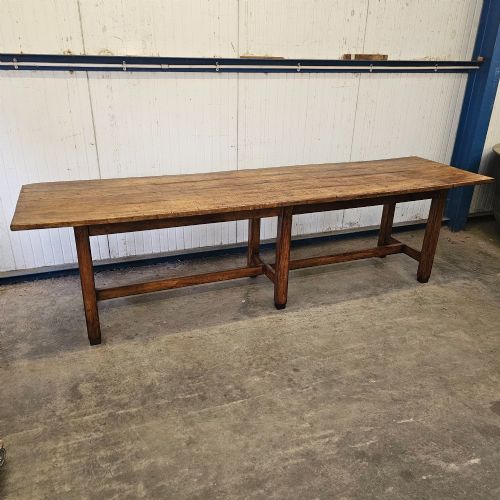
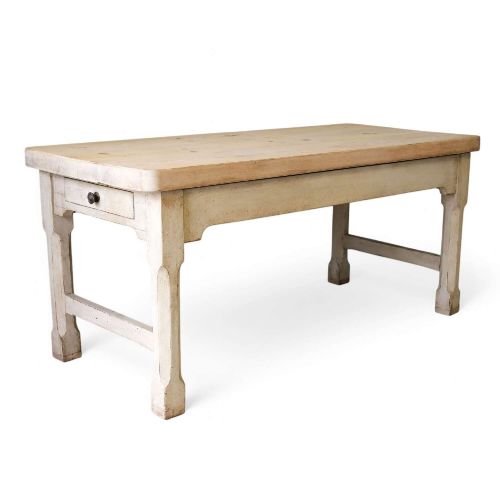
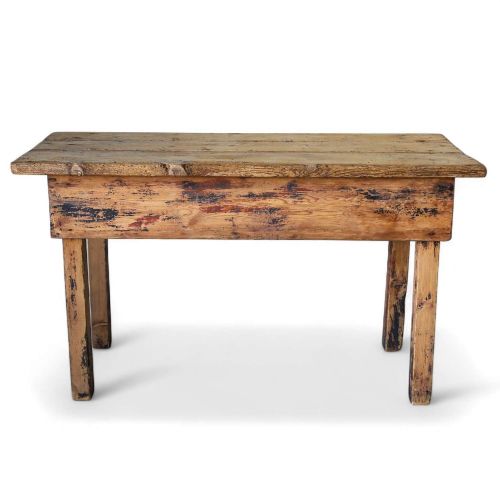
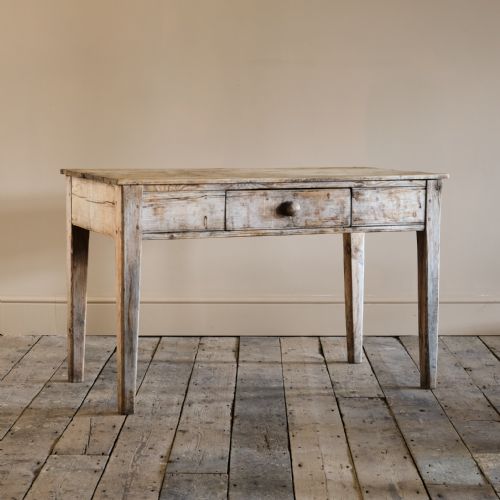




Rustic Timber Worktable
A rustic timber worktable brings honest utility and sturdy charm into a home, offering a solid surface shaped by daily graft and time.
Rustic Timber Worktable
A rustic timber worktable represents a sturdy heritage of practical utility, originating from sculleries, workshops, and farmhouse kitchens. When searching for a rustic timber worktable, buyers encounter forms designed for heavy daily graft rather than formal entertaining.
The pieces listed here span from the eighteenth century to the early twentieth century, taking the shape of prep tables, scullery tables, dining tables, and craft benches. Regional variations include English country house designs, Welsh pine pieces, and French provincial or Spanish farmhouse styles.
Most examples rely on generous proportions and honest construction, often featuring scrubbed tops or later paint that tells the story of previous domestic or industrial service. These tables suit modern kitchens and living spaces precisely because their utility remains entirely genuine.
How they were made
Construction relies on robust domestic and European timbers selected for strength and resilience, principally pine, sycamore, oak, elm, chestnut, and beech. Makers joined thick tops to sturdy legs using traditional framing methods suited to heavy downward pressure.
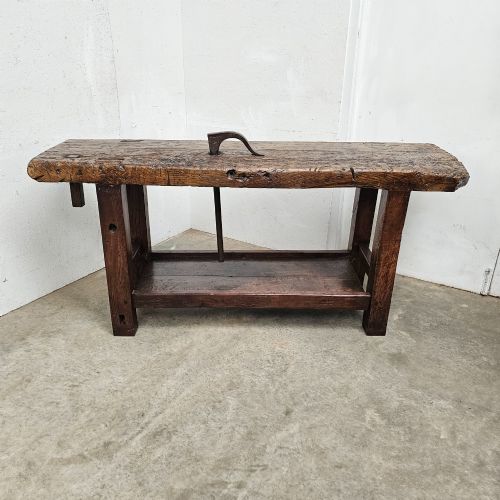
Many working pieces incorporate functional additions such as wooden clamping bars, trestle supports, or forged iron hardware designed to withstand intense daily labour. Surfaces often show the natural grain of the wood alongside traces of historic paint, scrubbed finishes, or patinated wear.
Rustic Timber Worktable Retail Price Guide 2026
Typical asking prices for rustic timber worktable among the pieces listed under this phrase on Sellingantiques today, from the lower quarter to the upper quarter. They describe what is for sale here now, not the wider market.
Listings feature timbers including pine, sycamore, oak, elm, chestnut, and beech across English, French, and Spanish origins.
What varies in quality
Quality rests in the integrity of the timber and the honesty of the wear, where untouched surfaces carry far more character than overly restored ones. The thickness of the top board and the stability of the underframe dictate how well a table survives centuries of active use.
The Rustic Timber Worktable Glossary
- Scrubbed top
- A wooden surface cleaned repeatedly with water and scrubbing brushes over generations, leaving a pale, tactile grain. This finish is typical of tables used intensively for food preparation.
- Clamping bar
- A heavy piece of timber fitted across the ends of a workbench or table top to keep boards flat and stable. It prevents warping during heavy carpentry or joinery work.
- Trestle table
- A form consisting of two or more vertical supports connected by a horizontal beam, holding a loose or fixed top. This design allows maximum legroom along the length of the table.
- Scullery table
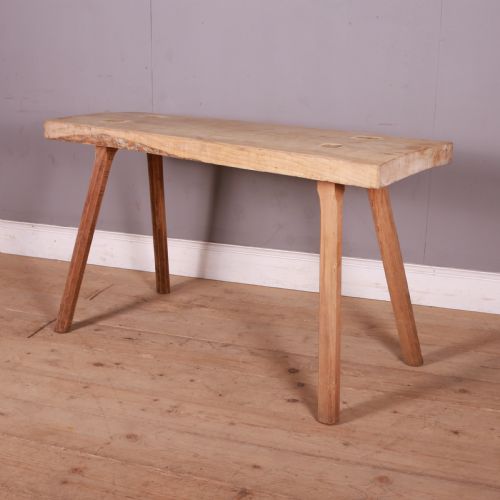
- A heavy utilitarian table traditionally used in the scullery for messy kitchen tasks like washing vegetables or scaling fish. These pieces are characterised by thick timber tops and simple, robust frames.
Rustic Timber Worktable: Frequently Asked Questions
How do I clean a scrubbed pine worktable?
Wash the surface gently using warm water and a mild soap, scrubbing along the grain with a soft bristle brush. Avoid harsh chemical cleaners that strip the historic character from the aged timber.
Allow the wood to dry naturally away from direct heat sources to prevent splitting. Periodic applications of natural wax help protect the dry grain without creating an artificial gloss.
Are these tables suitable for everyday dining?
These tables make exceptional dining surfaces because their original purpose required generous proportions and stable construction. Their robust timber tops easily handle daily family life and gathering.
Keep in mind that historic worktables often feature lower clearances or uneven boards shaped by decades of trade. Checking the exact height and legroom ensures comfortable seating for daily meals.
How do I tell an 18th-century table from a 19th-century one?
Eighteenth-century examples often display broader single-board construction, hand- forged iron nails, and deeper patination gained from centuries of domestic use. The tool marks left by early carpenters tend to be wider and more irregular than those on later pieces.
Nineteenth-century tables frequently incorporate factory-sawn timber and standardised joinery methods while retaining heavy utility forms. Comparing the framing techniques and the depth of the timber wear reveals the age of the piece.
Can I use a worktable in a modern kitchen?
A rustic timber worktable brings warmth and generous workspace to contemporary kitchen layouts. Their substantial tops provide an ideal station for food preparation and casual dining.
Protecting the aged wood from standing water and hot pans preserves the historic surface. Embracing existing dents and marks ensures the table continues to age gracefully within a modern home.