
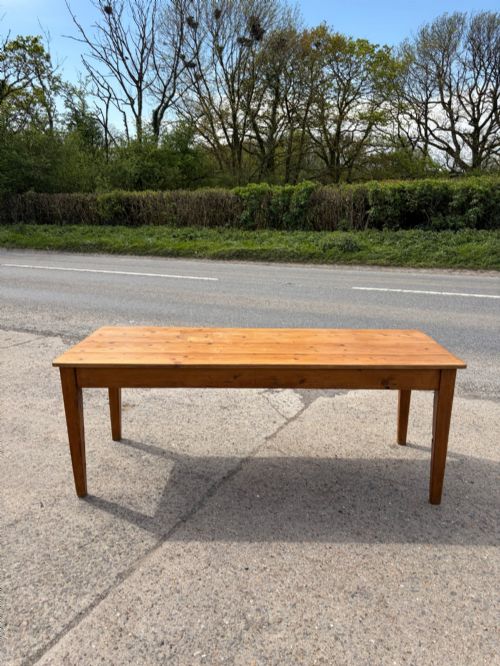
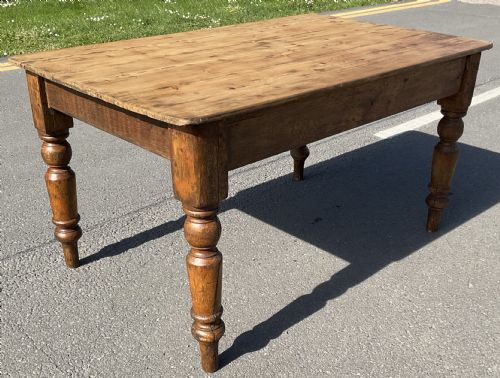


Victorian Farm Table
A victorian farm table brings honest utility and decades of lived history straight into the modern kitchen or dining room.
Victorian Farm Table
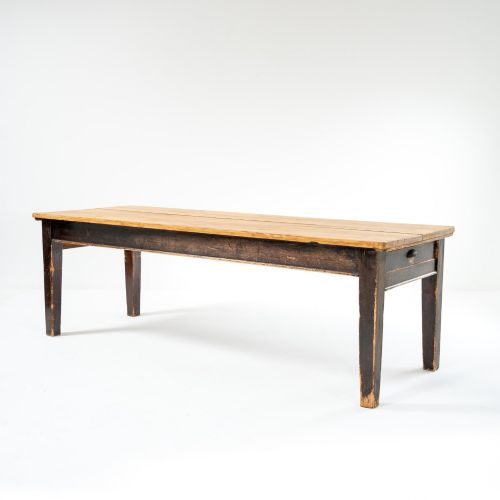
When you search for a victorian farm table, you encounter heavy, hardworking timber furniture built during the nineteenth century for daily domestic or agricultural labour. These pieces served families and workers alike, evolving from simple kitchen workhorses into grand dining centerpieces.
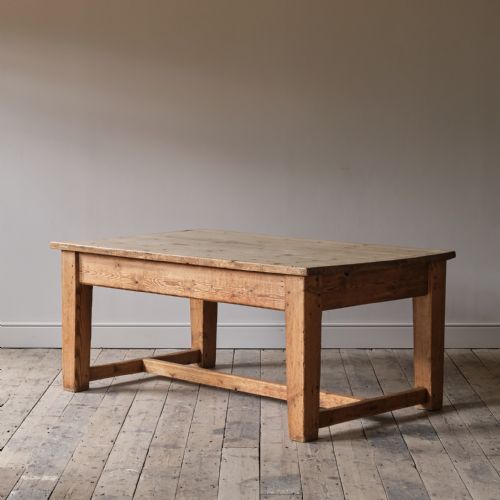
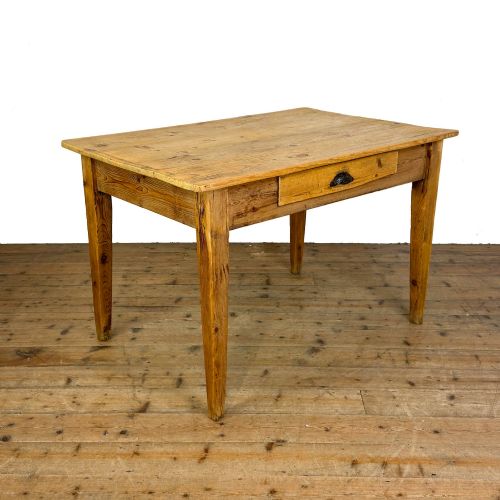
Pine dominates the selection, frequently scrubbed white or bearing layers of old paint, alongside sturdier hardwoods like oak, elm, and ash. You will discover formats ranging from compact four-seater boards to massive refectory tables stretching to accommodate twelve diners.
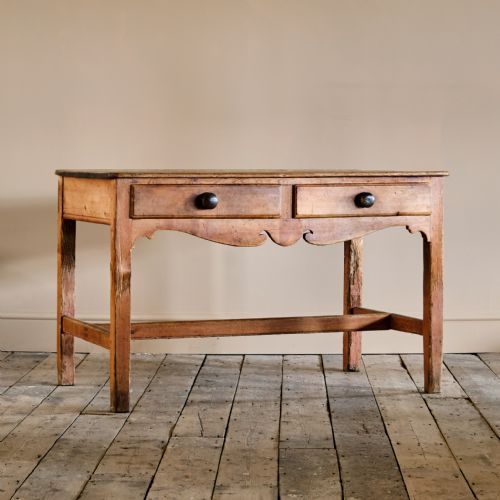
The aesthetic embraces rustic country utility rather than formal parlour refinement. Single frieze drawers, folding frames, and joined refectory constructions appear frequently across the periods spanning from eighteen-forty to nineteen-hundred.
Materials and Construction
Makers relied on durable native softwoods and hardwoods, pairing scrubbed pine tops with sturdy oak, elm, or fruitwood frames. Brass fittings and cast iron reinforcements occasionally appear on folding mechanisms or drawer hardware.
Carpenters utilised robust joinery methods such as mortise and tenon to withstand heavy daily use in farmhouses and dairies. Surfaces often received multiple layers of lead paint or simple stain, which weathered through decades of domestic scrubbing.
Victorian Farm Table Retail Price Guide 2026
Typical asking prices for victorian farm table among the pieces listed under this phrase on Sellingantiques today, from the lower quarter to the upper quarter. They describe what is for sale here now, not the wider market.
Periods represented across the archive and current selection include the mid-nineteenth century, eighteen-forties, eighteen-fifties, eighteen-seventies, eighteen-eighties, eighteen-nineties, and nineteen-hundred.
Distinctions in Quality
Superior examples showcase dense, well-grained timber like old-growth pitch pine or quarter-sawn oak that has aged with a deep, patinated warmth. The balance between top thickness and leg proportion dictates the visual weight and stability of the piece.
Superior construction is evident in tight, hand-cut joinery and drawers constructed with dovetail joints rather than simple butt joints. Untouched surfaces bearing genuine layers of old paint or scrubbed patination carry more integrity than over-restored timber.
The Victorian Farm Table Glossary
- Refectory table
- A long, narrow dining table originally designed for monastic dining halls and later adopted in farmhouses. These pieces feature stretcher rails running low between the legs for added stability.
- Frieze drawer
- A storage compartment integrated directly beneath the tabletop within the wooden framing. These drawers typically held cutlery, linens, or household ledgers.
- Scrubbed pine
- Timber that has been vigorously cleaned with water and brushes over decades, removing surface finishes to leave a pale, textured grain. This finish reflects the rigorous hygiene practices of nineteenth-century kitchens.
- Pitch pine
- A resinous pine variety known for its durability and distinct, figured grain patterns. Nineteenth-century carpenters favoured it for heavy-use surfaces.
- Arts and Crafts
- A late nineteenth-century design movement prioritising traditional craftsmanship and honest materials over mass production. Pieces from this style often highlight visible construction methods.
Victorian Farm Table: Frequently Asked Questions
How do I clean a pine tabletop?
Wash the surface gently with warm water and mild soap, using a soft cloth to avoid raising the grain. Avoid harsh chemical strippers that strip away historic patination.
Dry the timber thoroughly immediately after washing to prevent warping. Apply natural beeswax periodically to nourish the dry nineteenth-century wood.
Can I use a farm table daily?
These pieces were originally constructed for heavy domestic and agricultural labour, making them exceptionally durable for modern dining and family life. Their robust timber frames easily handle the demands of daily meals and gatherings.
Use coasters and placemats to protect historic scrubbed or painted surfaces from moisture rings and heat damage. Embracing the existing dents and marks allows the table to continue accumulating character.
How do I date a nineteenth-century table?
Examine the underside and drawer construction for hand-sawn tool marks and irregular handmade nails. Machine-cut screws and standardised fixings typically indicate later nineteenth-century or transitional periods.
Consider the timber species and style, noting that simpler scrubbed pine variants often predate the heavier Gothic Revival and Arts and Crafts oak designs of the eighteen-eighties.
What is a pig scratch table?
This specialised terminology refers to narrow agricultural or dairy boards used for specific farm processing tasks in the nineteenth century. Their slender proportions distinguish them from standard family dining furniture.
They function well in modern homes as sideboards, console tables, or narrow hallway desks. Their compact footprints suit spaces where a standard refectory table proves too wide.