
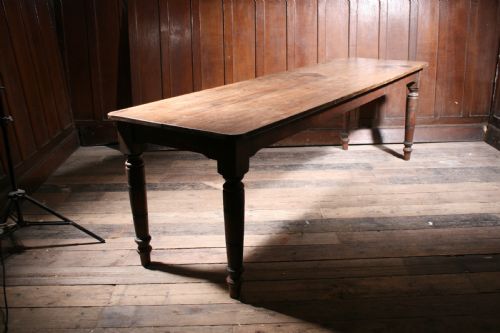
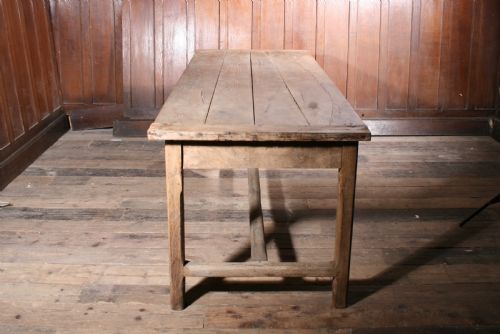
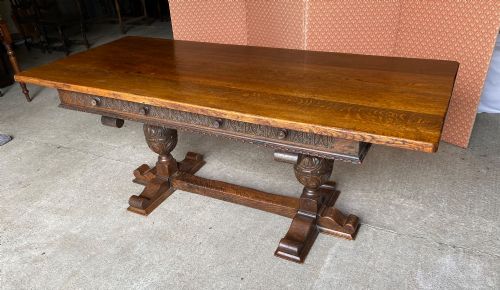
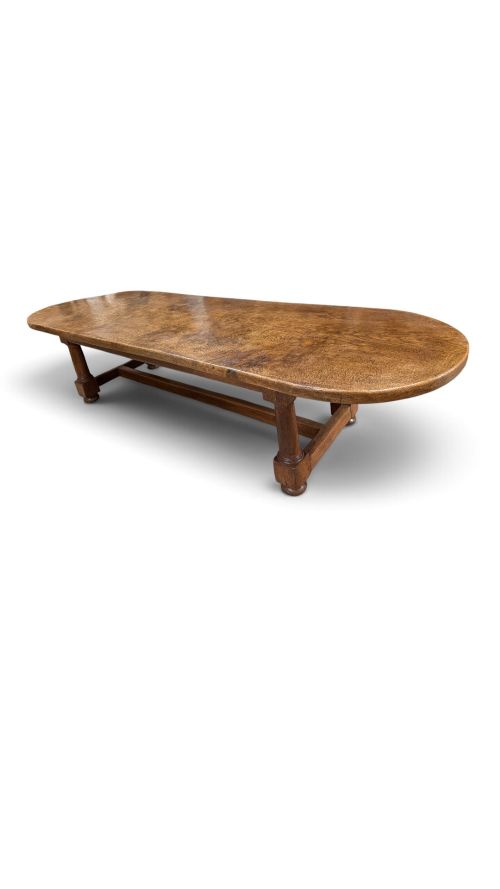
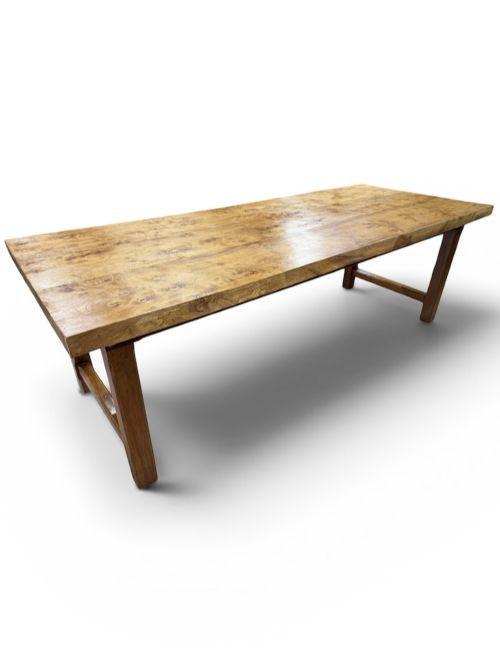
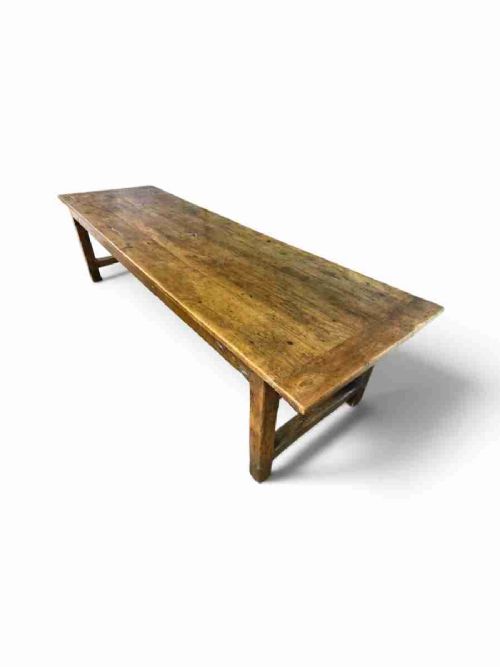
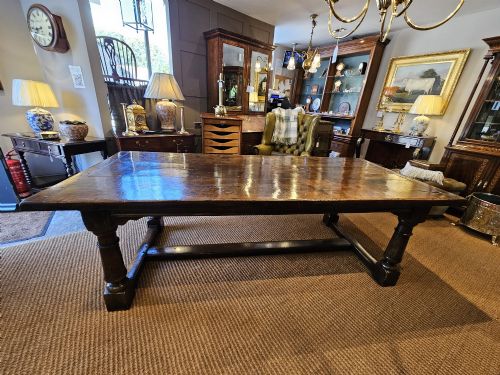
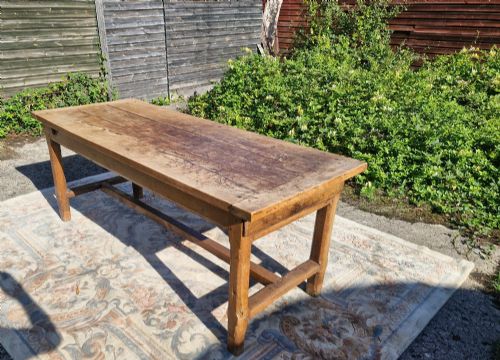
Large Trestle Table
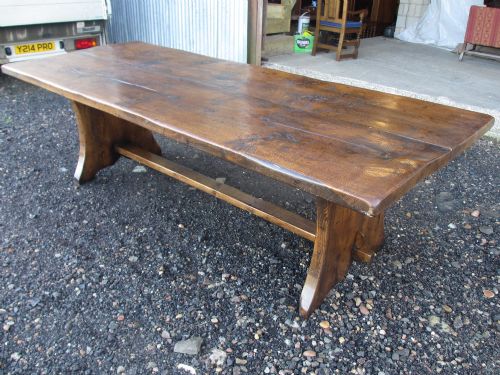
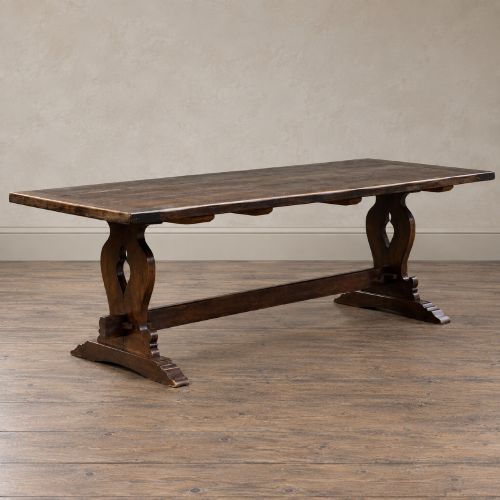
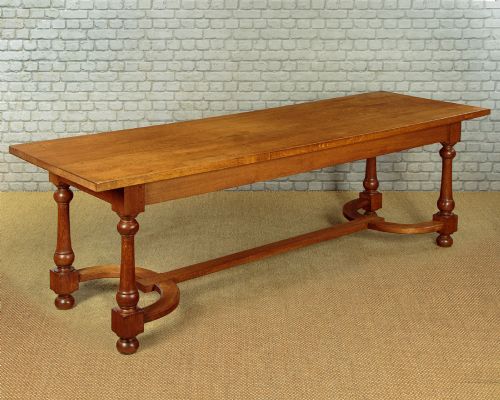
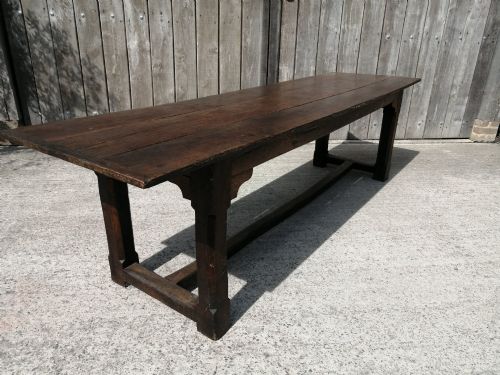
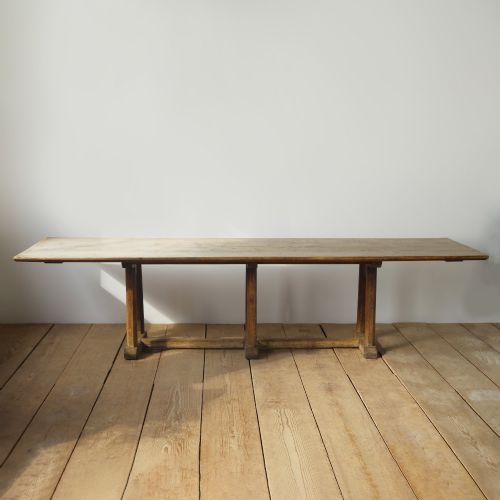
A large antique trestle table provides a solid, long-standing surface built to seat many people.
Large Trestle Table
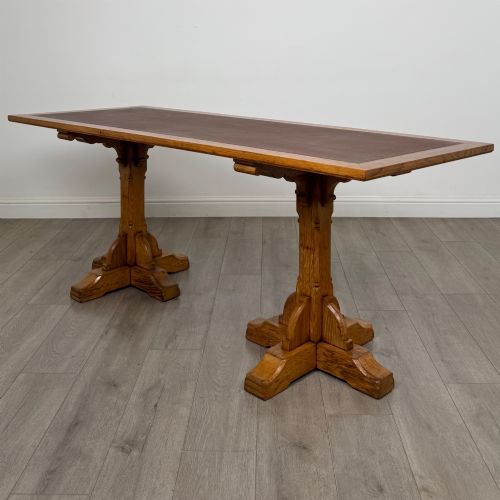
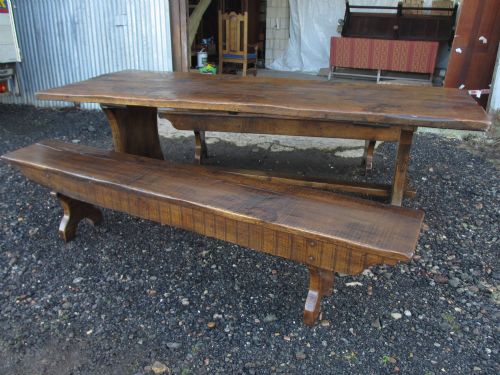
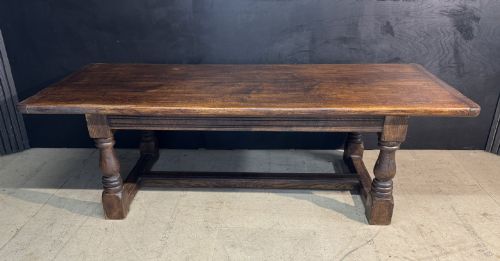
A large antique trestle table is primarily found as a refectory or farmhouse table designed for dining and communal use. These pieces date across the seventeenth, eighteenth, nineteenth, and early twentieth centuries, spanning periods from Georgian and Jacobean Revival to Edwardian and Arts and Crafts.
The format typically involves a long timber top supported by sturdy ends or trestles, frequently appearing in forms adapted for kitchens, libraries, and taverns. Buyers often encounter examples configured as eight-seater dining tables or long library desks.
Origins vary between English and French workshops, utilising local cabinet-making traditions that prioritise stability and length. The presence of single plank tops or multi-board surfaces marks the structural character of these utilitarian objects.
How they were made
Construction relies heavily on solid timber boards joined to robust supporting legs and trestle ends. Oak, pine, elm, and walnut form the primary structural woods, occasionally complemented by beech, cherrywood, chestnut, and mahogany.
Joinery methods emphasise durability, connecting thick table tops to sturdy framework bases without relying on complex modern adhesives. Surfaces frequently display the natural grain of the wood, sometimes finished with historic paint or bleached treatments.
Several tables show historic scars from public school libraries and tavern kitchens where scholars and drinkers argued over centuries.
What varies in quality
Quality rests in the selection of timber and the integrity of the original construction. Single plank surfaces and dense hardwoods like oak or elm demonstrate superior material choice compared to multi-board assemblies in lesser examples.
Proportion and the execution of structural joinery distinguish finer pieces. Well-balanced trestle ends and substantial thickness in the top board indicate higher craftsmanship within regional cabinet-making traditions.
The Large Trestle Table Glossary
- Trestle table
- A table consisting of a horizontal top supported by two vertical uprights or frames. This design allows for maximum legroom along the length of the board.
- Refectory table
- A long dining table traditionally used in monasteries and public institutions for communal meals. They are typically narrow and built from heavy timber.
- Single plank top
- A table surface constructed from one wide board of wood rather than multiple joined sections. This feature is particularly prized in early oak and elm examples.
- Farmhouse table
- A utilitarian wooden table originating from rural domestic settings. These pieces often exhibit simple lines and practical proportions suited to daily kitchen use.
- Arts and Crafts
- A design movement emphasising handcraftsmanship and traditional materials. Tables from this period focus on honest construction and visible structural joints.
Large Trestle Table: Frequently Asked Questions
How do I clean an antique wooden table?
Wipe surfaces gently using a soft, dry cloth to remove dust. Avoid harsh chemical cleaners that can strip historic finishes from the timber.
For routine maintenance, apply a light coat of natural beeswax to nourish the wood grain. Keep the table away from direct heat sources and strong sunlight to prevent splitting.
Are these tables suitable for daily dining?
These tables were originally constructed for heavy daily use in kitchens, refectories, and taverns. Their sturdy timber frames accommodate regular gatherings and meals.
Use protective mats under hot dishes and liquids to safeguard the historic surface. Accepting minor marks as part of the piece's history helps living comfortably with the wood.
How can I tell the period of a table?
Examine the wood species, tool marks, and construction joints visible underneath the top. Seventeenth and eighteenth-century examples frequently feature oak or elm with hand-cut joinery.
Later nineteenth and twentieth-century versions often show standardised fixings or different secondary timbers like pine. Comparing the leg style and stretcher arrangement against known historical periods aids identification.
What is the difference between a refectory and a trestle table?
A trestle table specifically uses vertical uprights or trestle ends to support the top. A refectory table is a broader category describing long, narrow dining tables.
Many refectory tables employ trestle ends, combining both definitions. The primary distinction lies in whether the support relies on end frames or traditional four-leg posts.