




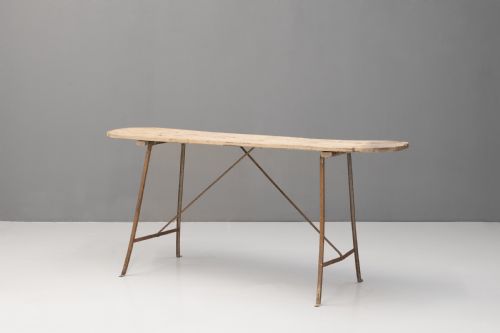


Vintage French Bench Table
These vintage french bench table pieces bring raw utility and rustic French character into modern rooms, offering sturdy timbers and historic working forms.
Vintage French Bench Table
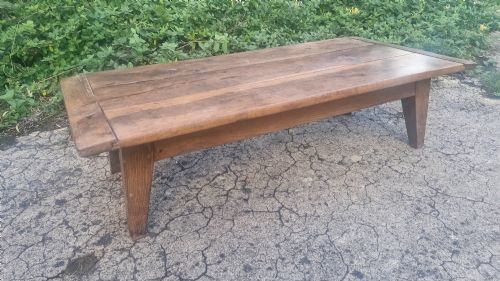
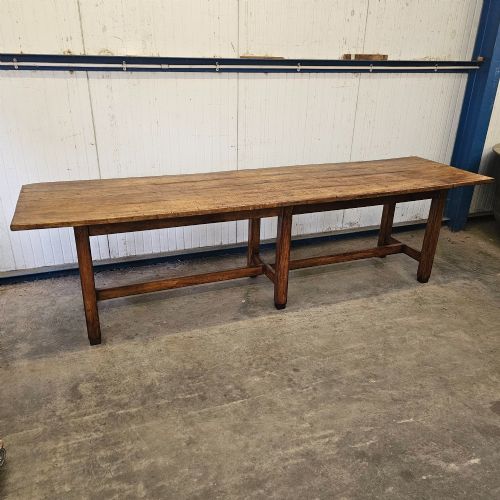
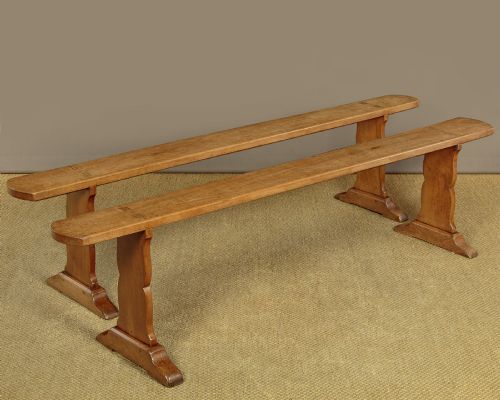
A vintage french bench table search reveals heavy-duty domestic and trade furniture originating from France, spanning the nineteenth and early twentieth centuries. These pieces encompass sturdy workbenches, laundry tables, drapers tables, and long dining benches alongside occasional low coffee tables. They reflect practical trades and country living rather than formal salon furniture.
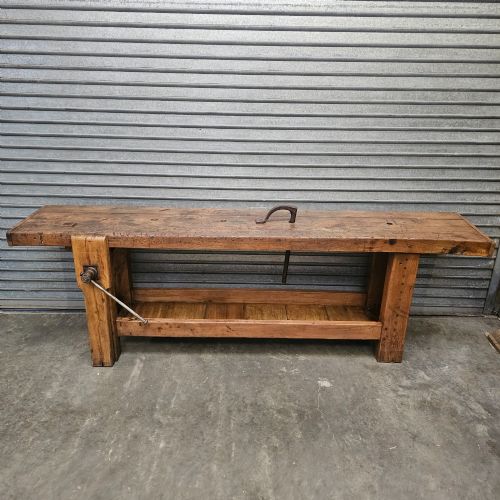
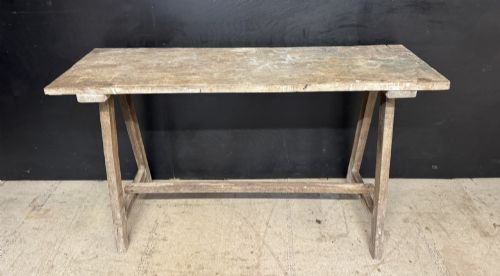
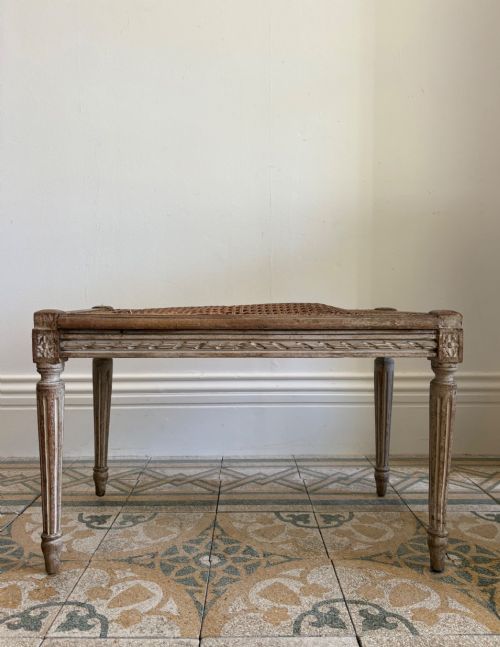
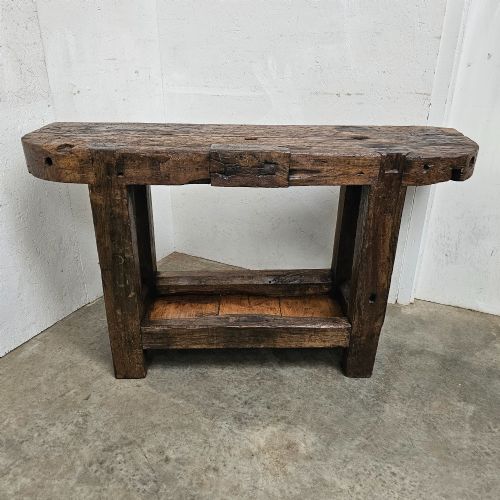
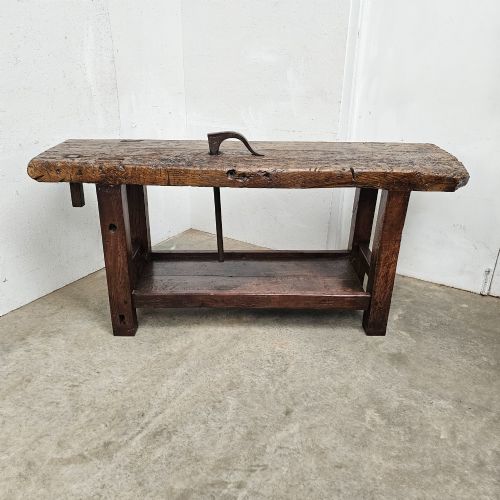
The most common formats on this page are repurposed workbenches fitted with vises or clamping bars, and long trestle or community hall tables built from heavy timber. Alongside these stand smaller stools, window seats, and scrubbed sycamore and elm tables designed for heavy daily use. Their origins stretch across rural French provinces and country houses, preserving centuries of workshop and kitchen use.
How they were made
Construction relies heavily on durable hardwoods and softwoods such as oak, pine, elm, sycamore, beech, and cherrywood, chosen for their resilience under daily labour. Carpenters and joiners utilised thick plank tops joined to robust legs, frequently incorporating wooden vices, iron hardware, and cross-stretcher bases for maximum stability.
Surfaces often show the direct marks of their working past, remaining unpainted, scrubbed clean, or bearing layers of historical paint. The joinery employs traditional pegged mortise and tenon joints designed to withstand heavy downward pressure and constant movement in workshops and laundry rooms.
Vintage French Bench Table Retail Price Guide 2026
Typical asking prices for vintage french bench table among the pieces listed under this phrase on Sellingantiques today, from the lower quarter to the upper quarter. They describe what is for sale here now, not the wider market.
Some workbenches still retain the stubborn ink stains and knife gouges left by nineteenth-century French artisans.
What varies in quality
The quality of a piece depends heavily on the integrity of its original timber and the survival of its working mechanisms, such as wooden bench screws and vises. Pieces featuring dense, aged hardwoods like oak and cherrywood command greater presence than simpler pine or painted equivalents.
Proportion and scale dictate the appeal of these tables and benches, with exceptionally long community hall pieces or small primitive low tables offering distinct spatial utility. Original untouched surfaces that retain their scrubbed grain or authentic historical patina elevate a piece above later stripped examples.
Trussant & Cie
The Vintage French Bench Table Glossary
- Workbench
- A heavy-duty table fitted with a woodworking vise, dog holes, or a clamping bar designed for manual craft. These sturdy items now frequently serve as console or kitchen island surfaces.
- Trestle table
- A table comprising two or more supports connected by a horizontal beam that holds a long plank top. This design provides maximum legroom and structural stability.
- Scrubbed finish
- A timber surface washed repeatedly with water and stiff brushes to remove dirt and reveal the natural grain. This treatment leaves a pale, clean matte texture.
- Louis XVI Neoclassical
- A decorative French style characterised by straight vertical lines, symmetry, and classical restraint. Pieces in this aesthetic often feature carved fluting and gilded elements.
Vintage French Bench Table: Frequently Asked Questions
What is a French bench table?
A French bench table is a heavy utility piece originating from France, encompassing workshop benches, laundry tables, and long dining boards. They were built for demanding manual tasks in trades and country houses.
Today, these versatile items find new life as kitchen islands, console tables, or low coffee tables in contemporary interiors, prized for their weathered timber and historic construction.
How do I use a workbench as a table?
Workbenches make exceptional console tables or kitchen islands because their narrow proportions and integrated vises add distinctive character. You can leave the original wooden clamps in place as sculptural details.
Ensure the height matches your intended use, and treat the scrubbed wooden surfaces with protective oils if you plan to use them for food preparation or dining.
What woods were used in these tables?
French makers relied on locally available timber, using durable hardwoods like oak, beech, cherrywood, sycamore, and elm for high-wear tops and structural frames. Pine was also common for larger domestic surfaces.
Each wood species ages differently, with sycamore and elm often taking on a pale scrubbed finish while oak deepens in tone and grain definition over decades of use.
Are these pieces restored or original?
Most pieces retain their original patinated surfaces, showing generations of use, tool marks, and historical wear from French workshops and homes. Scrubbed versions have been carefully cleaned to expose the raw timber grain.
Repairs are generally minimal and sympathetic to the history of the piece, preserving functional elements like iron vices and pegged joints rather than applying modern finishes.