




Large Porcelain Wall Platters
Large porcelain wall platters command attention in any room, offering sweeping painted surfaces that span centuries of Chinese, Japanese and European kiln work.
Large Porcelain Wall Platters
When someone searches for large porcelain wall platters, they encounter broad decorative chargers and display plates designed primarily for vertical exhibition rather than dining table use. These pieces originate from diverse workshops spanning the seventeenth century through the early twentieth century.
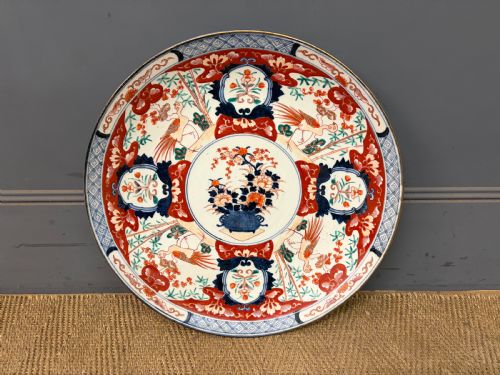
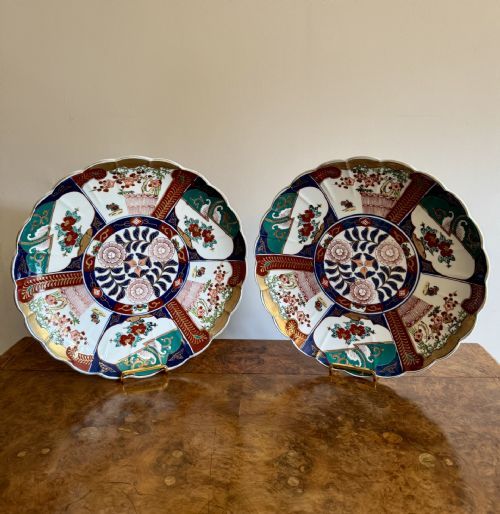
The version most commonly met on this page is the Japanese Imari charger, typically dating from the Meiji period or around nineteen hundred. These pieces present robust ceramic bodies decorated with distinct blue, iron-red and gilt palettes, often incorporating foliate borders and traditional motifs.
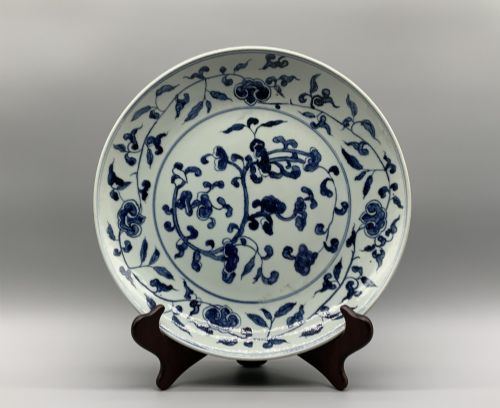
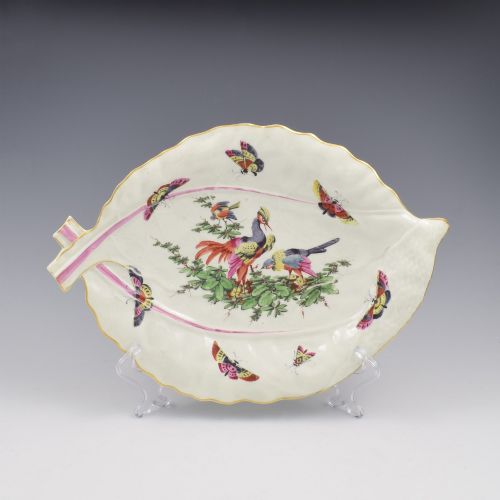
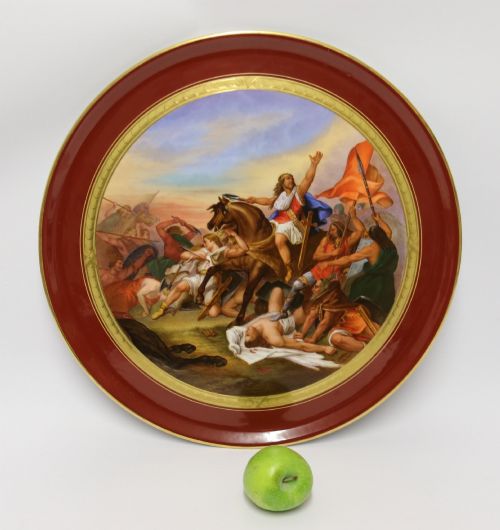
Beyond Japanese export wares, the selection includes Chinese blue and white and Famille Verte chargers from the Kangxi period, alongside European porcelain chargers from English factories like Worcester and Caughley, as well as French and Vienna porcelain works depicting figurative scenes.
How they were made
Potters built these expansive forms using high-firing porcelain clay and ceramic bodies, shaping substantial platters capable of supporting intricate surface decoration without warping in the kiln. Cobalt glaze was frequently applied beneath the clear glaze for deep blue underglaze decoration on Chinese and Japanese blue and white pieces.
Overglaze enamels, gold leaf and gilt work were added during subsequent firings to introduce vibrant reds, greens and metallic highlights across chargers, display plates and square platters. Specialised techniques such as Totai Shippo combined porcelain bases with cloisonne tree bark effects to create textured surfaces.
Materials documented across the inventory include cobalt glaze, gold leaf, enamel, and specialised Totai Shippo cloisonne.
What varies in quality
The distinction between ordinary production and finer examples rests upon the precision of the hand-painted brushwork and the depth of the glaze. Hand-painted pictorial scenes, such as court life or figurative narratives executed in Paris and Vienna porcelain, demonstrate higher artistic ambition than standard repetitive floral borders.
The richness of the overglaze enamels and the careful application of gold leaf further elevate specific chargers. Works bearing period signatures or documented provenance through historic collections represent the upper echelon of these large display ceramics.
Dr Wall Worcester·Bluett and Sons
The Large Porcelain Wall Platters Glossary
- Charger
- A large decorative plate or platter traditionally used for display rather than service. These expansive ceramic canvases provide maximum space for elaborate painted compositions.
- Imari
- A style of Japanese export porcelain characterised by a palette of underglaze blue, iron-red, and gilt. Motifs frequently include intricate brocade patterns, flowers, and scrolling foliage.
- Overglaze Enamels
- Coloured glass paints applied over a previously fired and glazed ceramic surface. A lower temperature kiln firing fuses these enamels to the piece.
- Totai Shippo
- A Japanese technique applying cloisonne wirework and enamel directly onto a porcelain or ceramic body. This creates a textured surface resembling tree bark or metalwork.
- Famille Verte
- A Chinese porcelain palette dominated by green enamel hues, developed during the Qing dynasty. Pieces utilise this green alongside other contrasting overglaze colours.
Large Porcelain Wall Platters: Frequently Asked Questions
How were large porcelain wall platters displayed?
These large plates and chargers were manufactured with substantial diameter dimensions intended for visual impact in reception rooms and dining spaces. Historic interiors frequently utilised specialised plate rails, wall hooks or sturdy plate stands to mount them securely.
Because of their considerable weight, particularly examples measuring over fifty centimetres across, secure hanging methods were essential. Collectors today continue to employ specialised wall wire hangers that distribute the load evenly across the rim and base.
What is the difference between Imari and blue and white?
Blue and white pieces rely strictly on cobalt oxide applied beneath the transparent glaze before the primary high-temperature kiln firing. This creates a durable blue monochrome design against a white ceramic background.
Imari wares incorporate this same underglaze blue foundation but introduce secondary firings using iron-red enamels and gold leaf overlays. This multi-step process adds rich metallic sheen and contrasting warm tones to the finished charger.
How do you date a Kangxi period charger?
Kangxi period chargers date from the late seventeenth to early eighteenth century during the Qing dynasty in China. They are identified by characteristic fine-grained porcelain bodies, brilliant cobalt blue tones, and specific recurring motifs within scrolling foliate borders.
Markings on the base, such as apocryphal reign marks or collector association labels like those from past gallery exhibitions, help historians and dealers narrow down the manufacturing decade.
What defines Meiji period Japanese porcelain?
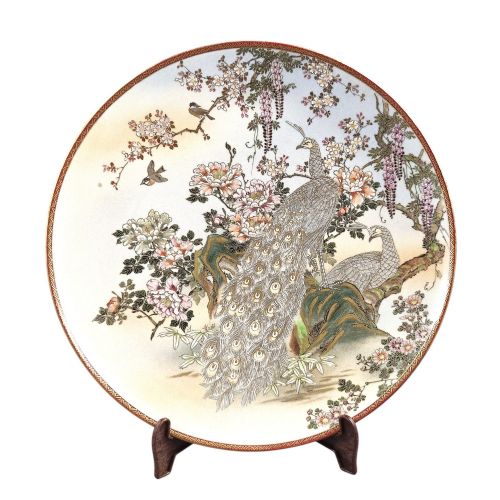
The Meiji period spans the late nineteenth and early twentieth centuries, marking an era of intense export production aimed at Western markets. Japanese kilns in Arita and Kutani produced large quantities of highly decorative chargers during this time.
These pieces often display exceptional technical skill in balancing complex multi-coloured enamels, intricate bird and floral compositions, and narrative scenes featuring traditional folklore figures.