

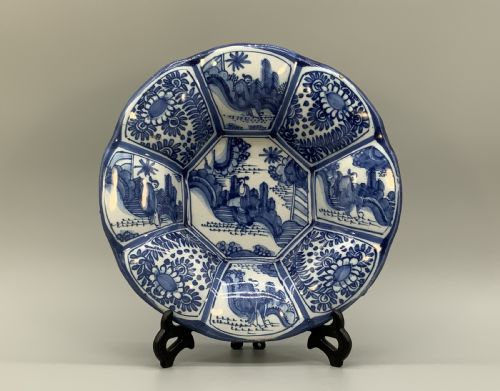


White Porcelain Display Platters
White porcelain display platters bring centuries of fine ceramic artistry into a room, offering striking blue and white patterns that command attention on any wall or surface.
White Porcelain Display Platters
White porcelain display platters encompass large decorative chargers, plates, bowls, and dishes designed primarily for visual impact rather than dining use. When searching for white porcelain display platters, buyers encounter substantial charger plates and dishes originating from Japanese, Chinese, and European workshops.
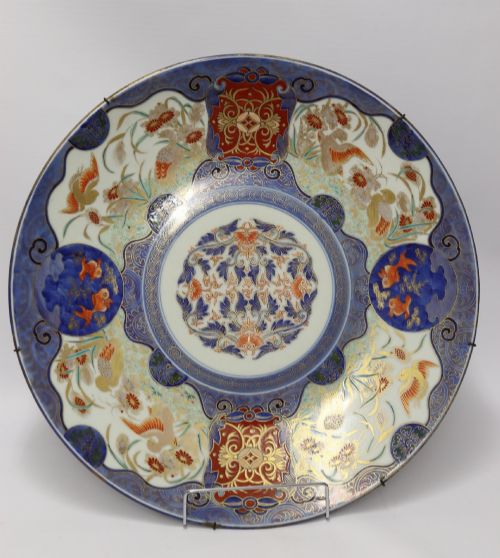
The pieces span multiple centuries, ranging from seventeenth-century Dutch Delft and Chinese Kangxi examples to nineteenth-century Japanese Meiji period Arita wares. Japanese Imari pieces and Chinese blue and white porcelain dominate the selection, often featuring complex floral, scrolling, or animal motifs.
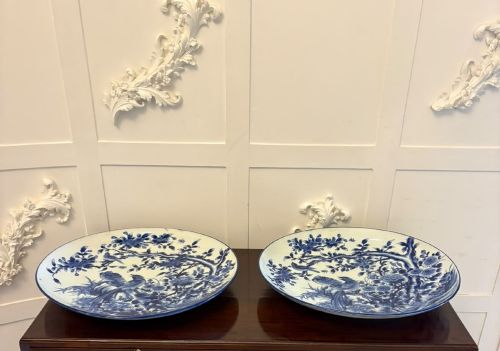
Forms vary from broad chargers with barbed rims and lobed edges to deep bowls and standard display plates. Many incorporate cobalt underglaze decoration on a crisp white ground, creating the high-contrast aesthetic characteristic of these historic wares.
How they were made
Potters utilised fine ceramic materials and porcelain clay bodies, shaping large chargers and dishes either by hand or utilising moulds to achieve precise forms like barbed and lobed rims. The resulting pieces provided a smooth, uniform surface suited to detailed painting.
Decoration relied heavily on cobalt pigment applied beneath a clear glaze, creating the deep blue designs seen across Chinese Qing Dynasty and Japanese Arita wares. Enamel highlights and tin-glazes appeared on specific European delftware and Japanese imari pieces, adding distinct colour layers during firing.
White Porcelain Display Platters Retail Price Guide 2026
Typical asking prices for white porcelain display platters among the pieces listed under this phrase on Sellingantiques today, from the lower quarter to the upper quarter. They describe what is for sale here now, not the wider market.
Several chargers proudly feature painted koi carp swimming across the white porcelain surface, ready to leap from the wall.
What varies in quality
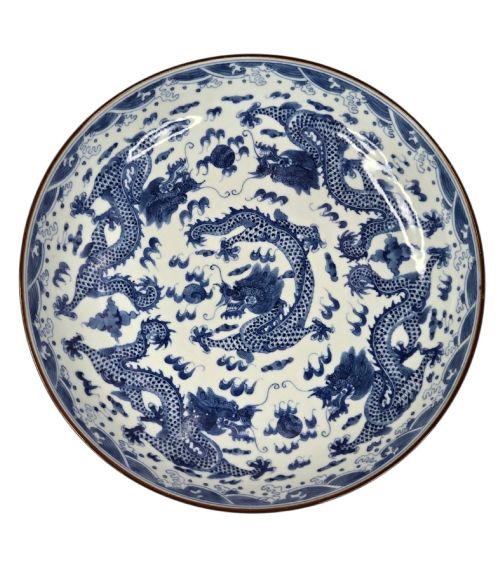
Quality in these ceramics rests on the precision of the hand-painted cobalt decoration and the clarity of the white porcelain ground. Finer examples display fluid brushwork within scrolling foliate borders and intricate motifs such as koi carp or dragons, whereas simpler pieces show more repetitive or standard patterns.
The crispness of moulded elements, such as barbed rims and lobed edges, distinguishes finer historic specimens from standard production. Well-preserved glaze surfaces with minimal firing flaws maintain greater visual appeal across centuries.
The White Porcelain Display Platters Glossary
- Charger
- A large decorative plate or platter traditionally used for display rather than serving food. These substantial ceramic pieces measure significantly larger than standard dining plates.
- Cobalt Underglaze
- A blue pigment applied to ceramic pieces before the application of clear glaze and firing at high temperatures. This technique locks the cobalt design permanently beneath the glossy surface.
- Imari
- A style of Japanese porcelain exported from the port of Arita, typically decorated in underglaze blue and iron red with supplementary colours. The tradition spans several centuries of decorative production.
- Kraak Style
- A type of Chinese porcelain characterised by panelled decoration radiating from a central motif, widely imitated in European delftware during the seventeenth century.
- Delft
- A tin-glazed earthenware developed in the Netherlands, heavily influenced by imported Chinese blue and white porcelain designs. It forms a distinct European counterpart to Asian ceramic traditions.
White Porcelain Display Platters: Frequently Asked Questions
How were display platters used historically?
Large chargers and display dishes served primarily as decorative showpieces on sideboards, walls, and tables within prosperous households. Their substantial size allowed workshops to showcase complex pictorial and floral designs.
Over time, collectors transitioned from dining use to wall mounting or cabinet display, preserving the intricate painted surfaces from daily wear.
How do I distinguish Japanese Arita from Chinese export porcelain?
Japanese Arita pieces often incorporate distinctive Imari palettes alongside cobalt blue, featuring dense scrolling foliate borders and characteristic forms. Chinese export porcelain from periods like the Kangxi reign tends to display specific reign marks and finely controlled underglaze blue painting.
Examining the clay body and glaze characteristics helps identify the regional origin and specific historical period of each charger.
Can I hang these large platters on a wall?
Many large chargers and platters feature sturdy construction suited to secure wall display utilising appropriate plate hangers. The generous diameter of these pieces makes them effective focal points in traditional or eclectic interiors.
Careful selection of hanging hardware ensures the weight of porcelain or tin-glazed earthenware is safely distributed across the rim and base.
What does blue and white Chinoiserie mean?
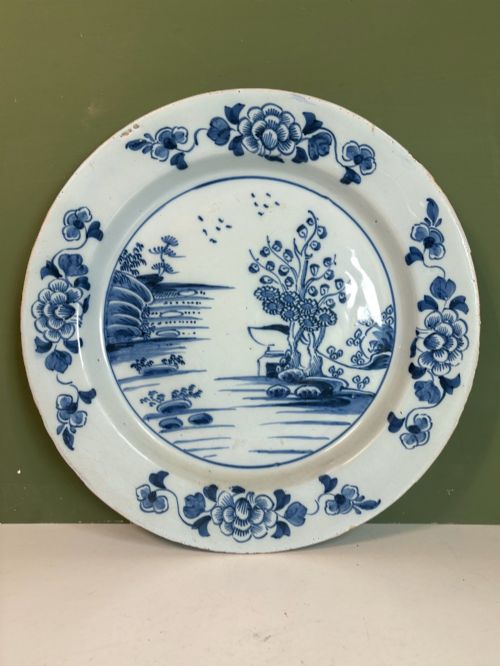
Chinoiserie describes European interpretations of Chinese artistic motifs, particularly prominent in seventeenth-century Dutch delftware production. These pieces adapt traditional Asian floral and landscape elements into distinct European forms.
The style bridges cultural aesthetic traditions, combining white tin-glazed earthenware bodies with spirited blue painted interpretations of oriental scenes.