



Chinoiserie Decorative Wall Plates
Chinoiserie decorative wall plates bring imaginative eastern scenes to domestic interiors through enamelled porcelain, ironstone and tin-glazed earthenware.
Chinoiserie Decorative Wall Plates
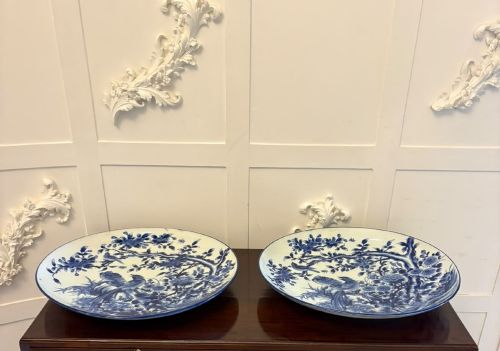
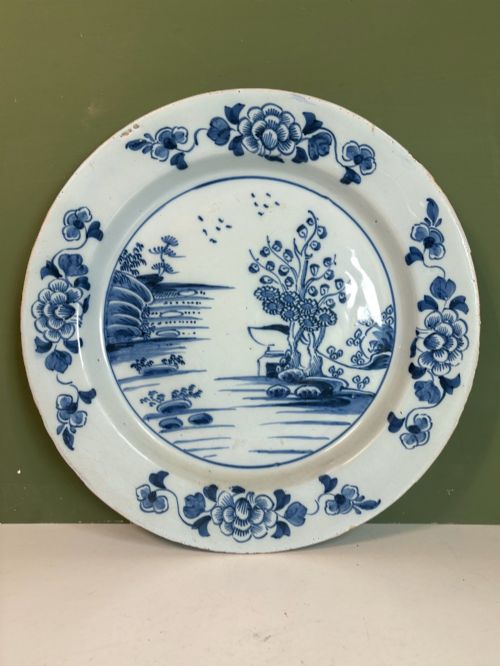
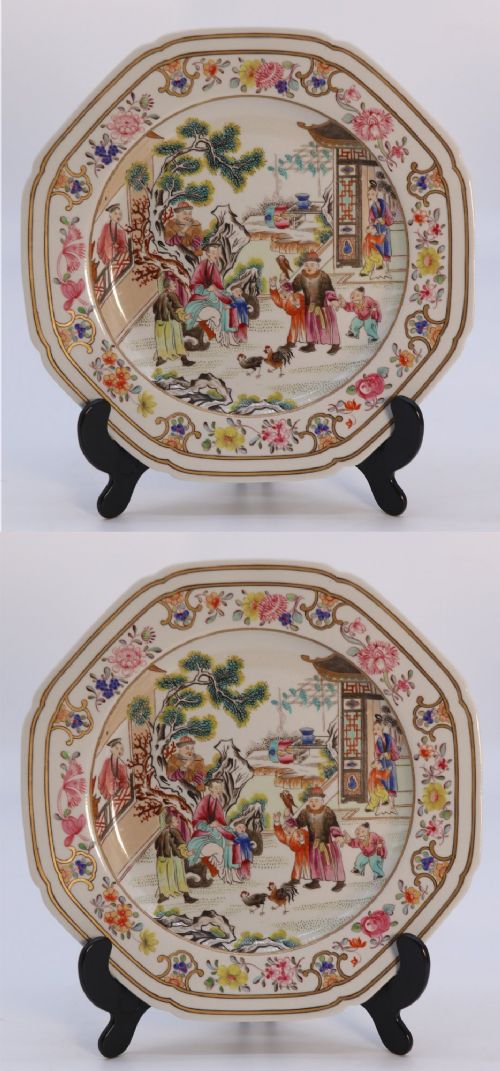
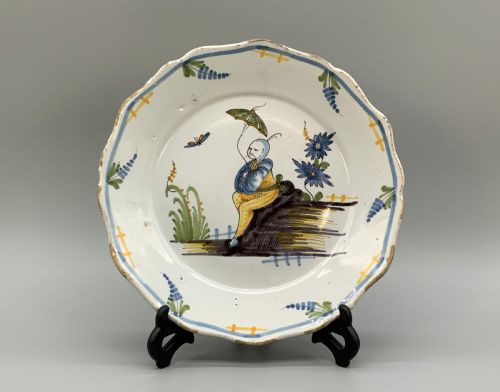
Chinoiserie decorative wall plates comprise chargers, cabinet plates and dessert plates decorated with European interpretations of East Asian motifs. These pieces span the eighteenth, nineteenth and early twentieth centuries, drawing on Qing Dynasty aesthetics alongside Georgian, Victorian and Edwardian design.
The selection ranges from large tin-glazed earthenware chargers and Delft dishes to robust ironstone plates and fine porcelain. Buyers encounter English factories such as Mason's, Spode, Minton and John Ridgway alongside continental faience and imported wares.
Materials and manufacture
Potters utilised earthenware, ironstone and porcelain as bases for these plates, applying tin glaze or clear enamel finishes. Surface decoration relied on hand-painting and transfer printing, frequently enhanced with gold leaf and vibrant pigments.
Early examples often take the form of tin-glazed earthenware chargers fired in local kilns, while later nineteenth-century production favoured durable ironstone and refined stone china capable of holding rich orange, yellow and blue grounds.
Chinoiserie Decorative Wall Plates Retail Price Guide 2026
Typical asking prices for chinoiserie decorative wall plates among the pieces listed under this phrase on Sellingantiques today, from the lower quarter to the upper quarter. They describe what is for sale here now, not the wider market.
Exotic birds peer from vibrant orange and yellow ironstone grounds, seemingly unimpressed by centuries of changing dining fashions.
Assessing quality and execution
Quality rests in the crispness of the transfer printing or the brushwork control within hand-painted motifs like exotic birds and oriental landscapes. Finer plates display careful registration of enamels and stable glazes across complex octagonal or circular forms.
The ambition of the ceramic body also dictates standing, with heavy ironstone chargers and translucent porcelain cabinet plates representing more demanding manufacturing feats than standard domestic tableware.
Spode·John Ridgway·Mason's Patent Ironstone·Minton
The Chinoiserie Decorative Wall Plates Glossary
- Chinoiserie
- European decorative style reflecting imaginative, Western views of Chinese and East Asian artistic traditions. It appears frequently on ceramics and furniture from the seventeenth century onwards.
- Charger
- A large decorative plate or dish, traditionally used for ceremonial dining or displayed upright on sideboards and walls. These oversized vessels provide a broad canvas for pictorial scenes.
- Ironstone
- A patented ceramic body invented in the early nineteenth century to offer a durable, dense alternative to porcelain. It takes enamels and blue-and-white transfer prints particularly well.
- Tin-glazed earthenware
- Pottery covered with a white tin-oxide glaze that becomes opaque during firing, creating a smooth surface for painting. This technique defines traditional Delft and faience production.
Chinoiserie Decorative Wall Plates: Frequently Asked Questions
How do I hang antique plates on walls safely?
Displaying plates securely requires proper wall fixings and coated wire hangers that grip the rim without exerting uneven pressure on the ceramic body. Careful placement avoids high-traffic zones where accidental knocks might occur.
For larger chargers, specialist flat-backed wall brackets distribute the substantial weight of ironstone and earthenware pieces evenly across the mounting point.
Can I use these plates for serving food?
Historical plates featuring old enamels, tin glazes or ironstone bodies are best reserved for display rather than daily dining. Historic glazes can be sensitive to modern detergents and cutlery wear.
Enjoying these items visually preserves the hand-painted surfaces, gold leaf highlights and delicate ceramic edges from accidental damage.
What defines the chinoiserie style on ceramics?
This aesthetic combines European forms with fantastical depictions of figures, pagodas, exotic birds and stylized foliage. It reflects eighteenth and nineteenth-century fascination with eastern trade goods.
Makers adapted these motifs to suit contemporary tastes, resulting in vibrant polychrome palettes alongside classic blue-and-white patterns.
How do I distinguish earthenware from porcelain plates?
Porcelain is typically white, fine-grained and translucent when held to a strong light source. Earthenware and ironstone present a heavier, opaque body with greater thickness.
Tin-glazed pieces often reveal a slightly softer fabric underneath where the glaze has chipped at the reverse rim.