






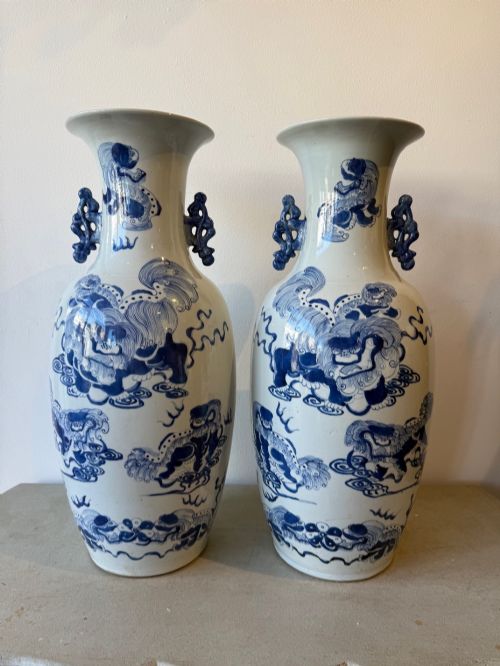
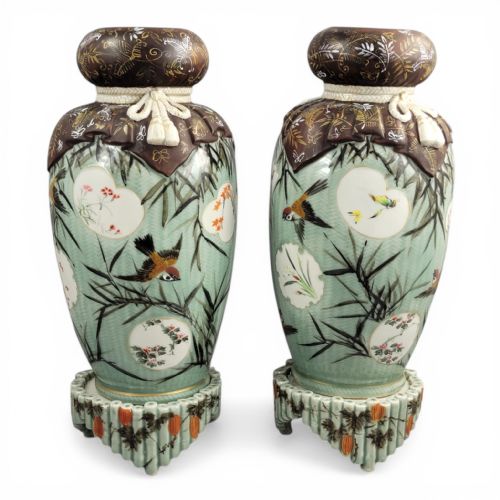
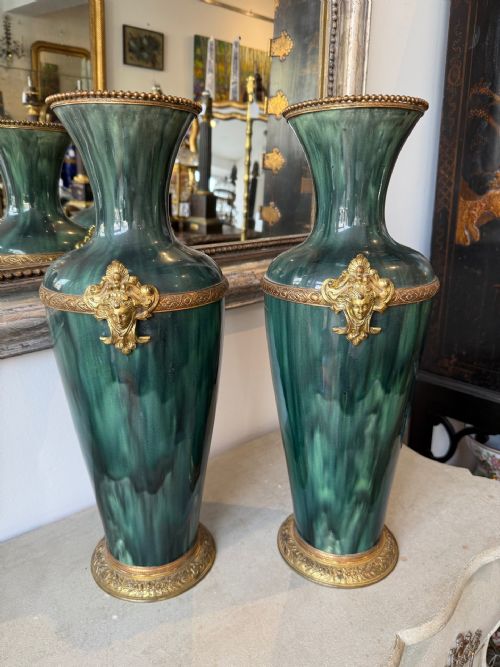
Large Porcelain Urn Pair
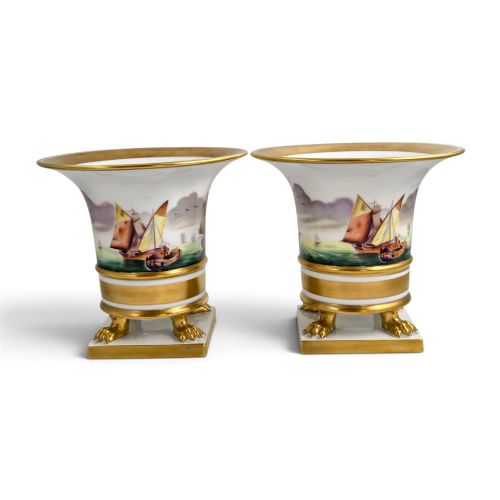
A large porcelain urn pair anchors a room with scale and presence, bringing symmetry and historical weight to a mantel or hall.

Large Porcelain Urn Pair
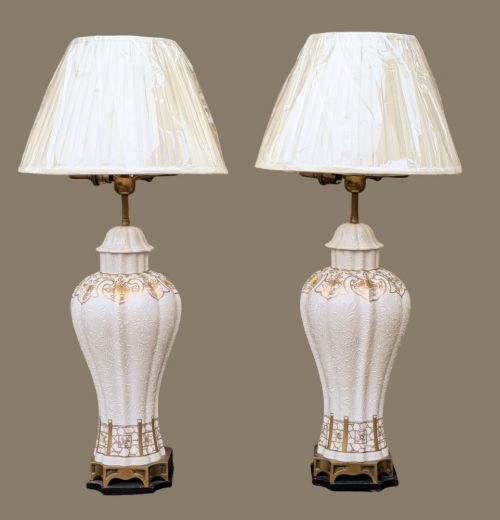
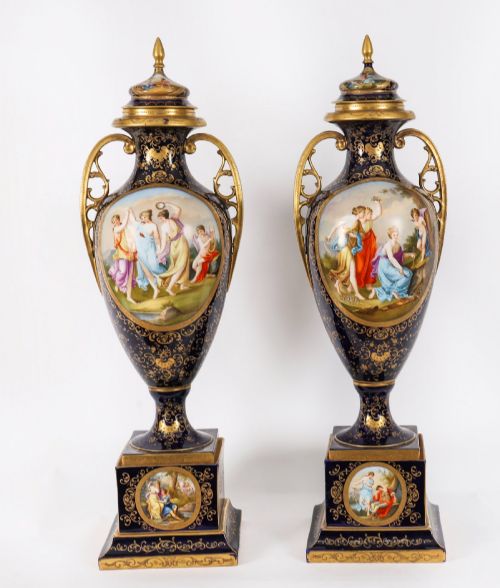
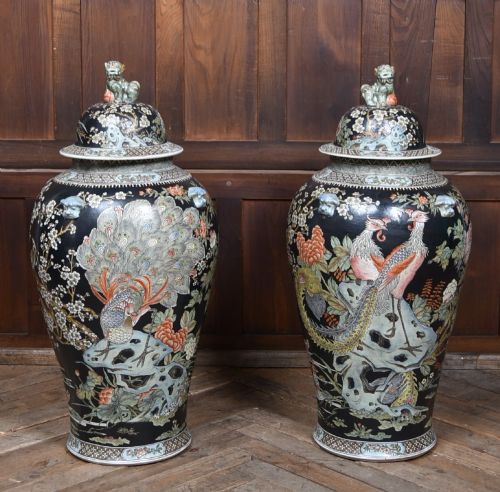
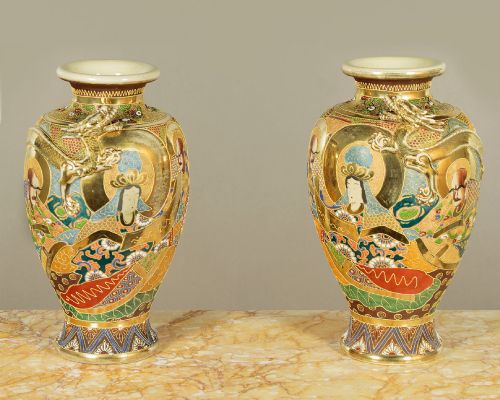
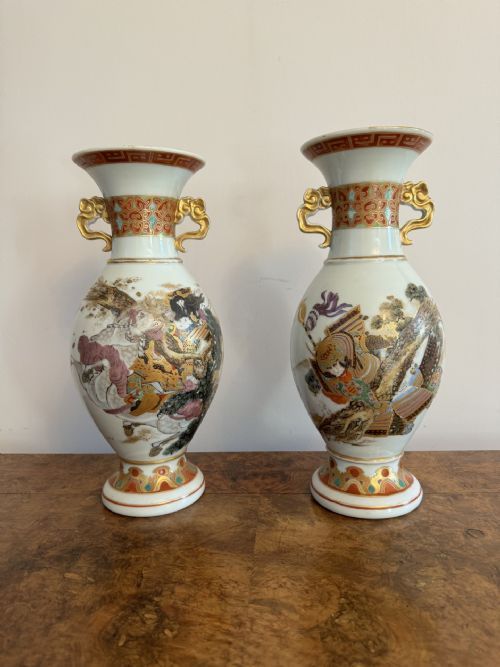
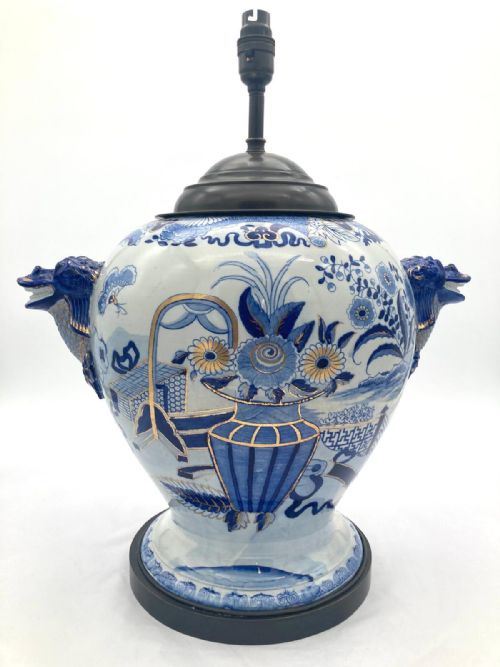
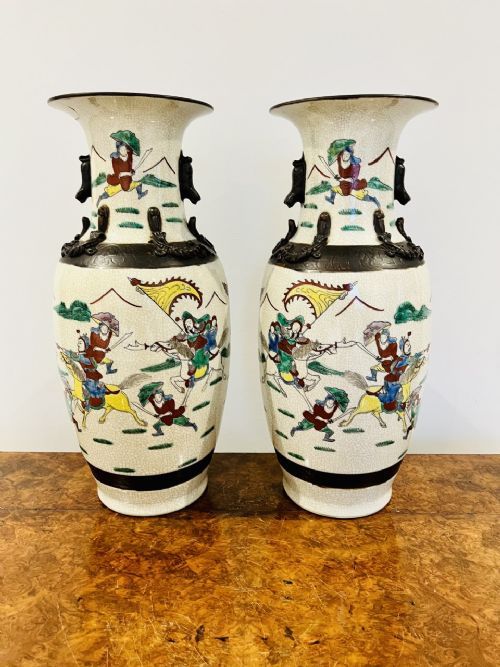
A large porcelain urn pair comprises matching ceramic vessels designed primarily for display, often featuring lids, handles, or decorative stands. These grand pieces frequently take the form of floor jars, lidded vases, or table lamps adapted from earlier vessels.
The selections available here lean heavily toward nineteenth-century production from Japan and Europe. Japanese Satsuma, Imari, and Kutani wares sit alongside European factories such as Sitzendorf, Berlin, Paris, and Sevres.
Buyers encounter everything from bulbous floor vases to slender spill vases and moon flasks. Many pieces incorporate specific stylistic references, including French Rococo Revival, Neoclassical, and Chinese Qing Dynasty aesthetics.
What varies in quality
The refinement of the hand-painted decoration separates standard production from exceptional examples. Crisp brushwork, controlled enamel application, and the skilled use of gold leaf or gilding indicate superior studio output.
Scale and ambition also dictate standing, with monumental heights and matching original stands or covers commanding greater attention. The precision of the ceramic form, freedom from warping during firing, and the integration of auxiliary mounts define the upper tier.
Large Porcelain Urn Pair Retail Price Guide 2026
Typical asking prices for large porcelain urn pair among the pieces listed under this phrase on Sellingantiques today, from the lower quarter to the upper quarter. They describe what is for sale here now, not the wider market.
Several towering pairs reach heights near a metre, demanding more floor space than the average occasional table.
Hicks and Meigh·Kato Sanhei
The Large Porcelain Urn Pair Glossary
- Imari
- A style of Japanese export porcelain characterised by a palette of underglaze blue, iron red, and gilt. It gained immense popularity in Europe during the seventeenth and eighteenth centuries.
- Satsuma
- A type of Japanese earthenware featuring a crackle glaze and ornate polychrome enamel decorations often enriched with gold. These wares were widely produced for export throughout the nineteenth century.
- Ormolu
- Gilded bronze used for mounts, handles, and decorative bases on European decorative arts. It adds architectural structure and visual weight to porcelain bodies.
- Famille Rose
- A palette of Chinese porcelain decoration dominated by opaque pink or rose enamel introduced in the eighteenth century. Pieces often depict complex figural scenes or floral arrangements.
- Spill vase
- A tall, slender vessel originally designed to hold wooden spills used for lighting candles or fires. In larger formats, they serve purely decorative functions.
Large Porcelain Urn Pair: Frequently Asked Questions
How were large porcelain urns originally used?
These substantial vessels served as prominent decorative accents in grand interiors, often placed on tables, pedestals, or flanking fireplaces. Some functioned as storage jars or were fitted with covers to hold potpourri.
Over time, many examples transitioned into lighting by being converted into table lamps. Their grand scale allowed them to anchor large architectural spaces effectively.
How do you distinguish Japanese Imari from Satsuma?
Imari wares utilise a hard porcelain or ceramic body decorated with a distinctive palette of dark underglaze blue, iron red, and gold. The surfaces are typically crisp and vitreous.
Satsuma pieces feature a characteristic cream-coloured earthenware body with a fine network of crackled glaze. They rely heavily on dense polychrome enamel painting and raised gilding.
Can these urns be used safely as lamps?
Many historical vessels arrive already converted into table lamps through professional wiring and fitted bases. This adaptation allows fragile or valuable ceramic forms to serve a practical purpose in modern interiors.
Buyers should inspect the existing electrical components to ensure they meet current standards. Professional rewiring can be undertaken without harming the underlying porcelain body.
How should large ceramic urns be cared for?
Maintenance requires gentle dusting with a soft, dry cloth to prevent the accumulation of debris on textured surfaces or gilt details. Avoid using liquid cleaners, which can damage aged enamel pigments or delicate gold leaf.
Placement should avoid direct sunlight and areas subject to sudden temperature fluctuations. Ensuring a stable, level surface protects heavy vessels from accidental tipping.