






Pink Green Ceramic Vase
A pink green ceramic vase brings striking colour contrast and historical craftsmanship to a room.
Pink Green Ceramic Vase
When you search for a pink green ceramic vase, you encounter a selection of nineteenth-century decorative items originating from Chinese export workshops and European makers. These pieces mostly take the form of large vases, lamps, urns, and decorative vessels spanning periods such as the Victorian era, eighteen eighty, and nineteen hundred.
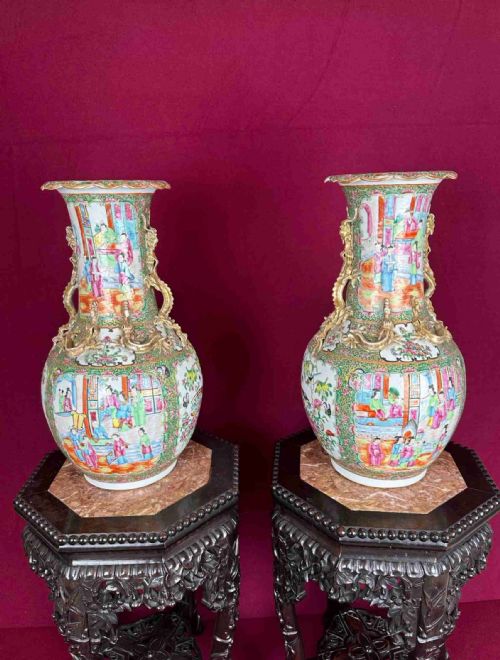
The Chinese export pieces on display predominantly feature elaborate floral and figurative designs associated with Rose Medallion and Canton styles. Alongside these, continental European porcelain appears in the form of pairs of hand-painted jugs, cherub figures, and large water nymph sculptures adapted for ornamental use.
Buyers seeking this specific aesthetic will find that many of these vessels have been thoughtfully converted into table lamps over time while retaining their original ceramic bodies. The fusion of vibrant enamels with sculptural forms creates a distinct visual impact that suits both traditional and eclectic interiors.
How they were made
The makers of these items utilised fine porcelain and ceramic bodies as the foundation for intricate surface decoration. Artisans applied hand-painted enamel pigments, predominantly featuring rose pink and contrasting greens, alongside details in gold leaf to build up complex pictorial scenes and floral motifs.
Many of the nineteenth-century Chinese export items and European decorative pieces incorporate applied gilt work and detailed overglaze painting fired at high temperatures. Where metal components are present, such as brass fittings on converted lamps, they complement the glazed ceramic surfaces.
Pink Green Ceramic Vase Retail Price Guide 2026
Typical asking prices for pink green ceramic vase among the pieces listed under this phrase on Sellingantiques today, from the lower quarter to the upper quarter. They describe what is for sale here now, not the wider market.
Even a ceramic cherub manages to find its way inside a porcelain vase in this collection.
What varies in quality
The finesse of the hand-painted brushwork and the vibrancy of the enamel colours largely determine the distinction between average and superior examples. Pieces with crisp, detailed figures and deeply saturated pigments display a higher level of artistic execution.
Proportion and scale also influence the standing of an object, particularly in matched pairs of large vases and urns where symmetry and balance are essential. The preservation of the original glaze and any gilding without excessive rubbing preserves the integrity of the piece.
Royal Vienna·Royal Dux
The Pink Green Ceramic Vase Glossary
- Rose Medallion
- A nineteenth-century Chinese export porcelain style characterised by panels of figures alternating with birds, butterflies, and flowers, typically dominated by pink enamel.
- Famille Rose
- A major palette of Chinese ceramic enamels introduced during the Qing dynasty, taking its name from the predominant opaque pink colour derived from colloidal gold.
- Canton
- A major port in China from which vast quantities of decorated porcelain were exported to Western markets during the nineteenth century.
- Royal Vienna Style
- A nineteenth-century European aesthetic mimicking the neoclassical porcelain painting techniques and rich gilding of the original Austrian imperial factory.
- Glaze
- A glassy coating fused to ceramic bodies through firing, which provides both a decorative glossy finish and a waterproof seal to the porous clay underneath.
Pink Green Ceramic Vase: Frequently Asked Questions
Were these vases originally made as lamps?
Most of these ceramic vessels were created purely for display or storage and were converted into table lamps during later periods. This adaptation was common for large nineteenth-century vases to give them a practical modern function in domestic interiors.
Inspecting the base and collar fittings often reveals how the conversion was achieved without compromising the ceramic body.
How can I identify nineteenth-century Chinese export pieces?
Look for characteristic palettes such as Rose Medallion and Famille Rose, which combine distinct pink enamel washes with intricate floral borders. The weight and finish of the porcelain paste provide further clues to their period of origin.
Comparing the hand-painted motifs with documented export styles helps confirm the historical context of the work.
Where should I place a large decorative urn?
Large urns and vases command attention when placed on sturdy side tables, pedestals, or mantels where their height and colour can be appreciated. Ensuring the support is stable is particularly important for heavy nineteenth-century porcelain.
Positioning them away from busy household traffic prevents accidental knocks while allowing the painted details to catch natural light.