



Large Japanese Vases
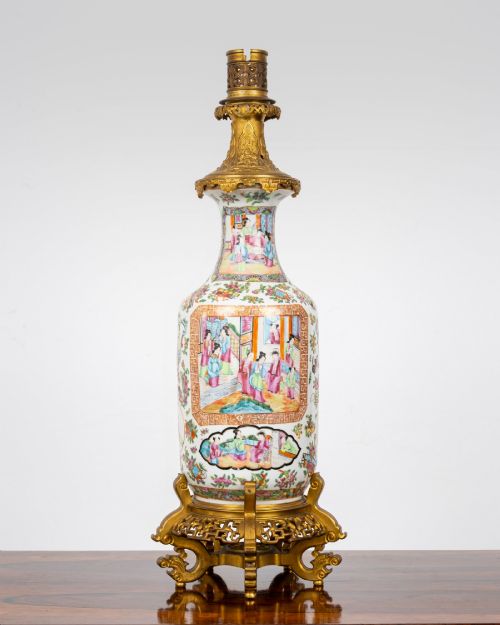
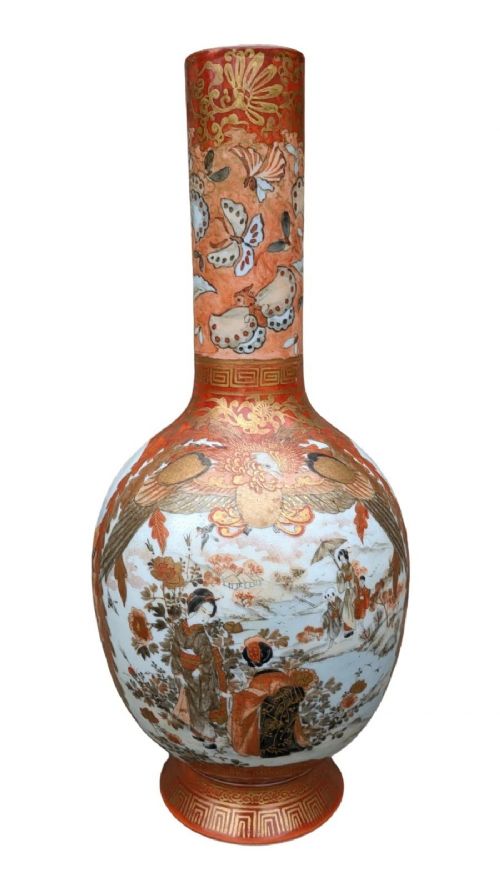
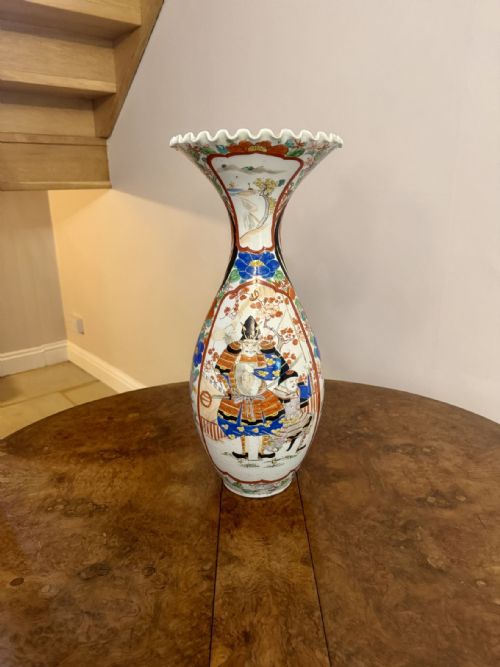
Large Japanese vases carry the rich weight of nineteenth-century export artistry, filling a room with monumental scale and intricate hand-painted detail.
Large Japanese Vases
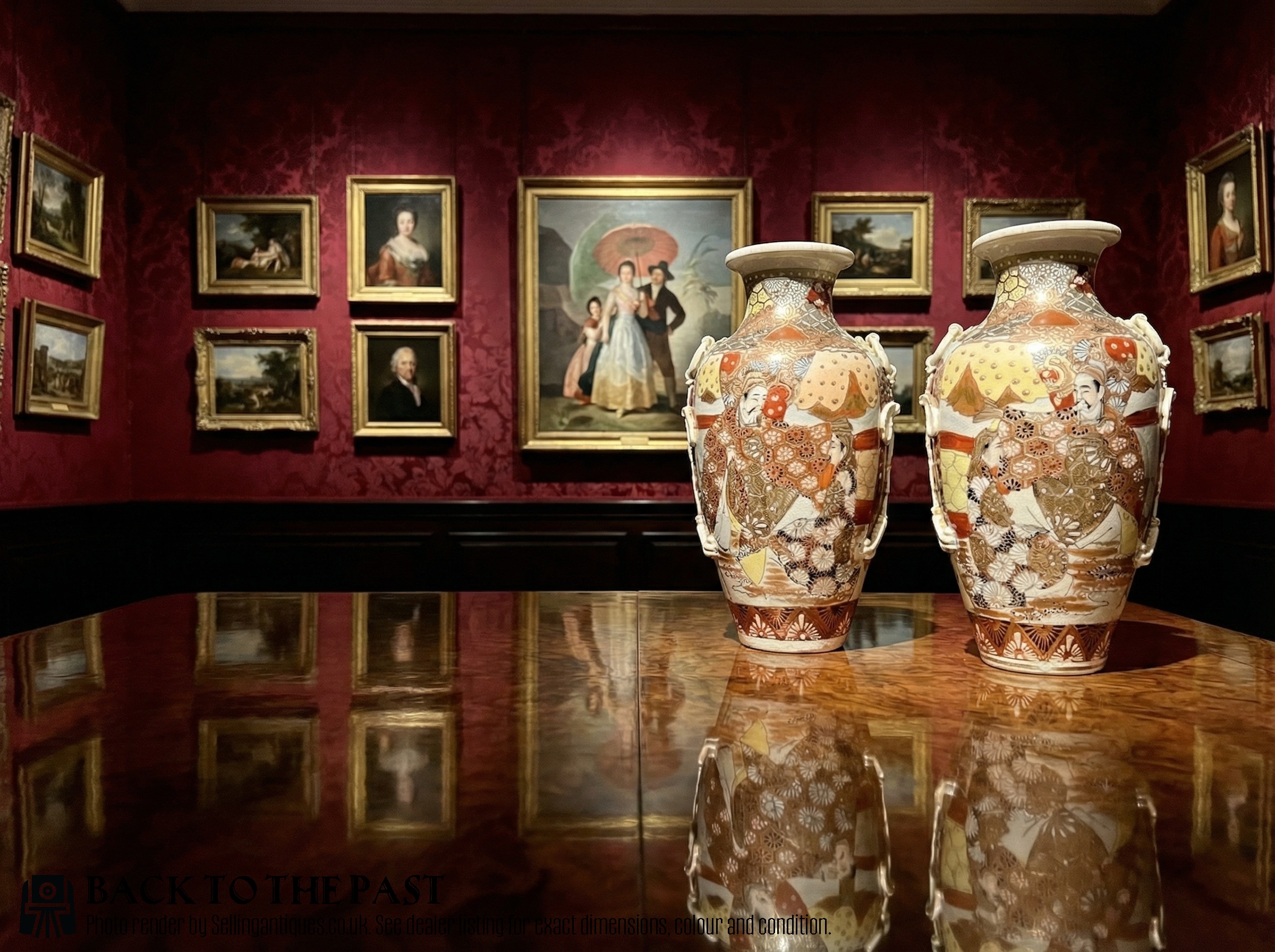
Large Japanese vases encompass floor-standing showpieces, heavy temple vessels, and balanced pairs designed for formal display during the Meiji period and subsequent decades.
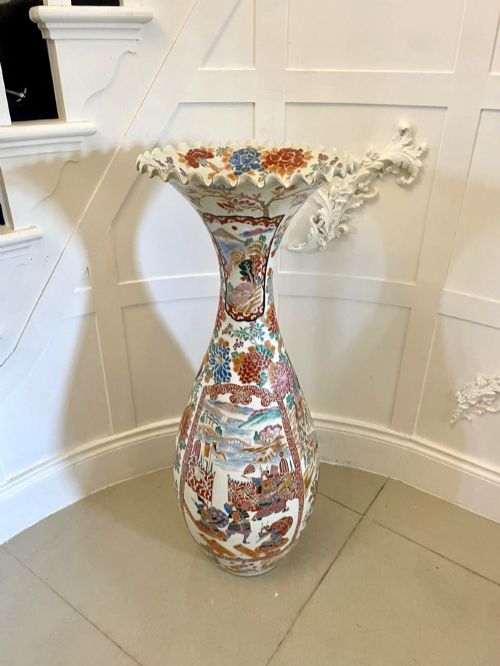
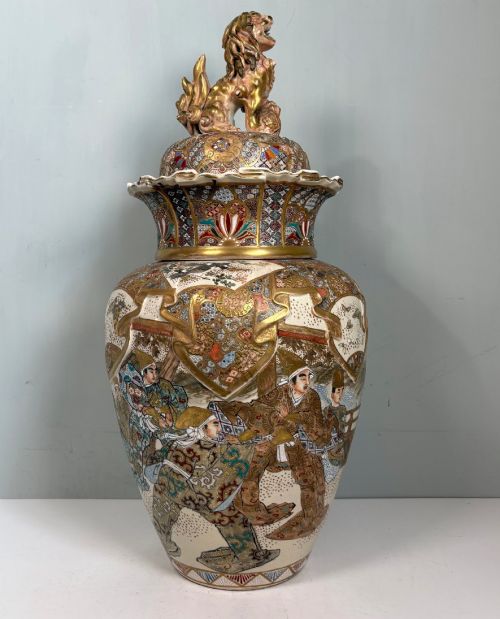
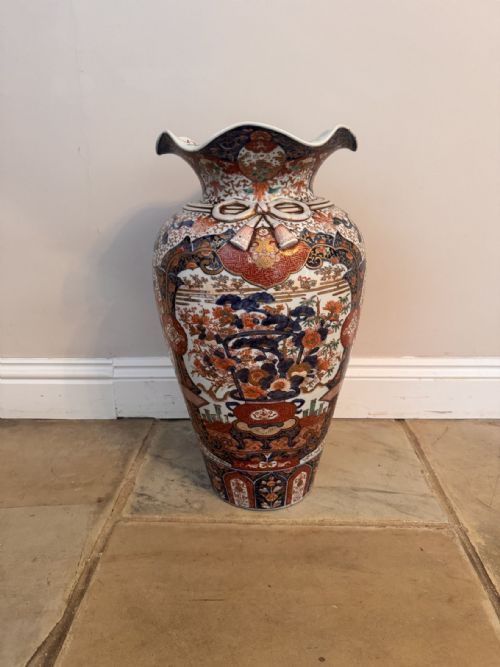
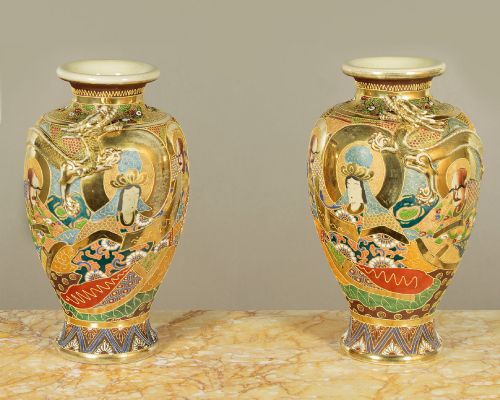
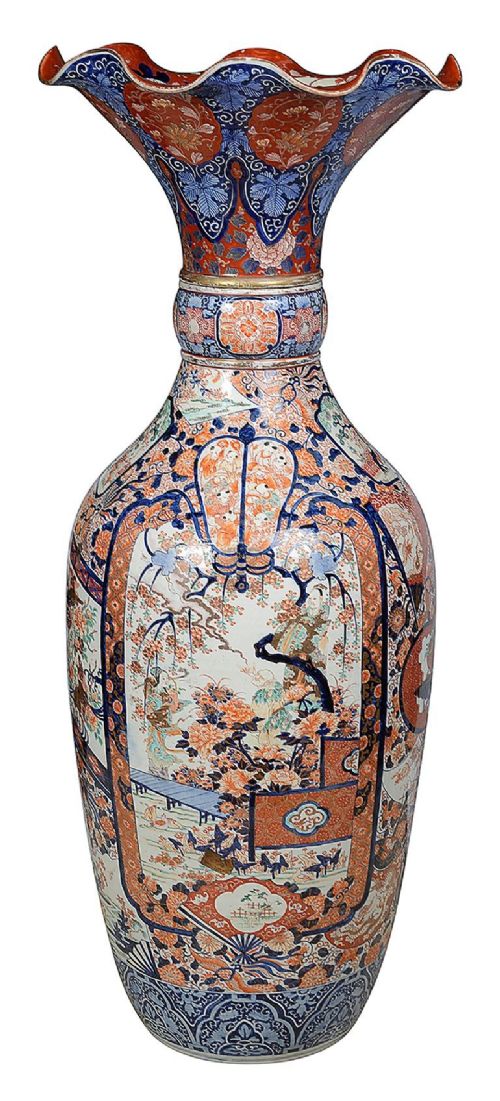
Imari porcelain and cream-ground Satsuma earthenware dominate the selections, alongside substantial bronze and cloisonne urns built to command attention.
Buyers encounter everything from towering lidded jars to wide garden planters, reflecting the diverse output exported to Western markets from the late nineteenth century onwards.
Materials and methods
Potters shaped high-fired porcelain and earthenware bodies, applying cobalt blue, iron red, and heavy gold leaf to create densely patterned surfaces.
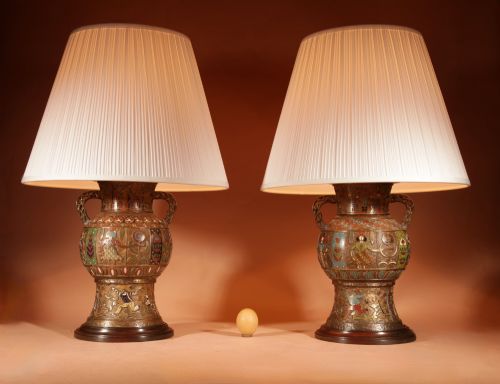
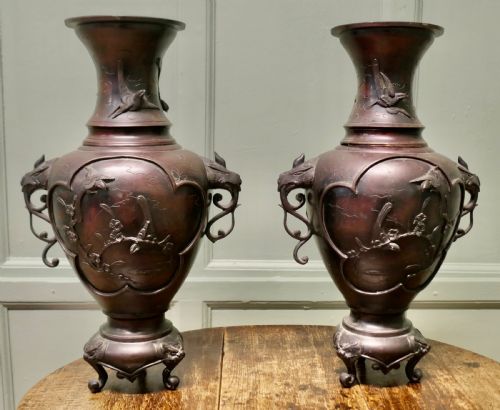
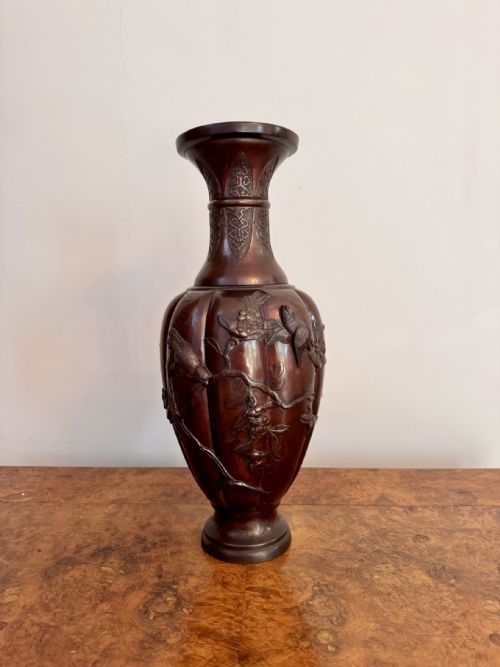
Metalworkers cast bronze and mixed metals, frequently incorporating silver wire cloisonne, inlaid elements, and patinated details to achieve textural depth.
Enamelling techniques such as ginbari revealed translucent red grounds beneath complex floral and avian motifs.
Certain bronze vases feature cheeky applied monkeys clambering up the sides, proving that Meiji metalworkers enjoyed surprising the viewer.
Distinguishing the finer examples
Superior execution relies upon the precision of the brushwork and the complexity of the narrative scenes, where master artists rendered hundreds of distinct figures or intricate dragons without crowding.
The weight and balance of cast bronze vessels, combined with the crispness of inlaid mixed-metal decoration, separate standard production pieces from signed studio works.
Preservation of original gilding and the absence of firing distortions dictate the standing of surviving porcelain and earthenware.
Hotoda·Makuzu Kozan·Kato Sanhei·Ando Jubei·Kinkozan·Suzuki Chokichi·Masayuki·Hamada Yoshifumi
The Large Japanese Vases Glossary
- Imari
- A traditional style of Japanese porcelain featuring a palette predominantly of underglaze blue, iron red, and gilt. These pieces were heavily exported and prized for their vibrant, densely patterned surfaces.
- Satsuma
- An earthenware ceramic type characterised by a crackled ivory glaze decorated with polychrome enamels and raised gold. It became immensely popular for decorative export wares during the late nineteenth century.
- Cloisonne
- A decorative metalwork technique where thin wire partitions form cells that are filled with enamel paste and fired. In Japanese work, this reached high technical perfection with flawless colour transitions.
- Meiji
- The imperial period spanning from 1868 to 1912, marking an era of intense artistic output and international trade. Vases from this time often display extraordinary technical ambition.
- Kutani
- A style of Japanese porcelain known for bold pictorial designs and rich colour palettes, frequently incorporating greens, purples, and extensive gold accents.
Large Japanese Vases: Frequently Asked Questions
How do I identify a Meiji period vase?
Meiji period vessels typically display exceptional technical refinement, complex decorative schemes, and often bear studio signatures or maker marks on the base.
They emerged during an era of significant export expansion when Japanese artisans combined traditional mastery with Western scale.
Where should I display a floor vase?
Floor-standing vessels require stable locations away from heavy foot traffic, such as entrance halls, wide landings, or quiet corners where their height can be appreciated.
Pair them symmetrically if space permits, or let a single monumental piece anchor a room.
What is the difference between Imari and Satsuma?
Imari is a hard porcelain decorated in blue, red, and gold, offering a ringing tone and smooth glaze. Satsuma is an earthenware body with a distinctive ivory crackle glaze designed purely for decorative impact.
Both styles served different aesthetic roles in nineteenth-century interiors.
Are these vases watertight?
Most antique decorative vessels were created for display rather than functional flower arrangement, particularly porous earthenware Satsuma pieces.
Utilising a modern inner liner protects the historic ceramic body if you wish to use them for live botanicals.