




Gilded Bronze Vases
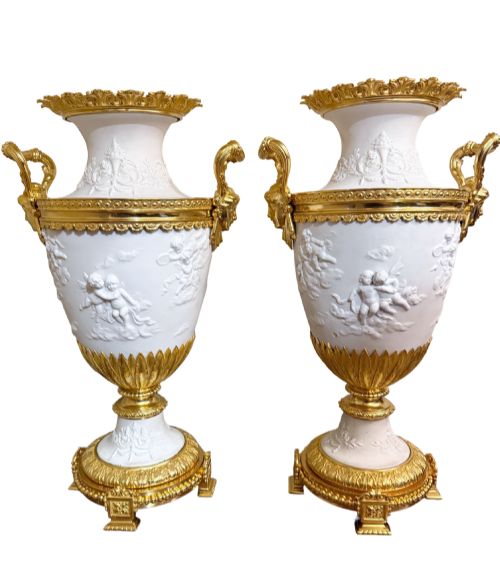
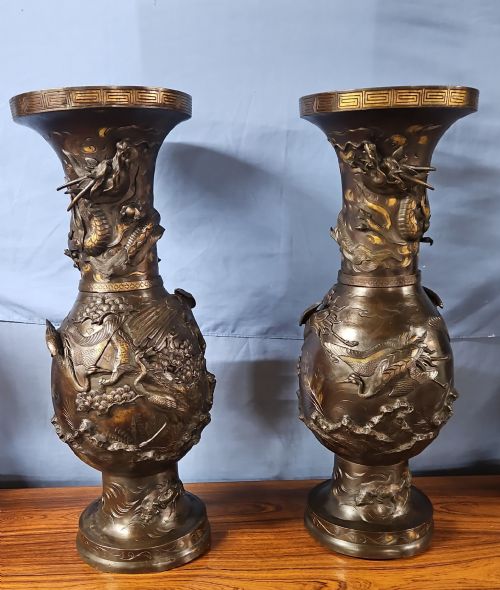
These gilded bronze vases bring weight and surface brilliance to a room, ranging from French porcelain mounts to Japanese metalwork.
Gilded Bronze Vases
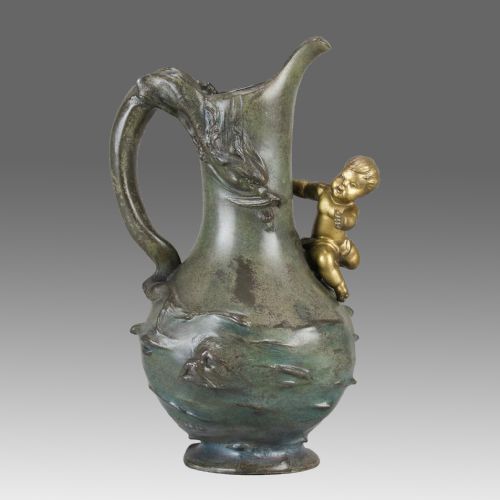
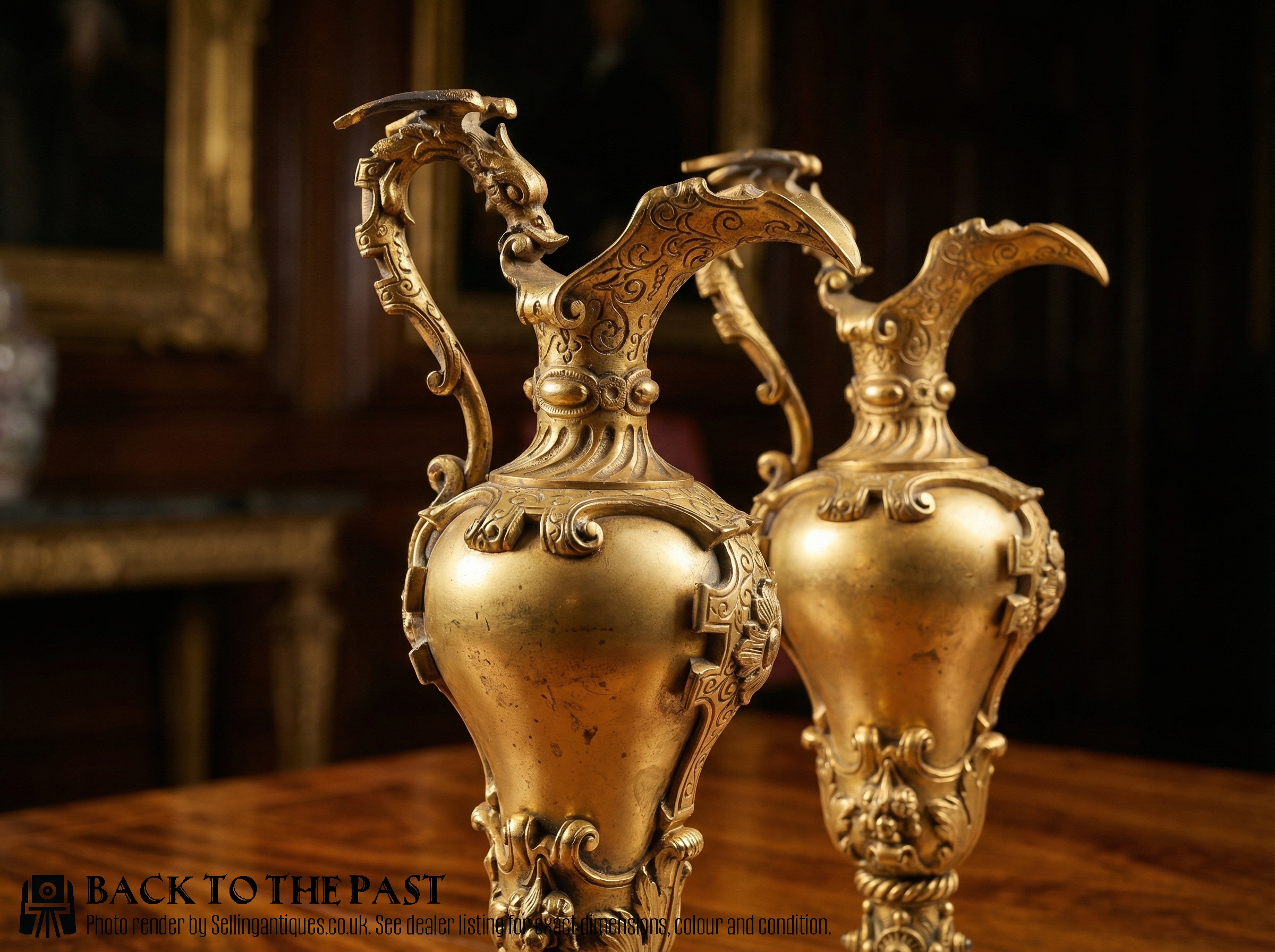
Gilded bronze vases combine cast metalwork with materials such as porcelain, enamel, and marble. When searching for gilded bronze vases, buyers encounter various forms including lidded urns, ewers, and decorative pitchers.
The pieces span the nineteenth century through the early twentieth century. French Rococo Revival, Art Nouveau, and Meiji period examples dominate the selection, alongside Italian Grand Tour pieces.
Pairs appear frequently among the listings, often shaped as campana urns or mounted mantel ornaments. These objects reflect nineteenth-century European and Asian decorative traditions.
How they were made
Craftsmen cast bronze and brass into complex shapes before applying fire-gilding or ormolu finishes. Many items combine these metal mounts with body sections made from porcelain, cloisonne enamel, or marble.
Artisans sculpted figural elements and chased surface details by hand. Techniques from French workshops and Japanese foundries unite metal casting with decorative ceramic bodies.
Listings combine nineteenth-century French porcelain with Japanese Meiji period bronze and cloisonne enamel.
What varies in quality
The crispness of the chasing and the depth of the gilding determine the standard of the metalwork. Better examples show sharp relief in cast foliate and figural motifs rather than soft or blurred edges.
The integration between the bronze mounts and the porcelain or stone body reveals the maker's skill. Superior mounts fit the underlying material precisely, while lesser pieces rely on heavy adhesive or clumsy mechanical fixings.
Charles Korschann·Georges Van De Voorde·Henry Dasson
The Gilded Bronze Vases Glossary
- Ormolu
- A gilded bronze finish achieved by applying an amalgam of gold and mercury to base metal. This technique produced a deep golden lustre on nineteenth-century French mounts.
- Campana urn
- A bell-shaped vessel with a flared rim and footed base. Originating in classical antiquity, these forms reappeared frequently during the Grand Tour period.
- Cloisonne
- An enamelling method where flat metal wires form compartments on a metal base. Artisans fill these cells with glass paste before firing the piece.
- Cassolette
- A decorative vase fitted with a reversible lid that functions as a burner or solid vessel. These items often feature ormolu mounts paired with marble bodies.
- Garniture
- A set of three or more matching decorative vessels designed to sit together on a mantelpiece. These groupings typically comprise a central vase flanked by matching urns or candelabra.
Gilded Bronze Vases: Frequently Asked Questions
How do I clean gilded bronze vases?
Dust the surface gently with a soft dry brush to protect the delicate gold finish.
Avoid commercial metal polishes and water, which can strip the thin ormolu layer from the bronze.
What is the difference between ormolu and gilt bronze?
Ormolu specifically describes the historical mercury-gilding process used on French decorative objects.
Gilt bronze is a broader term encompassing any bronze piece coated in a layer of gold.
Where were these vases made?
Many originate from nineteenth-century French workshops influenced by classical revival styles.
Others stem from Japanese Meiji period metal foundries or Italian Grand Tour centres.
Can these vases hold water?
Most antique pieces function strictly as decorative ornaments rather than functional vessels.
Internal construction and porcelain bodies are often unsuited for holding liquids safely.