
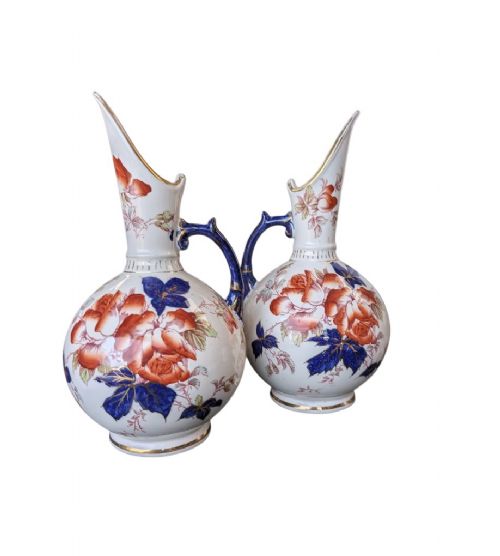


Antique Decorative Ewers
These antique decorative ewers combine sculptural form and historic craft, offering collectors striking display pieces for period interiors.
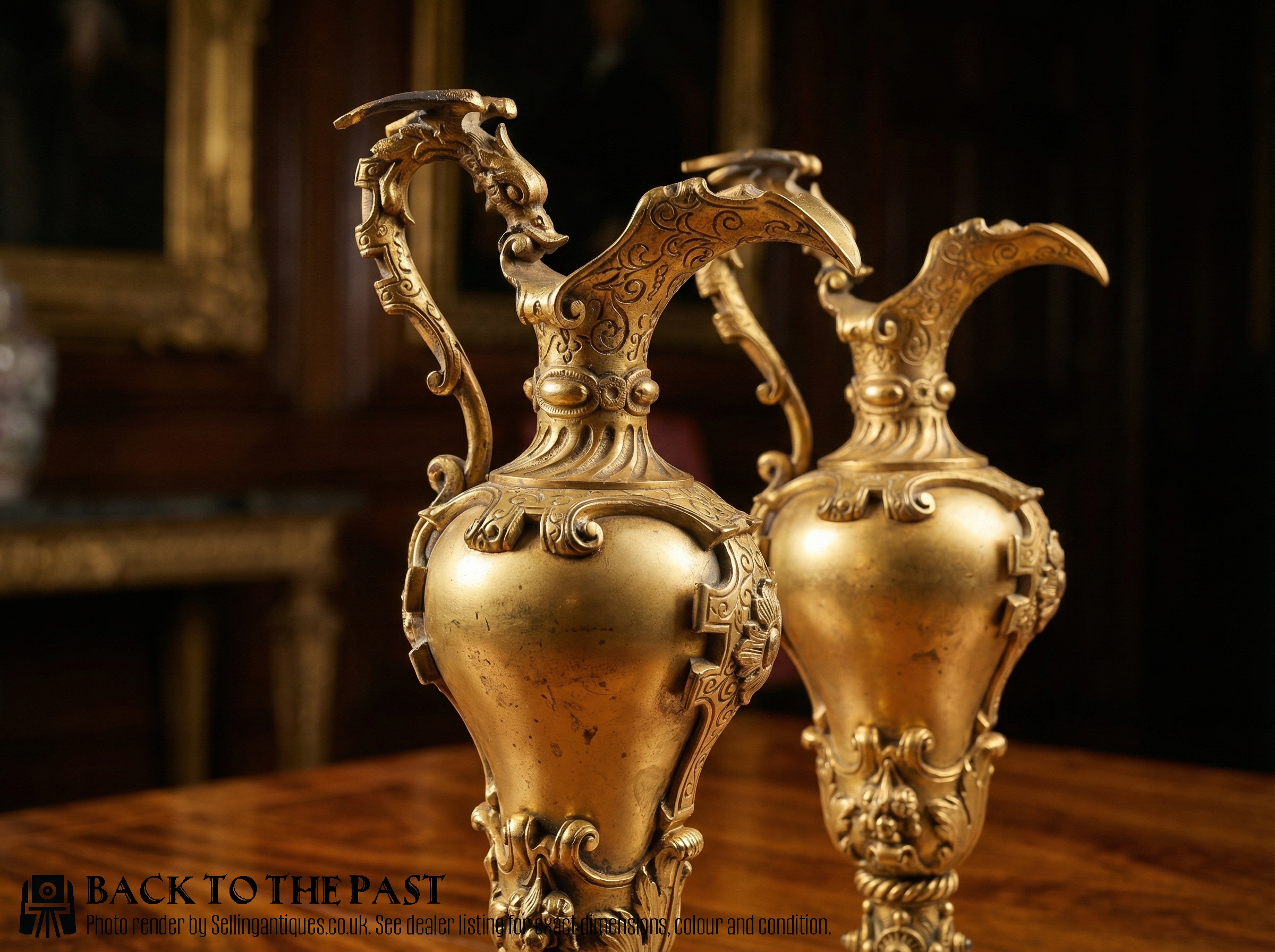
Antique Decorative Ewers
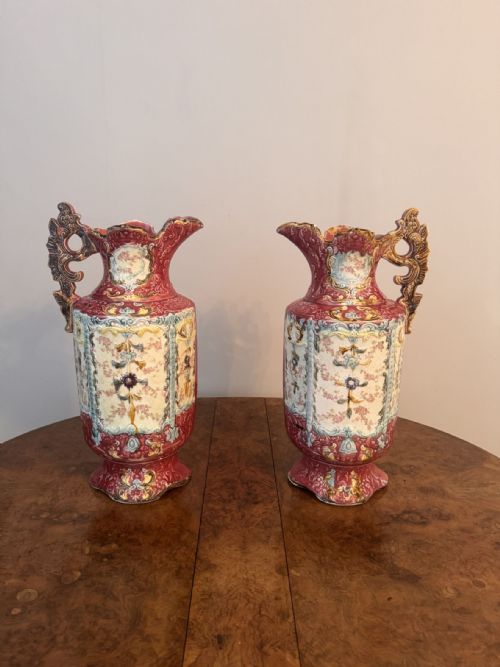
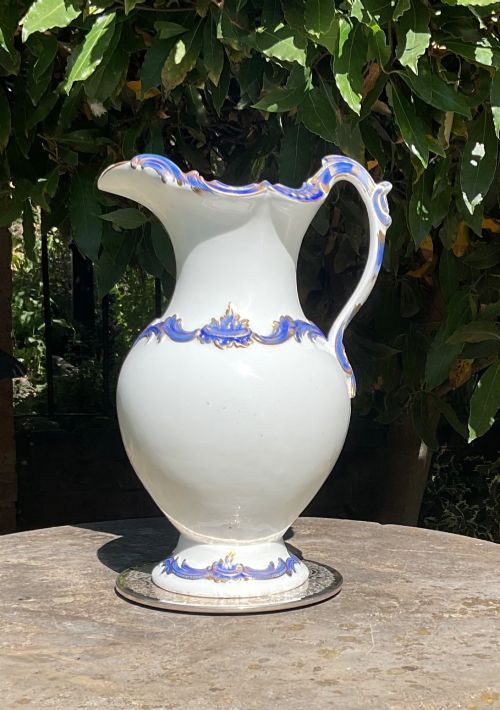
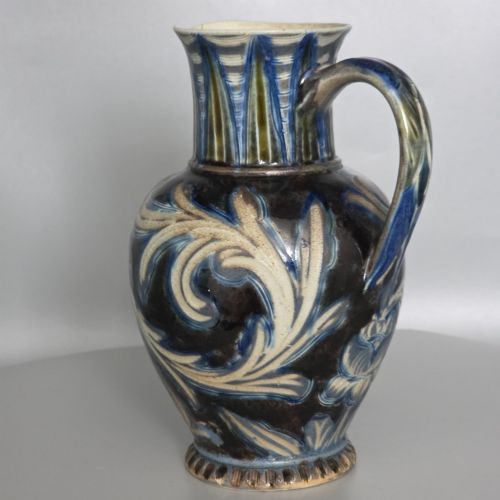
Antique decorative ewers represent a diverse array of sculptural vessel forms primarily rooted in nineteenth-century historicism, aesthetic experimentation, and domestic display. On this page, one most frequently encounters nineteenth-century and early twentieth-century examples spanning Victorian, Edwardian, and Art Nouveau tastes.
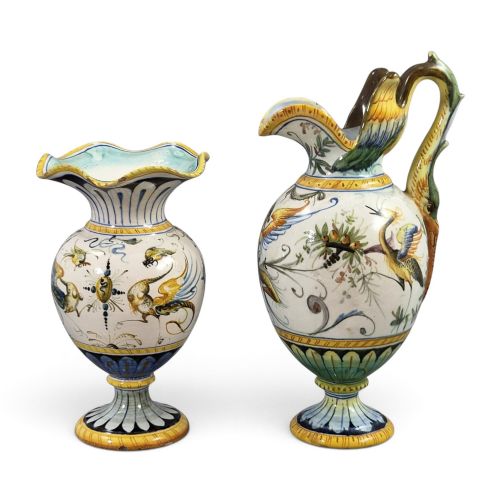
The objects themselves manifest as ewers, pitchers, jugs, and occasional conversions like table lamps, drawing heavily on styles such as Rococo Revival, Neoclassical, and Renaissance Revival. Makers and potteries utilised these vessel shapes as canvases for elaborate ornamentation, transforming utilitarian water carriers into purely decorative ornaments.
Origins stretch across English, French, Austrian, Italian, and Japanese workshops, employing varied ceramic bodies and metals. Buyers searching this category encounter everything from monumental porcelain jugs to patinated bronze pieces designed for grand tour interiors and cabinet displays.
Materials and methods
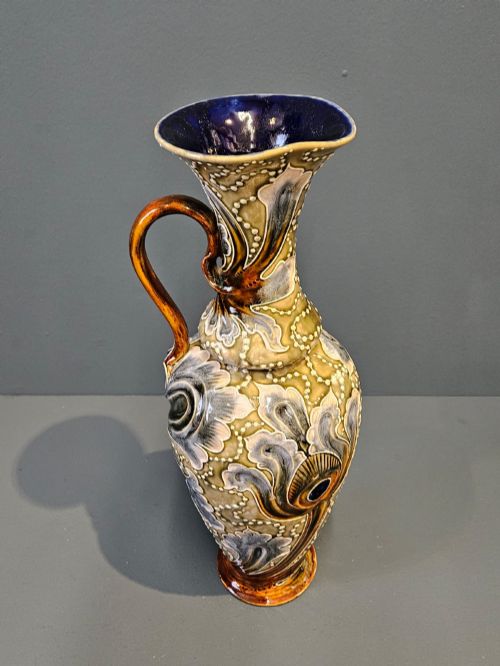
Ceramic bodies such as porcelain, earthenware, and majolica form the foundation of many pieces, often finished with detailed glaze, enamel, and gilding or gold leaf. Potteries applied reticulated piercing, floral encrustations, and transfer-printed or hand-painted panels before high-temperature firing.
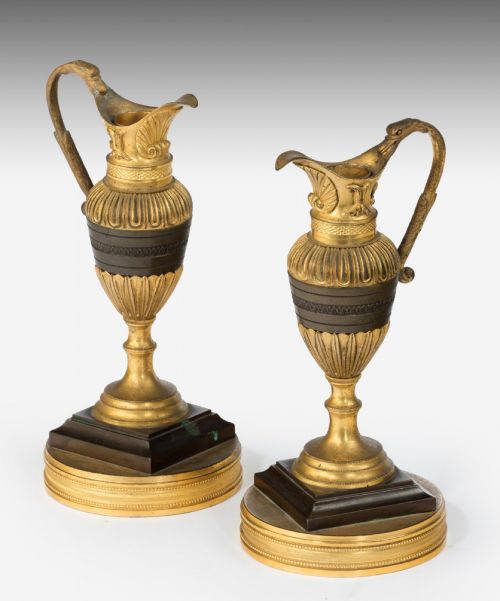
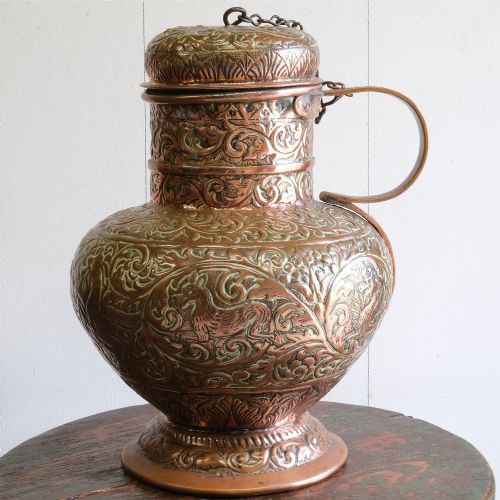
Metalwork pieces rely on bronze, brass, copper, and ormolu, utilising casting and chasing techniques to achieve sculptural handles and relief motifs. Artisans combined patination with parcel-gilt accents, securing figural elements like bacchic figures or dolphins to the main body.
Listings feature works spanning the Victorian and Edwardian eras, incorporating porcelain, earthenware, bronze, and gilt brass.
Distinguishing quality
The refinement of hand-painted detail and the crispness of cast or moulded ornament dictate the upper tier of these vessels. Painted floral panels signed by known decorators or executed with exceptional brushwork separate standard production items from superior works.
Structural ambition and material combination also define the scale of quality, seen in heavy bronze casting, intricate reticulation, and the integration of multiple decorative layers such as raised gold decor and enamel work.
Cantagalli Florence·Doulton Lambeth·Grainger Worcester·Royal Worcester·Choisy-le-Roi·Sarreguemines·Sherwin & Cotton·Doulton Burslem·Rockingham·Royal Crown Derby·Minton·Vienna porcelain·Georges Van De Voorde
The Antique Decorative Ewers Glossary
- Ewer
- A large jug or pitcher with a wide spout and handle, historically used for pouring water but frequently produced in ornamental forms for display. These vessels often feature bulbous bodies and elevated pedestals.
- Ormolu
- Finely ground high-carat gold applied to a bronze base, frequently used for mounts and decorative trim on nineteenth-century objects. The technique yields a rich, golden lustre.
- Majolica
- A type of earthenware coated with a tin-glaze and painted with metallic oxide colours, popular during the Renaissance Revival period. It yields vibrant, glossy surfaces suited to figurative and ornamental vessels.
- Reticulation
- An openwork or pierced lattice design created in ceramic bodies before firing. This delicate technique required immense skill to prevent warping in the kiln.
- Puce mark
- A specific colour of backstamp, often reddish-purple, applied under or over the glaze by factories such as Royal Worcester to indicate production eras. Collectors use these marks to date porcelain pieces.
Antique Decorative Ewers: Frequently Asked Questions
What were antique decorative ewers used for?
While originating from vessel forms designed to hold and pour liquids like wine or water, many nineteenth-century examples served strictly ornamental purposes. They functioned as grand tour display items, mantelpiece ornaments, or focal points in wealthy Victorian parlours.
Over time, some larger specimens were adapted into table lamps or utilised simply to showcase the technical prowess of leading European potteries and metal foundries.
How do I identify a Victorian ewer?
Victorian ewers typically display heavy ornamentation, drawing on eclectic historical revivals such as Rococo, Gothic, and Renaissance styles. Look for robust ceramic bodies with rich gilding, floral panels, or deep relief casting in bronze and brass.
Factory backstamps, registration lozenges, and characteristic nineteenth-century colour palettes further help anchor a piece firmly within the Victorian era.
How should I display ewers at home?
These sculptural pieces suit prominent placements on sturdy sideboards, mantelpieces, or dedicated display cabinets where their height and three-dimensional handles can be appreciated. Because many feature delicate gilding or enamel, keep them away from direct sunlight.
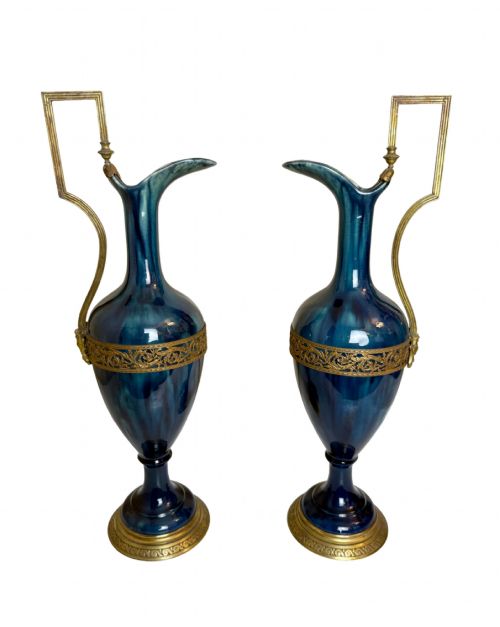
Pairing matching pairs across a symmetrical space highlights their original decorative intent as garniture sets.
Are bronze ewers heavy?
Bronze and brass ewers from the nineteenth century are typically substantial and heavy due to solid metal casting and applied ormolu mounts. This weight provides necessary stability for tall, ornate vessels with prominent handles.
When handling these pieces, support the base rather than the handle to protect historical joins and decorative mounts.