

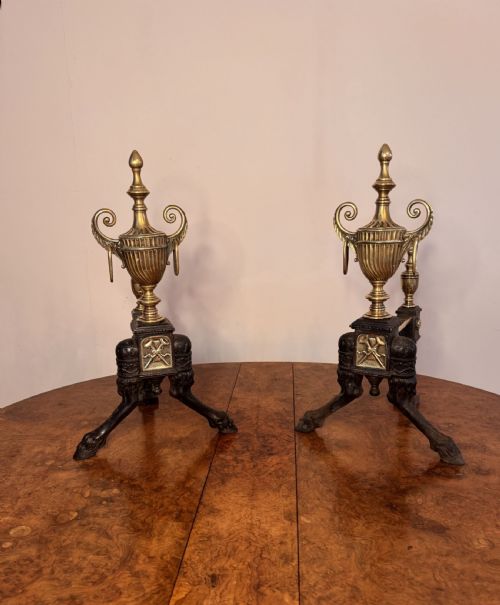
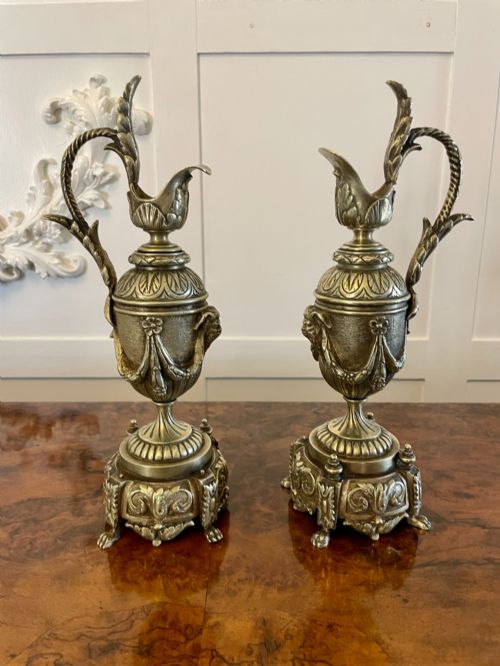
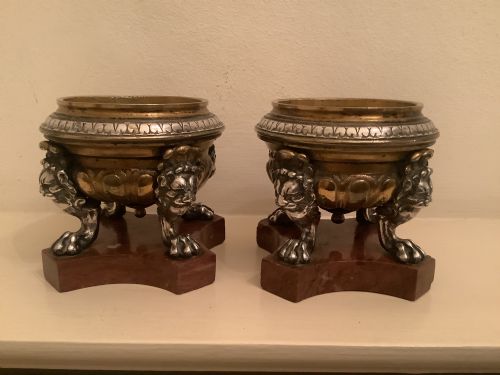
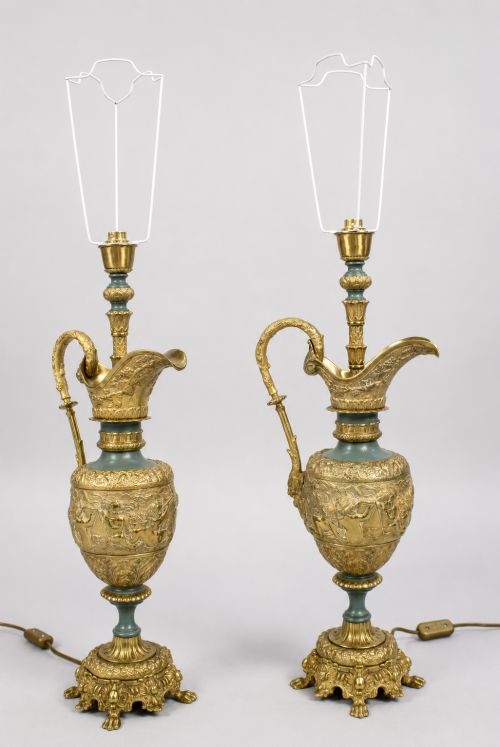
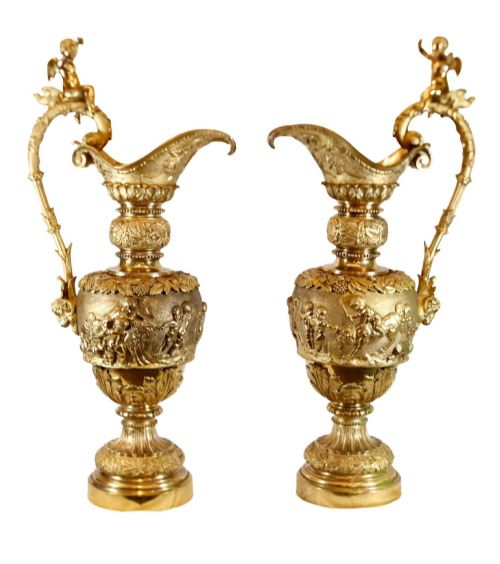


Ornate Metal Urn Pair
An ornate metal urn pair brings monumental presence to a room, combining heavy cast materials with classical form.
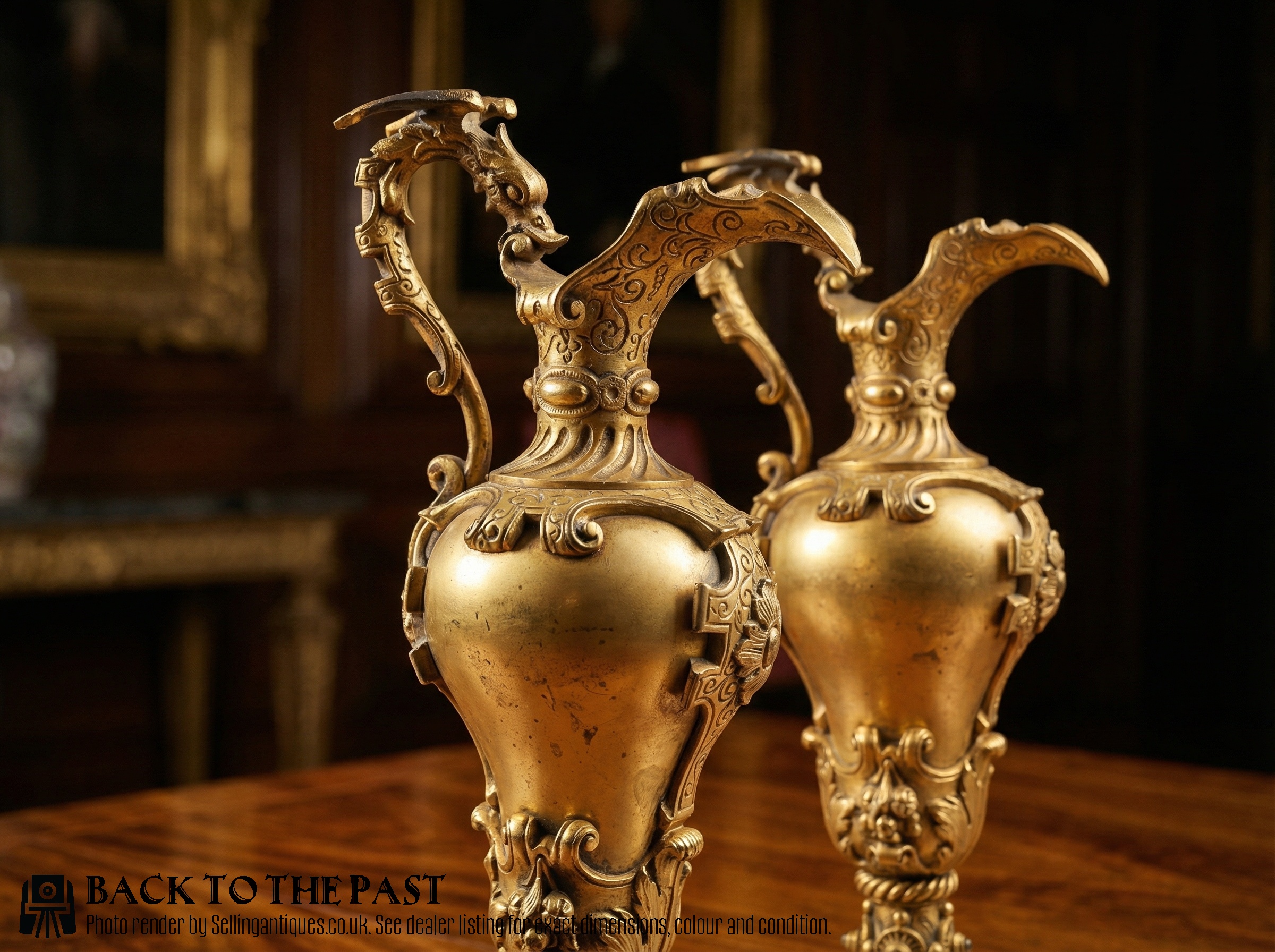
Ornate Metal Urn Pair
An ornate metal urn pair encompasses decorative vessels, lamps, and garden pieces formed from brass, bronze, cast iron, and gilt metal. These matched pairs serve as focal points, drawing the eye through their substantial scale and intricate surface decoration.
The pieces on this page span the nineteenth century into the mid-twentieth century, showing Victorian, French Empire, and Gothic revival styles. Buyers most frequently meet Victorian brass and bronze ewers, alongside cast iron garden urns from later decades.
Forms range from interior decorative ewers and tazzas to large garden pedestals and fireplace accessories. Each pair demonstrates the nineteenth-century taste for classical antiquity reinterpreted through contemporary metalworking techniques.
How they were made
Maker's workshops utilised casting techniques in bronze, brass, and iron to achieve crisp relief and structural weight. Molten metal poured into moulds allowed intricate ornamentation to emerge with high definition across the body of each vessel.
Gilt metal and bronze surfaces often received chemical patination or mercury gilding to enhance tonal depth. Marble bases were cut and polished to provide a stable foundation for heavier metal bodies, particularly in table lamps and tazzas.
Ornate Metal Urn Pair Retail Price Guide 2026
Typical asking prices for ornate metal urn pair among the pieces listed under this phrase on Sellingantiques today, from the lower quarter to the upper quarter. They describe what is for sale here now, not the wider market.
Materials across these listings combine cast metals with carved marble bases and applied gilt finishes.
What varies in quality
The distinction between standard production and exceptional work lies in the sharpness of the casting and the depth of the chased detail. Finer pieces retain crisp definition in high-relief foliage and figural mounts, whereas lesser examples show smoothed contours.
Proportion and material combination also dictate quality, particularly where bronze meets marble or where gilding remains intact. Superior pairs exhibit balanced symmetry and substantial weight without clumsy joins or remedial repairs.
The Ornate Metal Urn Pair Glossary
- Ewer
- A large jug with a wide spout and scrolled handle, frequently produced in matched pairs for decorative display.
- Tazza
- A shallow cup or basin mounted on a stem and foot, often fashioned from bronze and marble.
- Gilt metal
- Base metal treated with a gold-coloured finish or gold leaf to simulate solid precious metal.
- Fire dogs
- Andirons used to support logs in an open fireplace, frequently cast in heavy brass or iron.
- Patination
- The natural or chemical surface coloration developed on metal over time through exposure and handling.
Ornate Metal Urn Pair: Frequently Asked Questions
Where should I display an ornate metal urn pair?
These pairs command attention when placed on heavy sideboards, mantels, or dedicated pedestals where their vertical lines balance the room. Interior examples suit formal reception spaces or studies, while cast iron pieces belong in garden settings.
Because of their substantial weight, ensure the supporting surface is sturdy enough to bear the load safely without risk of tipping.
How do I clean antique brass and bronze?
Dust gently with a soft dry cloth to prevent the accumulation of grime in the recessed details of the casting. Avoid aggressive metal polishes that strip away historic patination and soften the crisp edges of the relief work.
If the metal requires more attention, consult a professional conservator to preserve the original surface finish.
Are these pieces functional or purely decorative?
Most items on this page were created primarily for visual display, though several incorporate functional elements such as lamp fittings or fire furniture. Ewers and decorative urns serve to punctuate interior architecture rather than hold liquids.
Converted lamp pairs combine decorative nineteenth-century metalwork with later electrical wiring for domestic use.
How do I distinguish Victorian revival styles from original classical pieces?
Nineteenth-century revival work typically employs heavier casting methods and incorporates stylistic cues from multiple historical periods within a single design. Look at the construction of handles, bases, and internal fixings to read the manufacturing period accurately.
French Empire and Gothic revival interpretations use specific decorative motifs like acanthus leaves or pointed arches that reflect nineteenth-century taste rather than antiquity.