


Gilt Decorative Jugs
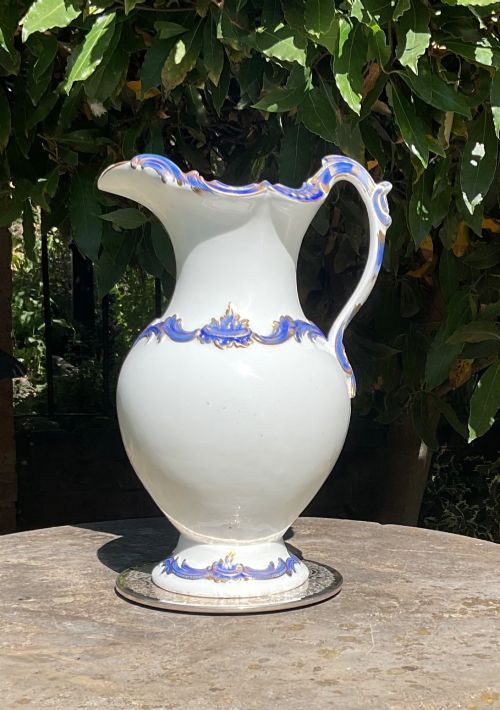
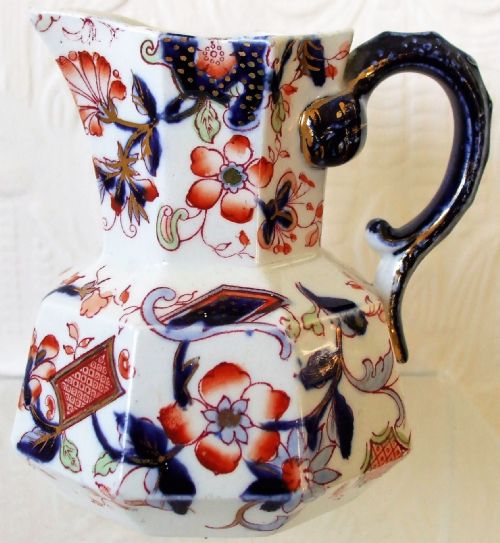
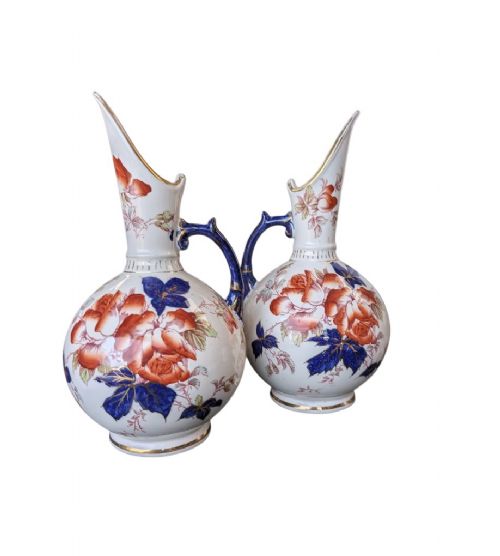
These gilt decorative jugs bring Victorian and Edwardian craftsmanship to any room, combining porcelain and bronze with gold leaf for striking display pieces.
Gilt Decorative Jugs
When you search for gilt decorative jugs, you encounter a diverse range of ornamental vessels spanning the nineteenth and early twentieth centuries. These objects take the form of ewers, pitchers, and jug-vases designed primarily for display rather than domestic service.
The pieces on this page originate predominantly from the Victorian and Edwardian eras, encompassing English fine porcelain, French ormolu, and Japanese-influenced pottery. Makers utilised diverse stylistic movements, from Rococo Revival to the Aesthetic Movement, resulting in heavily decorated surfaces.
You are most likely to meet ceramic bodies enriched with gilding, alongside gilt bronze and ormolu mounts. Forms range from monumental wine ewers to delicate cream jugs painted with fruit.
How they were made
Potters shaped fine porcelain and earthenware bodies before applying intricate glazes, reticulated piercing, and hand-painted details. Workshops then introduced gold leaf, enamel, and liquid gilding to accent handles, rims, and moulded motifs.
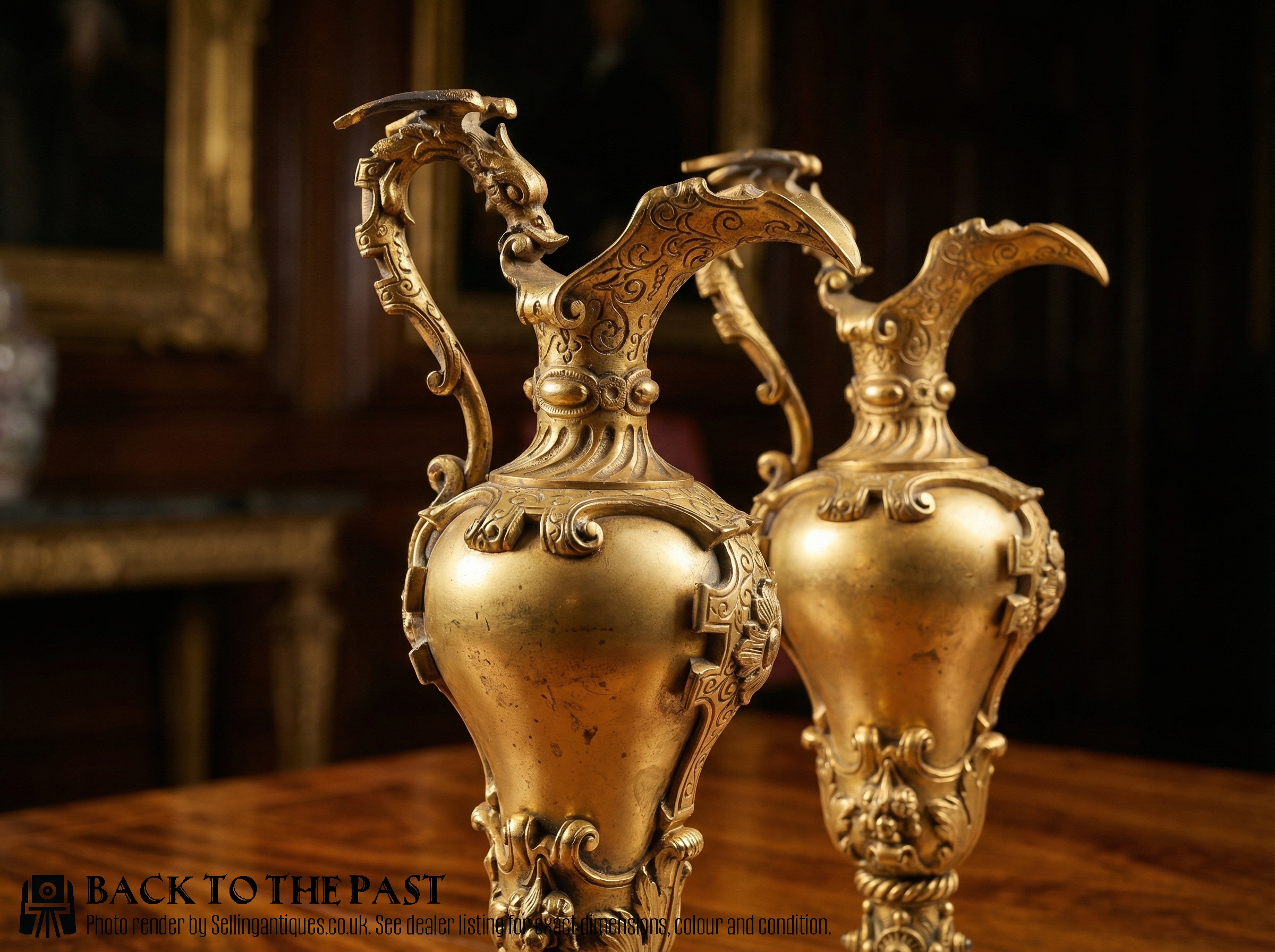
Metal vessels combine cast bronze or ormolu with glass bodies, utilising secure mounts and patinated finishes. Craftsmen chased the metal surfaces to create high-relief ornamentation that complements the underlying ceramic or glass forms.
Listings feature Victorian, Edwardian, and 19th Century pieces utilising porcelain, earthenware, gilt bronze, and ormolu.
What varies in quality
The refinement of the hand-painted decoration and the precision of the gilding set the finer pieces apart. Superior examples display crisp brushwork, particularly on floral or fruit subjects, and thick applications of gold leaf that have retained their burnished lustre.
The complexity of the form and the quality of the mounting determine the tier of the piece. Elaborate reticulation in porcelain or substantial ormolu mounts paired with glass indicate higher manufacturing ambition than standard moulded production.
Keeling & Co.·Grainger Worcester·Choisy-le-Roi·Sarreguemines·Doulton Slater·Doulton Burslem·Royal Worcester·Coalport
The Gilt Decorative Jugs Glossary
- Ormolu
- Finely ground high-carat gold-mercury amalgam applied to a bronze base, creating a rich golden surface found on French mounts.
- Reticulation
- An openwork ceramic technique where portions of the body are cut away before firing to create a lace-like geometric or floral pattern.
- Gilding
- The application of gold leaf or powdered gold to the surface of porcelain, earthenware, or metal to impart a metallic sheen.
Gilt Decorative Jugs: Frequently Asked Questions
Where were these decorative jugs made?
The pieces originate primarily from English potteries, French workshops, and Japanese kilns. English firms like Royal Worcester and Doulton produced fine porcelain and earthenware.
French makers specialised in ormolu mounts and large-scale decorative ewers.
How do I date a Victorian gilt jug?
Dating relies on maker marks, stylistic movements such as the Aesthetic Movement or Rococo Revival, and material composition. Victorian pieces often carry registration numbers or factory stamps specific to the late nineteenth century.
Edwardian examples from the early twentieth century shift toward lighter painted compositions.
Can I use these jugs for liquids?
Most pieces listed are intended strictly for decorative display rather than daily domestic service. Delicate reticulation, delicate hand-painted fruit, and delicate gilt surfaces require careful handling.
Displaying them on stable surfaces away from heavy traffic preserves their fragile porcelain and ormolu structures.