


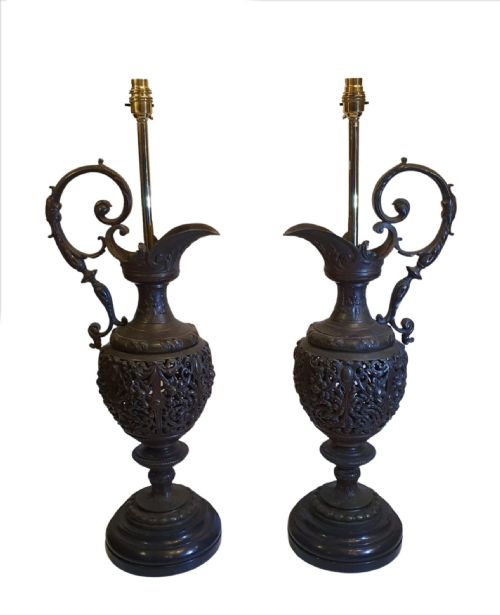


Victorian Bronze Pitchers
These Victorian bronze pitchers, encountered mostly as decorative ewers and monumental table lamps, bring heavy cast metal presence and classical proportions to any room.
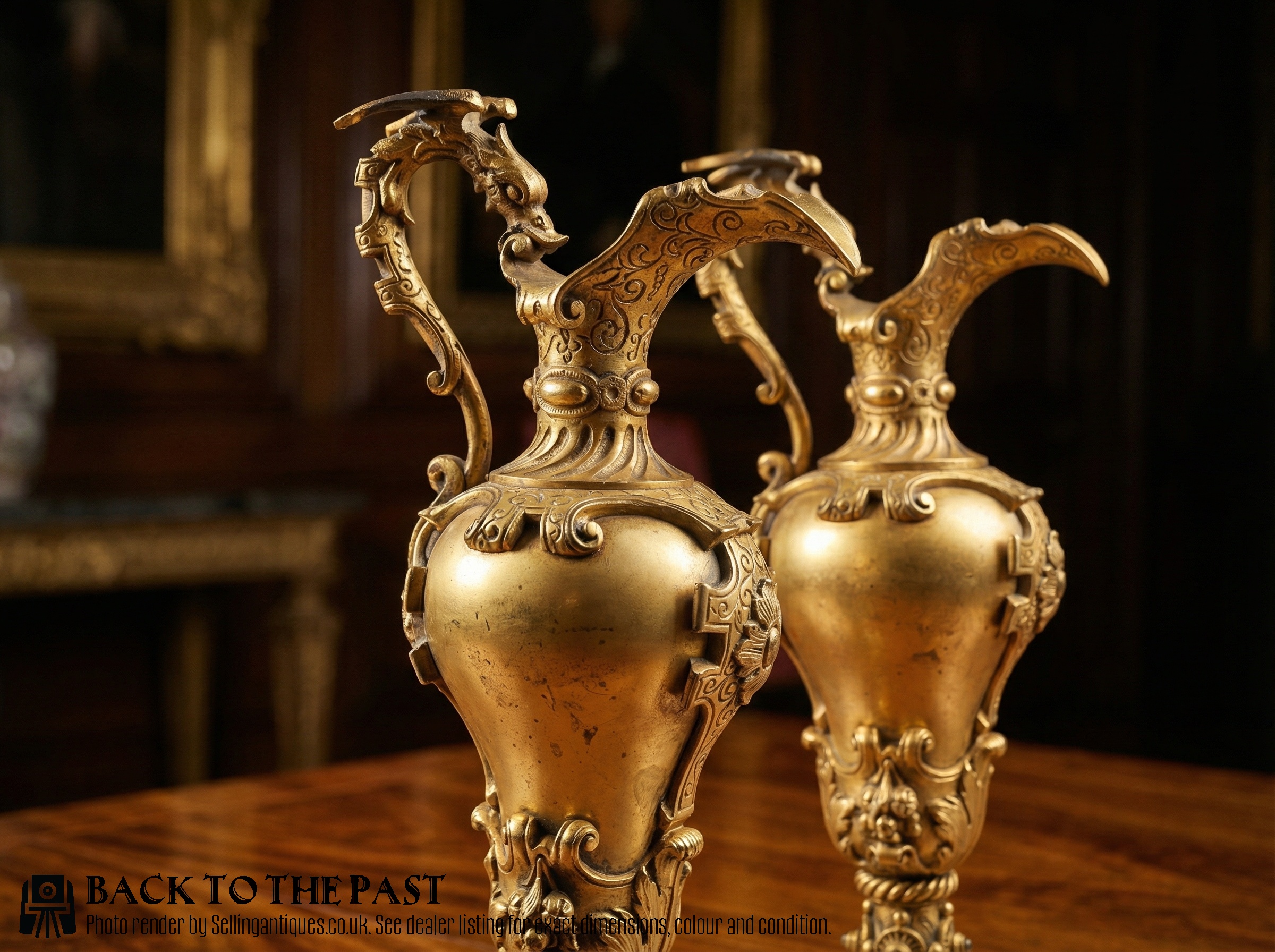
Victorian Bronze Pitchers
When you search for victorian bronze pitchers, you encounter heavy nineteenth century vessels designed primarily for display rather than utility. The listings here comprise ornate ewers, ornamental urns, and heavy metal table lamps dating from the eighteen seventies up to nineteen hundred.
You meet pairs of grand tour pieces alongside single large ewers and gilt metal conversions. The forms span revivalist aesthetics, drawing heavily on classical, rococo, and aesthetic movement design principles.
How they were made
Maker workshops utilised casting methods in bronze, brass, and gilt metal to produce rigid bodies with deep relief ornamentation. Details were chased by hand into the surface after casting to sharpen the scrolling foliage and figural handles.
Gilding and ormolu finishes were applied to highlight specific architectural zones of the ewers and urns. Some pieces integrate contrasting elements of blue glass, porcelain, or stoneware bodies.
Victorian Bronze Pitchers Retail Price Guide 2026
Typical asking prices for victorian bronze pitchers among the pieces listed under this phrase on Sellingantiques today, from the lower quarter to the upper quarter. They describe what is for sale here now, not the wider market.
Some nineteenth century households decided that heavy drinking vessels made exceptional lighting fixtures and wired them for electricity.
What varies in quality
The distinction between ordinary and superior pieces rests on the crispness of the cast relief and the depth of the hand chasing. Softer surface details indicate worn moulds or hurried finishing work.
Proportion and weight also dictate worth, as heavier cast metal bases and balanced handle attachments denote superior construction. Original mercury gilding or intact fire gilt surfaces retain a warmer, deeper glow than later painted coatings.
Frederic Goldscheider
The Victorian Bronze Pitchers Glossary
- Ewer
- A large jug with a wide spout and a large handle, traditionally used for washing or serving wine but made in the nineteenth century purely for ornamental display. These vessels form the backbone of the metalwork offerings.
- Grand Tour
- A cultural journey undertaken by wealthy young Europeans through France and Italy to collect art and antiquities. Pieces made for this trade often replicate classical Roman or Renaissance forms.
- Ormolu
- Finely ground high-carat gold applied to a bronze object using a mercury amalgamation process. This technique creates a rich, durable golden surface layer found on high-end nineteenth century metalwork.
- Aesthetic Movement
- A late nineteenth century design movement that emphasised visual and compositional beauty over narrative subject matter. Objects in this style often incorporate Japanese or eclectic geometric motifs.
Victorian Bronze Pitchers: Frequently Asked Questions
What is a ewer?
A ewer is a large ornamental jug featuring a wide pouring spout and a prominent handle. In nineteenth century interiors, these vessels served as sculptural display items rather than functional tableware.
They often stood on sideboards, mantels, or pedestals as pairs to anchor decorative arrangements.
How are these lamps converted?
Many nineteenth century ewers were later fitted with electrical wiring to serve as table lamps. This conversion usually involved running a cord through the hollow cast bronze body and mounting a lamp holder to the top.
These pieces combine historical metalwork with modern lighting utility.
Where were grand tour pieces made?
Grand tour items were typically produced in workshops across Italy and France to satisfy travelling collectors. Artisans cast bronze and brass vessels to replicate ancient Roman and Renaissance antiquities.
These souvenirs allowed Victorian buyers to display classical taste in their homes.
How do I identify the period?
Period identification relies on casting techniques, patination, and stylistic markers recorded in the titles. Nineteenth century pieces frequently exhibit heavier bronze casting and distinct revivalist decorative motifs.
Examining the base and construction methods helps separate true Victorian production from later reproductions.