


Victorian Brass Jugs
Victorian brass jugs are robust metal vessels forged in the nineteenth century, prized by collectors for their utilitarian warmth and decorative presence.
Victorian Brass Jugs
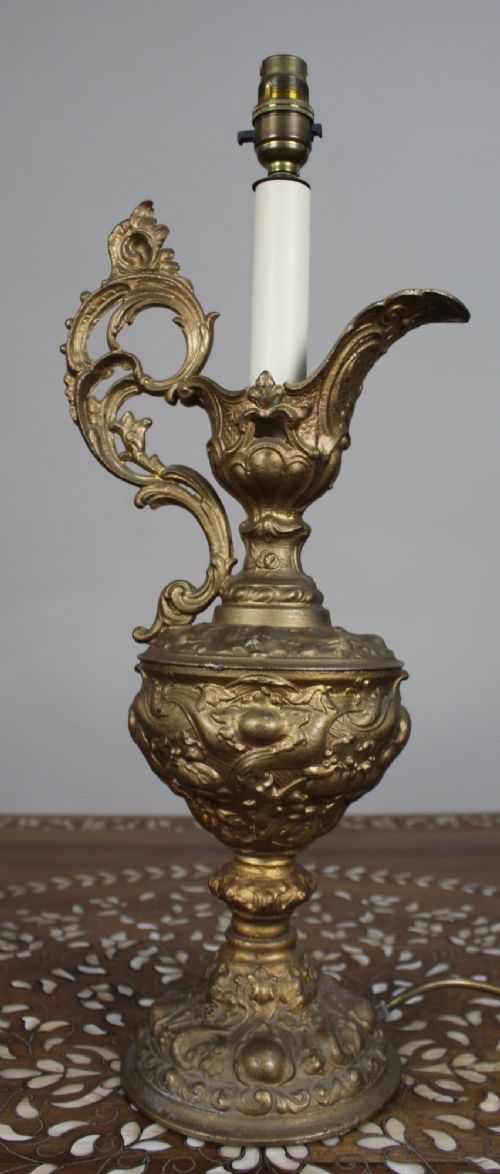
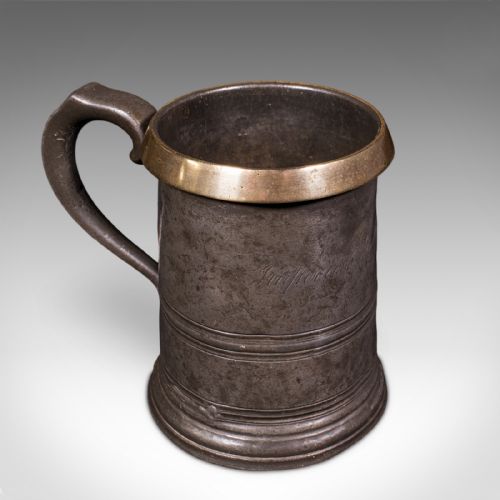
Victorian brass jugs encompass a variety of utilitarian and decorative forms ranging from heavy public house measures to ornate ewers and milk jugs. Buyers searching for victorian brass jugs encounter pieces spanning the nineteenth century alongside related iterations from adjacent decades up to nineteen ten.
The selection frequently includes coopered oak vessels bound with brass, slender water jugs, and mixed metal milk jugs bearing the influence of the Arts and Crafts movement. Formats stretch from tall domestic pitchers to robust one gallon haystack measures.
Origins represented in the inventory extend beyond standard English production to include Bohemian glass and regional workshops across the country. These vessels bridge the gap between heavy industrial utility and parlour display.
Making methods
Makers utilised sheet brass, cast bronze, and heavy copper, frequently combining metals within a single piece such as copper bodies fitted with brass handles. Coopered examples employ staves of oak bound tightly with brass bands in the manner of traditional barrel making.
Surface finishes involve cast ornamentation, hand polishing, and gilt plating on metal ewers and table lamps. Mixed media creations incorporate clear and coloured overlay glass, tinplate, pewter, and oak alongside the primary brass structure.
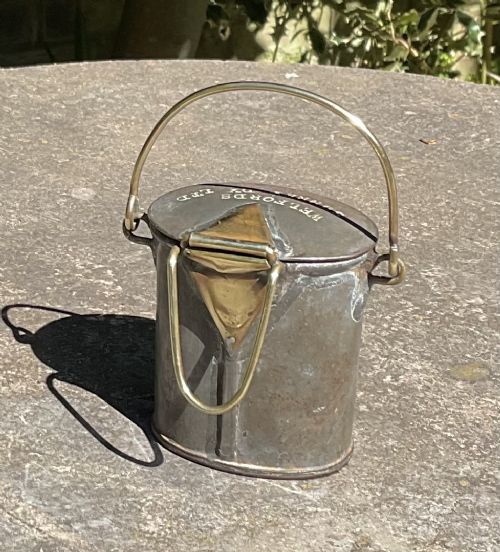
Some dairy jugs carried milk across Surrey before finding a second life on mantelpieces.
Quality variations
The distinction between standard utility items and finer pieces rests upon the crispness of cast ornamentation and the weight of the metal used in construction. Ornate ewers display deeply chased surface detailing and balanced proportions, whereas everyday measures prioritise stout wall thickness and functional stability.
Maker attribution elevates certain examples, particularly where stamped workshop details or established firm marks remain legible on the base or body. The structural integrity of coopered oak staves and the secure fixing of heavy handles also separate superior survivals from ordinary items.
J Bower·H F Fearncombe and Co·Welfords Surrey Dairy
The Victorian Brass Jugs Glossary
- Ewer
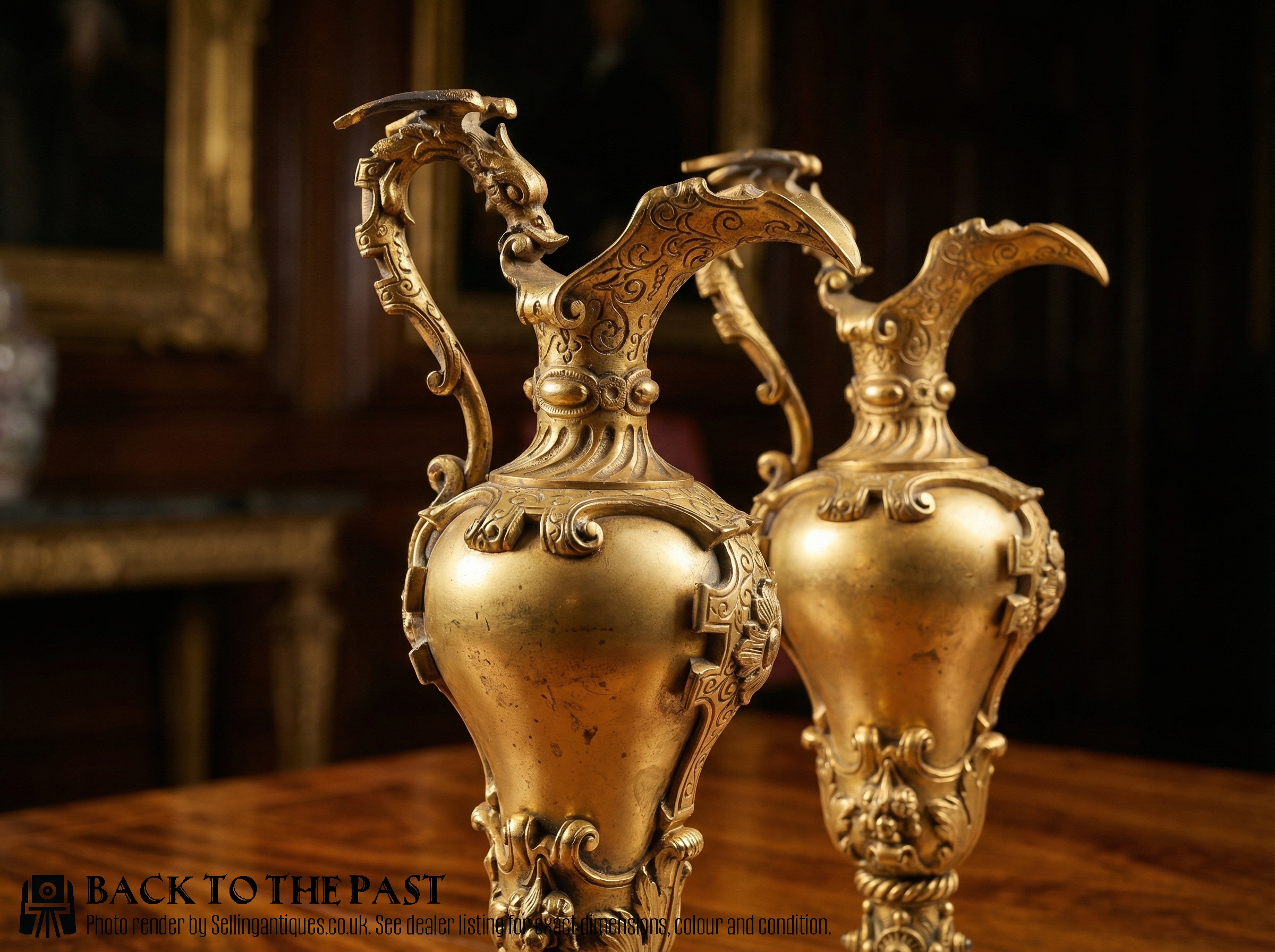
- A large jug with a wide spout and handle, traditionally used for holding water or washing. These pieces often feature ornate cast decoration and prominent bases.
- Haystack measure
- A standard liquid capacity measure characterised by its distinctive tapered profile resembling a stacked pile of hay. These carry official verification marks from their period of active service.
- Coopered
- Built from wooden staves joined side by side and bound with metal hoops. This technique appears on larger vessels utilising oak and brass.
- Breweriana
- Items related to the brewing and serving of alcoholic drinks, encompassing public house tankards and heavy metal jugs. Collectors prize these for their direct connection to hospitality history.
- Overlay glass
- Glass composed of two or more distinct layers of different colours, where the outer layer is partially cut away to reveal the contrasting colour beneath.
Victorian Brass Jugs: Frequently Asked Questions
What were Victorian brass jugs used for?
These vessels served diverse roles ranging from public house liquid measures and dairy milk transport to domestic water pouring and decorative parlour display. Heavier pieces handled daily service in inns and dairies.
Lighter or more ornate examples remained in domestic rooms where their polished metal surfaces added warmth to the interior.
How do I clean brass jugs?
Maintenance requires gentle cleaning with appropriate metal polishes to remove tarnish while preserving the underlying patination accumulated over generations. Avoid abrasive pads that scratch the soft metal surface.
Leaving a moderate layer of age on recessed cast details often enhances the visual depth of decorative nineteenth century pieces.
Are these jugs safe for daily use?
Many historical vessels contain traces of historical solder or interior corrosion from decades of holding liquids in public houses or dairies. Modern usage for consumption is generally discouraged.
They function best as decorative interior objects or dry flower containers within a traditional room setting.
How can I tell the period?
Dating relies upon stylistic markers such as Rococo Revival curves, Arts and Crafts simplicity, or the heavy proportions typical of mid nineteenth century manufacture. Stamped maker marks and capacity stamps provide concrete chronological clues.
Construction techniques like hand beating versus machine rolling also indicate the likely decade of origin.