

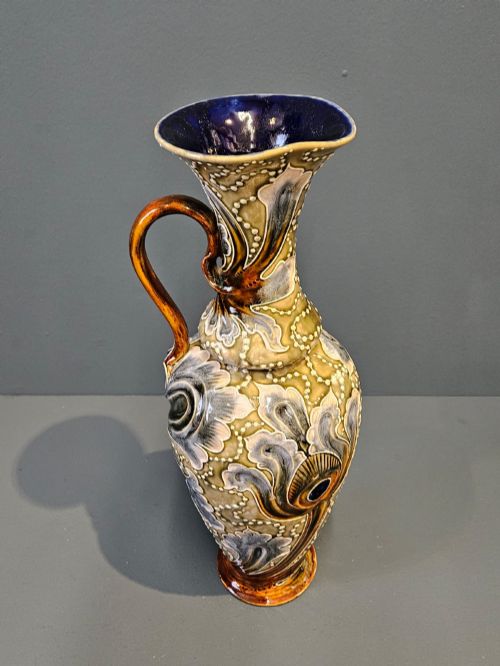
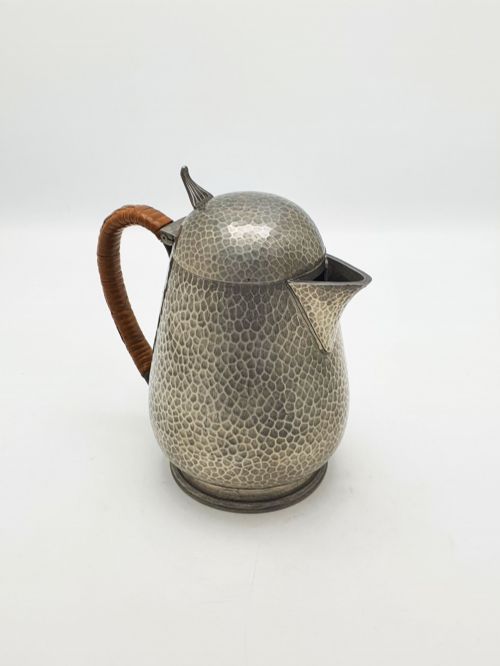
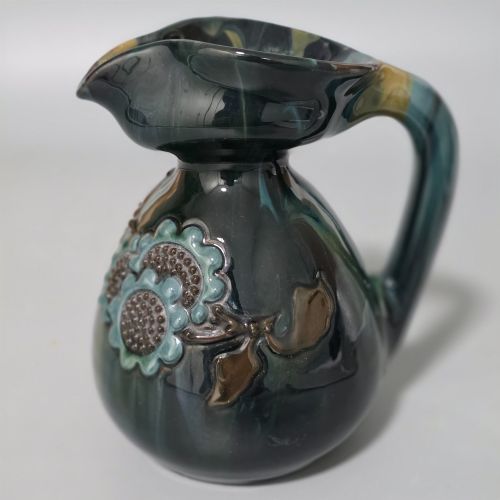


Arts and Crafts Pitcher
These arts and crafts pitcher selections combine utility with hand-wrought design, offering durable metal and ceramic vessels shaped by the late nineteenth and early twentieth movements.
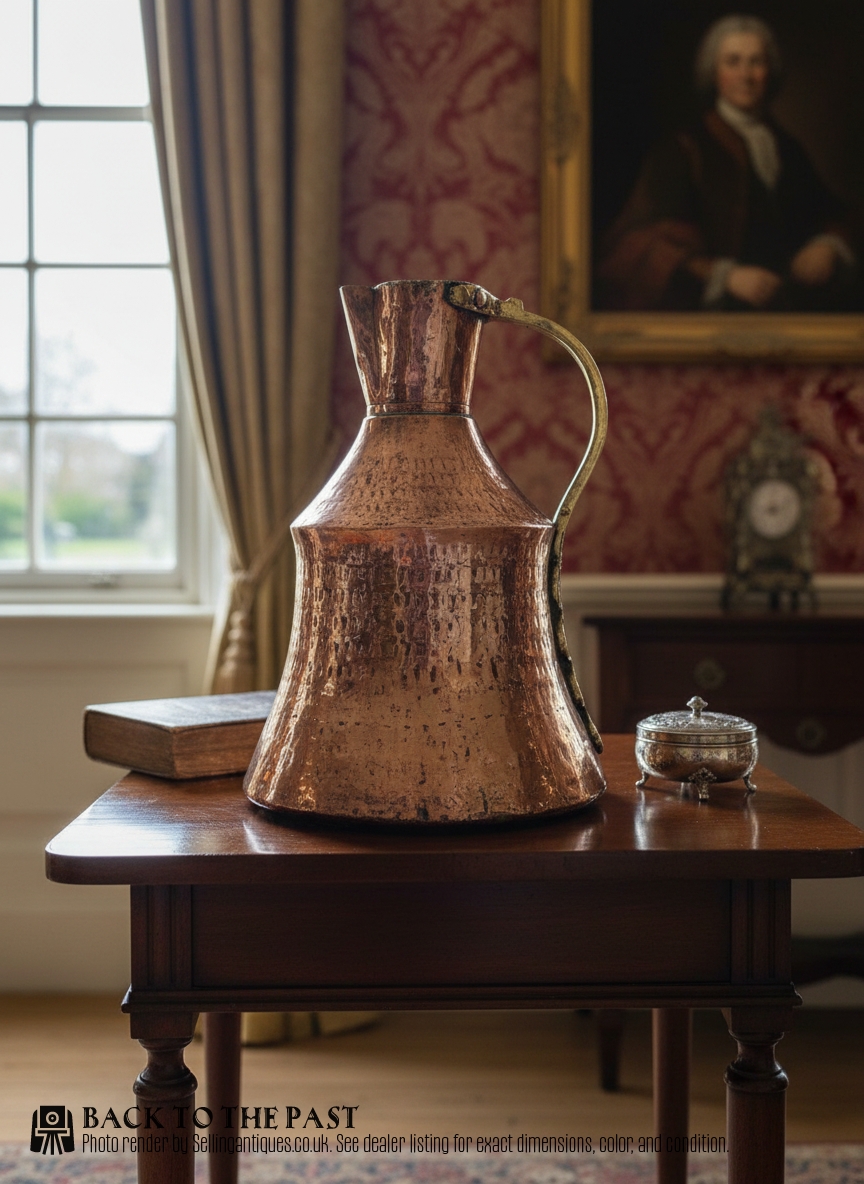
Arts and Crafts Pitcher
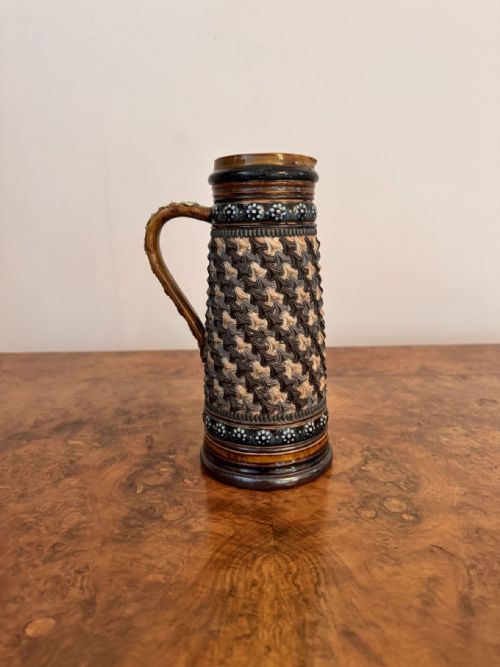
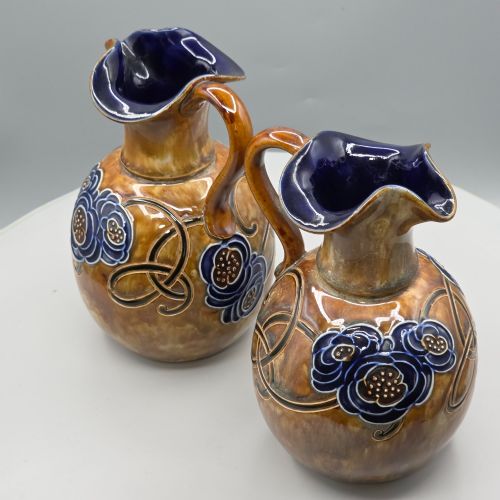
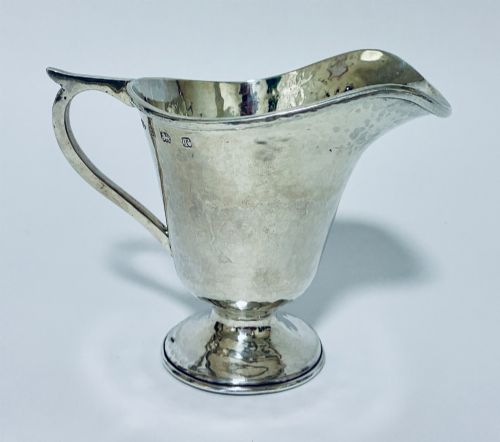
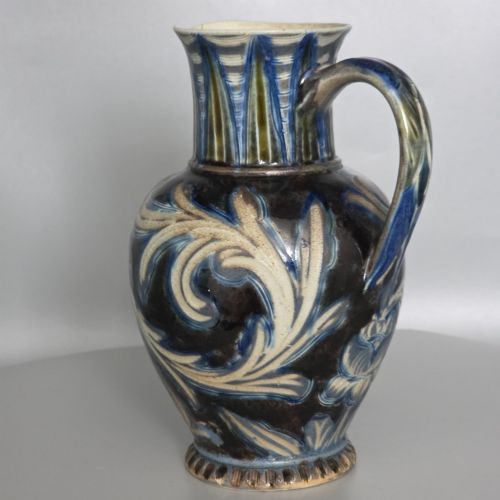
An arts and crafts pitcher serves as a functional pouring vessel defined by the aesthetic reforms of the late Victorian and Edwardian periods, stretching from the eighteen seventies through the nineteen twenties. These pieces encompass various forms including water jugs, cream jugs, claret jugs, and decorative ewers produced in both ceramic and metal. Buyers encounter works shaped by notable potteries and metalsmiths from English workshops.
The ceramic examples frequently appear as salt glaze stoneware or studio art pottery from regional makers, while metal versions utilise copper, pewter, and brass. Many feature applied decoration, incised patterns, or enamel highlights characteristic of the movement's emphasis on craftsmanship over industrial uniformity. They range from domestic cream jugs to large copper flagons intended for functional display.
Materials and Construction
Pottery examples rely on earthenware and stoneware bodies, often finished with salt glazes or studio formulated slips that highlight natural surface textures. Artisans shaped these vessels by hand or on the wheel before applying incised motifs, painted details, or specialised botanical patterns.
Metal vessels draw upon hammered copper, cast brass, and Tudric pewter, frequently joined with riveted seams or fitted with insulating handles made of cane. Workshops utilised metal spinning, hand raising, and enamelling techniques to build substantial jugs with distinct tactile qualities.
Assessing Quality
Quality rests in the precision of the hand-formed details, from the crispness of incised ceramic decoration to the weight and balance of a hammered copper body. Pieces bearing identifiable studio signatures or designer attributions demonstrate superior craftsmanship compared to unmarked commercial output.
The integrity of applied elements, such as enamel cabochons, cane handle bindings, and hinged metal lids, distinguishes standard utility wares from collector-grade studio creations. Well-preserved patinas and deliberate surface finishing further elevate the standing of individual vessels.
Doulton Lambeth·Royal Doulton·Sir Edmund Elton·Joseph Sankey·Archibald Knox·Liberty and Co·Hukin and Heath·Minton·H F Fearncombe and Co
The Arts and Crafts Pitcher Glossary
- Salt Glaze
- A ceramic finish created by throwing common salt into the kiln during high-temperature firing, producing a textured orange-peel surface.
- Tudric Pewter
- A trade name used by Liberty and Co for a high-grade pewter alloy utilised in arts and crafts metalwork.
- Ewer
- A large pitcher with a wide spout and flared base, traditionally used for holding water rather than drinking directly.
- Studio Pottery
- Ceramics produced by individual artists working independently or in small workshops, focusing on unique artistic expression rather than mass production.
Arts and Crafts Pitcher: Frequently Asked Questions
How do I clean an antique metal pitcher?
Clean antique copper and pewter gently with a soft dry cloth to preserve the natural aged patina. Avoid harsh chemical polishes that strip away historical surface character.
For brass and silver-plated examples, use mild soapy water only when necessary and dry thoroughly immediately afterward to prevent spotting.
Were these pitchers used for serving drinks?
Many metal and ceramic vessels served functional roles for water, milk, cream, or wine at the dining table. Claret jugs and water ewers were standard domestic items in households of the period.
Larger flagons and decorative ewers functioned primarily for display or service during formal meals.
How can I tell a studio piece from factory output?
Studio pottery often bears hand-painted artist signatures, monogram stamps, or individual incised marks specific to the maker. Factory items usually display standard impressed registry numbers or company transfer marks.
Hand-wrought metalwork shows subtle individual hammer marks and variations that mass-produced stamped vessels lack.
What is Tudric pewter?
Tudric pewter is a specialised alloy commissioned by Liberty and Co during the early twentieth century. It was favoured for its bright finish and ability to hold intricate cast designs.
Pieces made from this material often incorporate enamel inserts or Celtic-inspired motifs designed by artists like Archibald Knox.