


Brass Water Jugs
Brass water jugs are robust vessels of utility and decorative design, offering tactile warmth and period character to any interior.
Brass Water Jugs
Brass water jugs encompass a range of domestic vessels produced across the Victorian, Edwardian, and Georgian eras, spanning styles from Arts and Crafts to Art Nouveau. Buyers searching for brass water jugs encounter tall everyday pitchers alongside coopered wooden containers bound in metal.
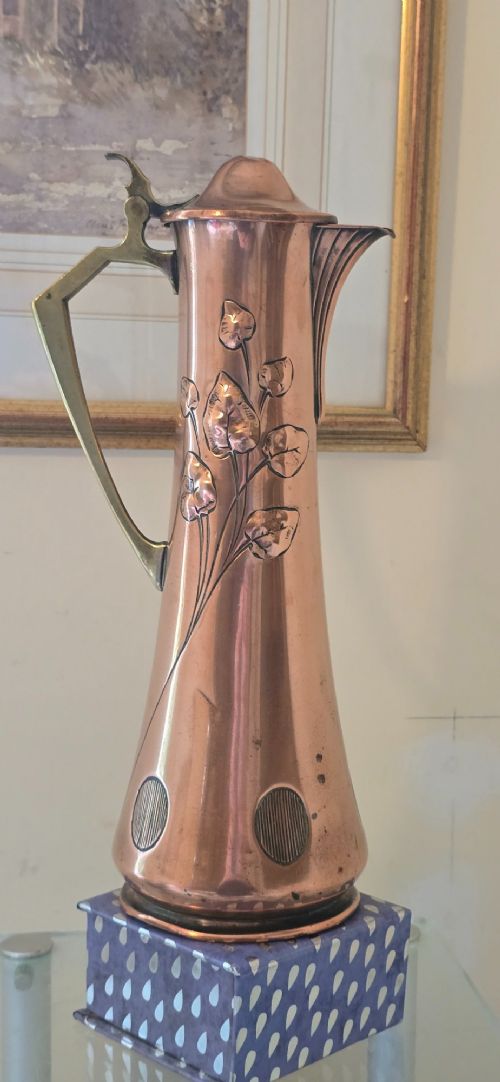
The selections on this page feature forms identified as ewers, watering cans, and pitchers, often combining brass with copper and ebonised wood handles. These pieces originate from distinct periods including the nineteenth and early twentieth centuries, reflecting changing domestic habits.
Makers such as WMF, Orme Evans and Co, and H F Fearncombe and Co appear in the listings alongside unlabelled examples. The typical piece balances functional water carriage with decorative metalwork suited to period and traditional interiors.
How they were made
Construction methods combine sheet metal fabrication with traditional coopering techniques, utilising brass, copper, and oak staves. Metal bodies are shaped and joined with handles and bands, sometimes incorporating ebonised wood for grip.
Surface decoration involves relief work, as seen in floral designs on Art Nouveau ewers, alongside structural banding in brass-bound oak pieces. Materials are chosen for durability in domestic use, pairing warm metallic tones with timber.
Some Edwardian watering cans double as hot water vessels, proving that household chores once required a certain amount of multifunctional multitasking.
What varies in quality
Quality reveals itself in the integration of materials, such as the precision of brass binding on coopered oak bodies and the weight of the metal. Heavier gauge brass and copper indicate sturdier construction designed for sustained daily utility.
The refinement of decorative elements, including hand-finished floral relief work and clean stylistic details characteristic of Arts and Crafts or Art Nouveau design, separates standard utility items from finer workshop production.
WMF·Orme Evans and Co·H F Fearncombe and Co of Wolverhampton
The Brass Water Jugs Glossary
- Ewer
- A large jug or pitcher with a wide spout, traditionally used for carrying water for washing. These vessels often feature decorative handles and pedestal bases.
- Coopered
- Built from vertical wooden staves fitted together and held tightly by metal bands, a method commonly used for wooden buckets and jugs. This technique provides structural strength through interlocking wooden joints.
- Arts and Crafts
- A design movement valuing handcraftsmanship, simple forms, and honest materials over mass production. Pieces from this period frequently display visible construction details and restrained ornamentation.
- Art Nouveau
- A style defined by flowing, organic lines and floral motifs, popular around the turn of the twentieth century. Metalwork in this style often incorporates asymmetrical plant and flower reliefs.
- Pitcher
- A large container with a handle and a lip or spout for pouring liquids. In metalwork, these range from plain utility vessels to decorative serving pieces.
Brass Water Jugs: Frequently Asked Questions
What were brass water jugs used for?
These vessels served practical household tasks such as carrying water for washing, bathing, or general domestic chores before modern indoor plumbing became universal. Many designs were intended for direct use in bedrooms and living spaces.
Over time, sturdier metal and wooden variants also found roles in dairy work, gardening, and general liquid storage. Their decorative qualities meant they frequently transitioned from utilitarian objects to displayed interior items.
How do I date an old jug?
Dating relies on stylistic markers, construction methods, and maker marks associated with specific manufacturing periods. Victorian and Edwardian examples often display distinct design influences like Arts and Crafts or Art Nouveau.
Earlier pieces from the Georgian era tend toward simpler, heavier copper and brass forms without the ornamental relief work seen in later decades. Comparing the materials and fastening techniques helps narrow down the production era.
How do I clean brass and copper?
Cleaning depends on whether you prefer to maintain a bright, polished surface or preserve the darker natural patina accumulated over decades. Gentle cleaning with appropriate metal care products removes active tarnish without stripping historical character.
Abrasive cleaners should be avoided to protect engraved details, relief work, and soldered seams. Regular dusting and occasional mild washing generally suffice for domestic display pieces.
Where were these metal vessels made?
Production centres included specialised metalworking factories and workshops across Britain, with notable makers operating in industrial hubs like Wolverhampton. Continental manufacturers such as WMF also produced metalware exported for domestic use.
Regional metalworking traditions influenced the choice of materials, combining local timber like oak with sheet brass and copper. Factory production existed alongside smaller specialist metal shops.