
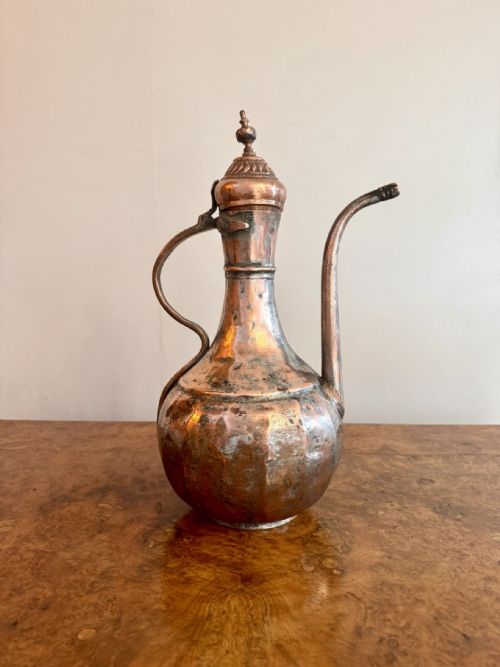


Antique Metal Ewer
An antique metal ewer brings sculptural form and historic weight to a room, ranging from grand Victorian display pieces to intricate Middle Eastern vessels.
Antique Metal Ewer
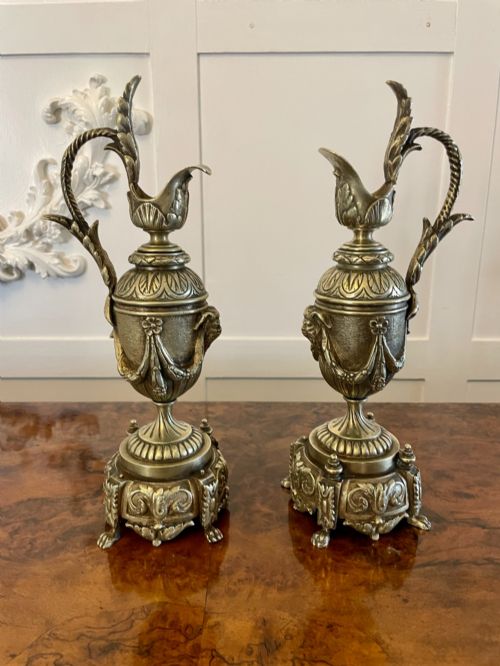
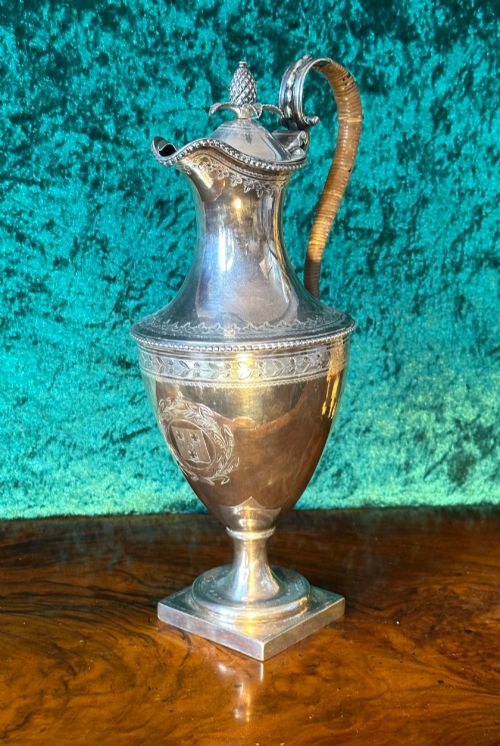
When searching for an antique metal ewer, collectors encounter a diverse array of pouring vessels spanning centuries and continents, from utility jugs to purely decorative items. The pieces on this page lean heavily towards nineteenth-century European production, including ornate Victorian brass and bronze examples designed purely for display.
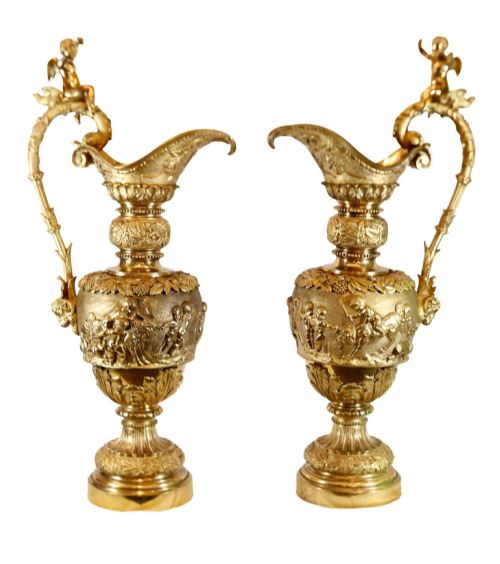
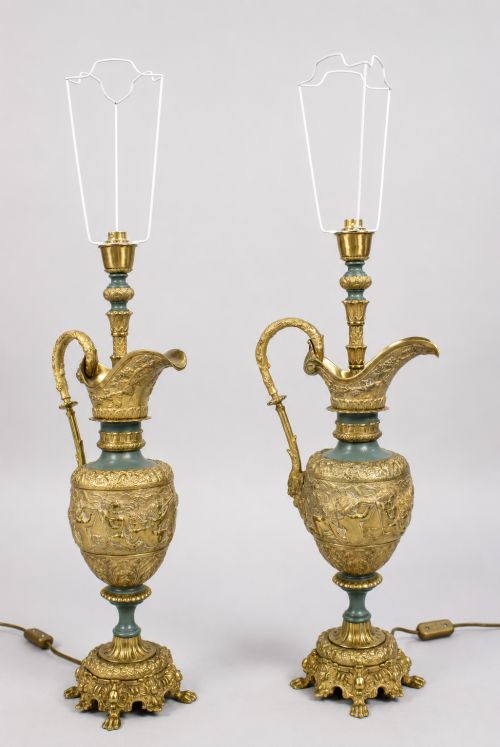
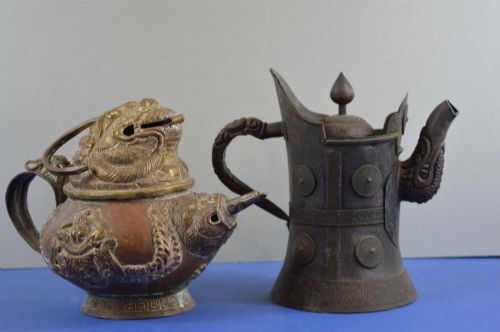
Alongside European decorative works, the selection includes distinct regional traditions such as Ottoman and Middle Eastern copper coffee pots, Tibetan ceremonial vessels, and classical Italian Grand Tour souvenirs. Forms vary from monumental French gilt jugs featuring classical figures to domestic Georgian copper pitchers and converted table lamps.
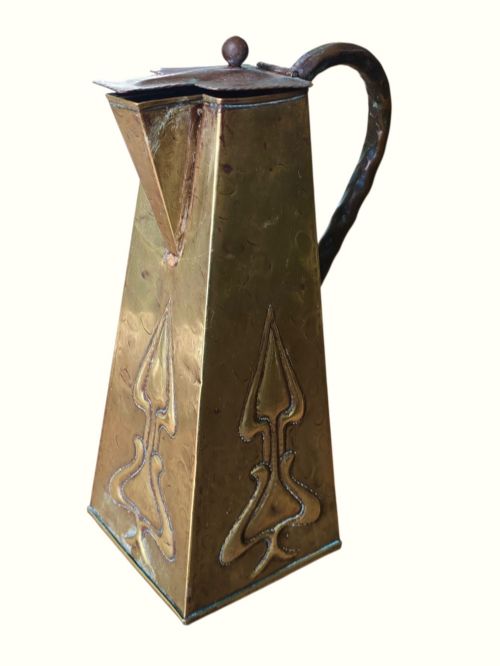
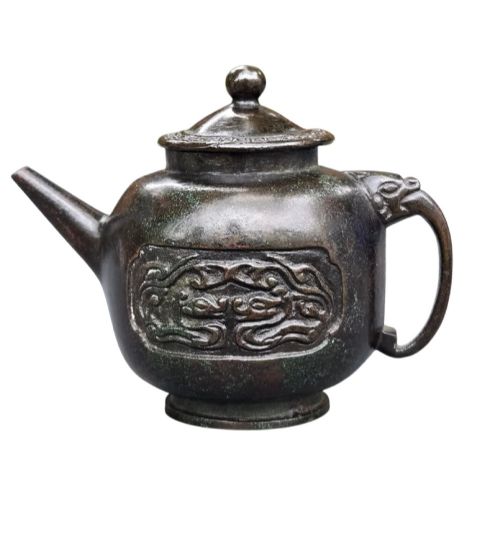
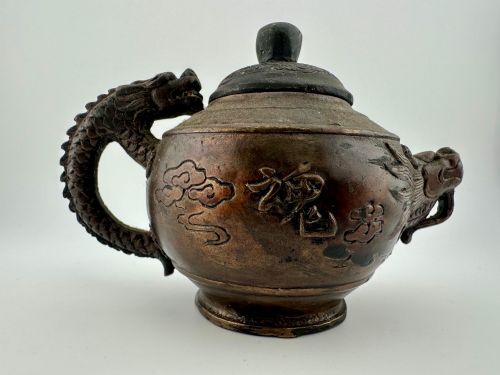
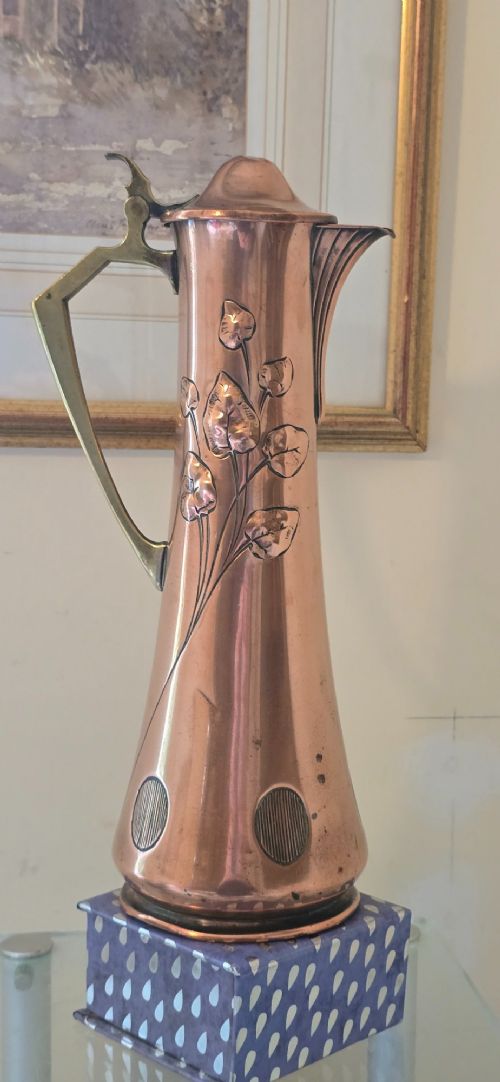
Eastern influences also appear through Chinese bronze teapots and water droppers, alongside German Art Nouveau pewter and copper pieces from makers like WMF. Buyers will find that many items function as ornamental vases or lamps rather than practical pouring vessels.
Materials and construction
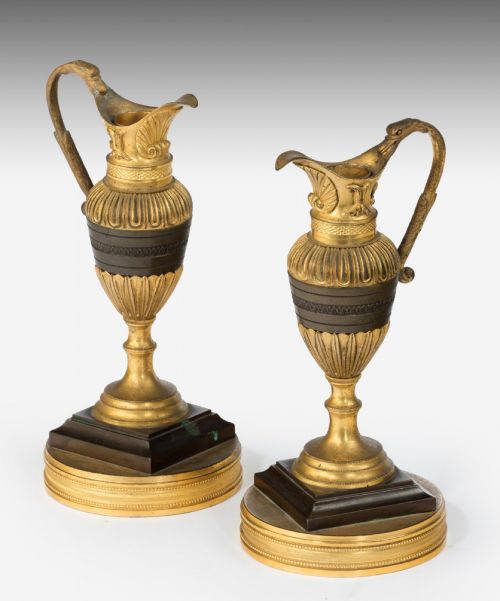
Metalworking techniques define these pieces, with casting, hammering, and metal inlay forming the primary methods of creation. Bronze and brass serve as the structural foundation for many European and Asian pieces, often finished with fire gilding, ormolu, or silver plating to enhance the surface texture.
Copper and pewter appear frequently in domestic and Art Nouveau examples, allowing makers to achieve smooth contours or hammered relief designs. Details such as handles and spouts are frequently cast separately as figures or foliage before being joined to the main body.
Judging craftsmanship and finish
Quality in these vessels rests upon the crispness of the casting and the depth of the chasing work on the metal surface. Superior examples display finely articulated figural handles, such as classical deities or marine creatures, rendered with anatomical clarity rather than soft, mass-produced blurriness.
The integrity of the material and the subtlety of the patina further distinguish finer items from simpler utilitarian wares. Heavier gauges of bronze, brass, and copper, combined with balanced proportions and secure joints, mark the distinction between high-status ornament and standard production.
WMF·Georges Van De Voorde·H F Fearncombe And Co
The Antique Metal Ewer Glossary
- Aftaba
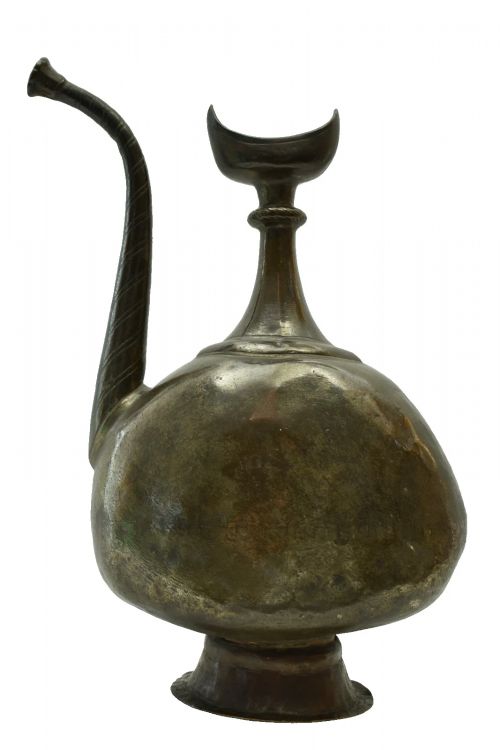
- A traditional metal ewer used in Islamic cultures for ritual washing or serving water. These vessels typically feature a long spout and a slender neck.
- Ormolu
- Finely ground high-carat gold applied to a bronze base through a mercury amalgamation process. This technique imparts a durable, rich yellow lustre to nineteenth-century mounts.
- Grand Tour
- A cultural journey undertaken by wealthy young Europeans to view continental antiquities. Ewers associated with this movement often copy classical or Renaissance forms in bronze.
- Ming Dynasty
- A historical period of Chinese imperial rule known for advanced bronze casting and scholarly objects. Pieces from this era display distinct archaising motifs and sophisticated patination.
- Repoussé
- A metalworking technique where the artisan hammers the metal from the reverse side to form a raised design. This method creates tactile floral or figural relief work on jugs and vessels.
Antique Metal Ewer: Frequently Asked Questions
What was an antique metal ewer originally used for?
These vessels primarily served practical functions for pouring water, wine, or coffee during meals and ablutions. Over time, many evolved into purely decorative display items or ceremonial objects.
Heavier bronze and brass versions were often placed on sideboards or used as washstand accessories in wealthy households. Later nineteenth-century examples were frequently designed from the outset as ornamental garnitures or converted into lighting.
How do I care for antique bronze and brass?
Maintain the surface by dusting gently with a dry, soft cloth to prevent the accumulation of grime. Avoid abrasive polishes that strip away the historical patina built up over generations.
Keep the metal away from direct moisture and chemical sprays to protect gilt finishes and applied patinations. Professional conservation is advised if structural cleaning becomes necessary.
How can I tell a nineteenth-century ewer from an older piece?
Examine the casting marks, construction seams, and wear patterns across the base and interior. Nineteenth-century European pieces often display machine-assisted finishing or standardised mounting screws not found on earlier hand-wrought items.
Stylistic revivals during the Victorian era frequently copied Renaissance or classical motifs with heavier proportions. Comparing the weight, patination, and tool marks helps clarify the true age of the metal.
Can converted ewer lamps be returned to their original state?
Converting a vessel into a lamp often involves drilling a small hole through the base or running a wire through existing apertures. Reversing this process requires a specialist to plug the wiring channel without compromising the structural integrity of the metal.
Many collectors choose to leave the lamp conversion intact if the wiring was executed cleanly and preserves the overall silhouette. Assessing the impact of the conversion depends on the rarity and historical value of the original piece.