




19th Century Stoneware Pitcher
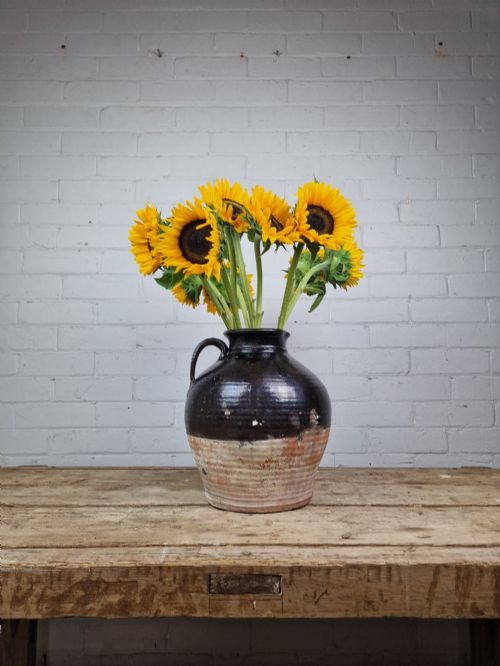
A 19th century stoneware pitcher brings sturdy utility and rich historical character to a modern table.
19th Century Stoneware Pitcher
A 19th century stoneware pitcher is a heavy ceramic vessel designed for holding liquids, most often found in robust salt-glazed or relief-moulded forms. These pieces hail from various periods across the nineteenth century, including the Georgian, Victorian, and later decades.
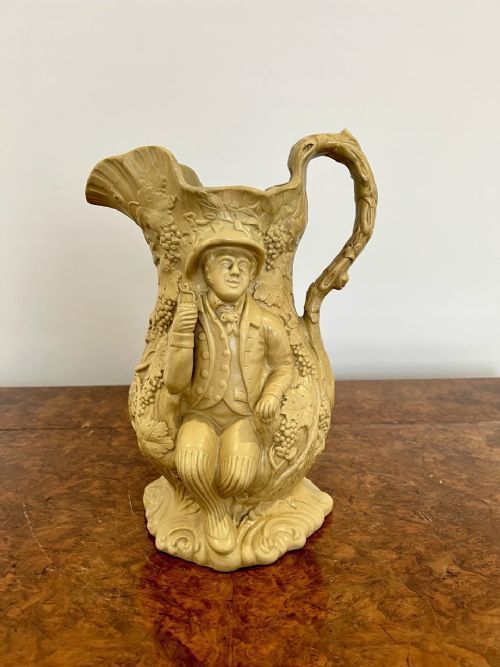
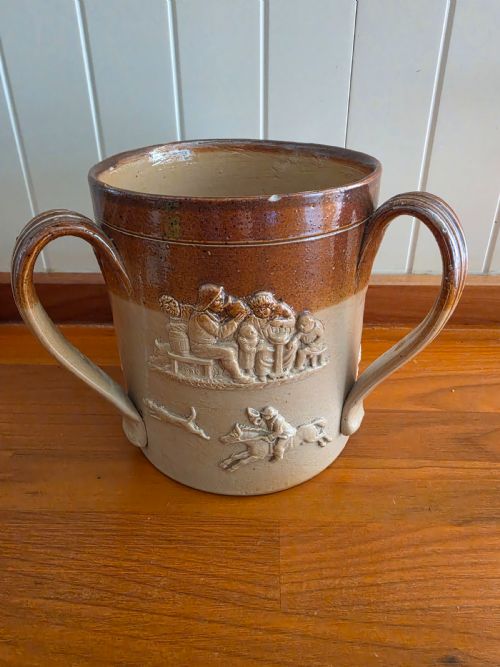
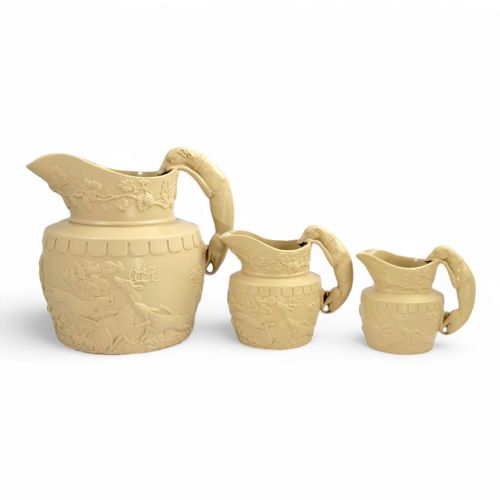
Buyers will encounter vessels ranging from large harvest jugs with silver rims to tavern jugs and three-handled tygs. The selection also includes specialised drinking vessels featuring intricate Bacchanalian scenes and hunting motifs.
The materials span traditional stoneware, earthenware, and glazed terracotta, reflecting diverse regional English pottery traditions. Many examples incorporate moulded reliefs or colourful glazes that highlight the decorative ambitions of nineteenth-century makers.
Materials and Techniques
Potters utilised dense clay bodies fired at high temperatures to achieve the impermeable finish characteristic of stoneware. Salt glazing was frequently applied during the firing process to produce a distinctive pebbled texture on the surface.
Relief moulding allowed workshops to press intricate classical, tavern, or harvest scenes directly into the damp clay body before firing. Skilled artisans then applied hand-brushed cobalt blue highlights or coloured lead glazes to accentuate the raised designs.
Some puzzle jugs challenge drinkers by featuring hidden spouts that spill ale unless you cover the correct secret holes with your fingers.
Defining Quality
The crispness of the moulded relief work separates ordinary vessels from exceptional collector pieces. Sharp detailing in scenes such as Bacchanalian dances or stag hunts indicates a well-maintained mould and a master potter's hand.
The complexity of the form and the application of special elements, such as silver rims or multiple handles, distinguish finer examples. Furthermore, an even salt glaze and balanced proportions elevate a utilitarian jug into a decorative exhibition piece.
Charles Meigh·Ridgway and Sons·Jones and Walley·Minton·Phillips and Bagster·Copeland Spode
The 19th Century Stoneware Pitcher Glossary
- Stoneware
- A robust ceramic pottery fired at high temperatures until vitrified and rendered completely waterproof. This material forms the durable body of traditional 19th century pitchers and tavern jugs.
- Relief-moulded
- A decorative technique where designs are pressed in raised relief onto the surface of the vessel. This method was widely utilised by Victorian potteries to create elaborate figural scenes.
- Tyg
- A large drinking vessel characterised by multiple handles designed for communal passing around a table. These medieval-form pieces occasionally reappear in nineteenth-century clay iterations.
- Salt glaze
- A vitreous coating created by throwing common salt into the kiln during high-temperature firing. It produces a distinctive orange-peel texture unique to traditional stoneware.
- Parian ware
- A fine white bisque porcelain developed in the nineteenth century to imitate carved marble. Makers used it to create drinks jugs with classical sculptural details.
19th Century Stoneware Pitcher: Frequently Asked Questions
How were stoneware pitchers used?
These vessels served primarily for storing and pouring liquids such as ale, cider, water, or milk in homes and taverns. Larger examples functioned as harvest jugs for communal drinking during agricultural labour.
Over time, many transitioned from purely utilitarian kitchenware into decorative mantelpieces and display objects. Their robust construction made them suitable for daily table service.
How can I tell the period?
Examine the manufacturing style, such as the distinct classical motifs popular during the Victorian era or earlier Georgian forms. Marks stamped on the base often point to specific nineteenth-century potteries.
The choice of material, from salt-glazed stoneware to coloured majolica or Parian ware, also offers strong clues to the decade of production.
Are these pitchers waterproof?
Most nineteenth-century stoneware and glazed ceramic pitchers remain capable of holding liquids safely. High-firing temperatures vitreous bodies ensure the material does not absorb moisture.
However, pieces exhibiting hairline cracks or historical repairs should be kept dry to prevent further damage. Inspect the interior base to confirm its structural integrity before use.