

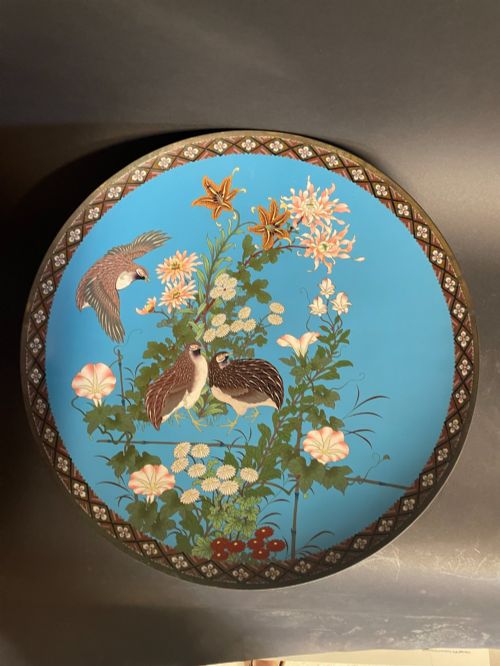
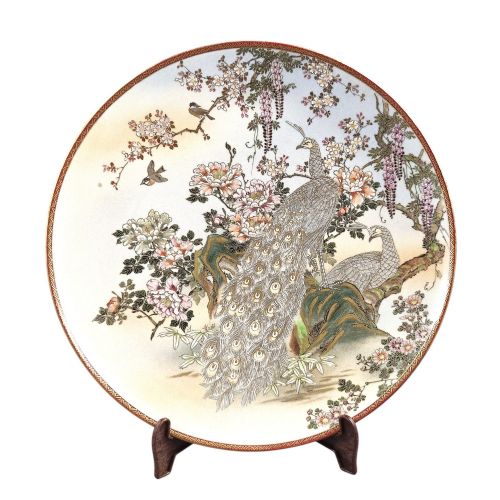


Large Japanese Enamel Dish
A large japanese enamel dish brings the intricate artistry of the Meiji and late Edo periods directly into your interior.
Large Japanese Enamel Dish
The selections span from the late Edo period through the Meiji period, encompassing both metal-bodied cloisonné works and painted porcelain forms. You meet pieces decorated with dragons, birds, flora, and landscapes that represent the height of nineteenth-century craftsmanship.
How they were made
Artisans constructed metal-bodied dishes using copper or brass bases, often applying thin brass wire to form intricate cellular patterns for enamel work. For ceramic variants, porcelain served as the primary canvas for hand-painted motifs and glazes.
Enamelling involved fusing vitreous coloured pastes within wire compartments through controlled firing, whilst certain pieces utilised specialised techniques like totai shippo to simulate organic textures such as tree bark.
Look closely at the branches; you might spot a lone bird keeping watch over Mount Fuji.
What varies in quality
The degree of ambition in the design separates standard production from exceptional examples, with masterworks displaying complex figural subjects like leaping koi, dragons, or mythological birds. Precision in wirework execution and the subtlety of colour blending further distinguish superior pieces.
Signed examples often indicate heightened workshop standards, whereas variations in the depth of the enamel gloss and the complexity of the background texturing dictate the visual weight of the dish.
The Large Japanese Enamel Dish Glossary
- Cloisonné
- A decorative metalwork technique where fine wire creates compartments that hold coloured enamel pastes. This method defines the majority of the metal charger examples.
- Charger
- A large ornamental plate intended for display rather than dining use. These items form the core of the available physical objects.
- Totai shippo
- A specialised technique involving cloisonne enamel applied over a ceramic or porcelain body rather than traditional metal. It often mimics natural textures such as tree bark.
- Meiji Period
- The era spanning from eighteen sixty-eight to nineteen twelve in Japan, noted for an explosion of fine decorative arts exported globally. Most items on this page originate from this time or slightly before.
- Moriage
- A ceramic decorating technique using slip trailing to build up raised patterns on porcelain bodies. It creates a tactile, three-dimensional surface effect.
Large Japanese Enamel Dish: Frequently Asked Questions
How were large chargers displayed?
These large dishes were traditionally displayed on specially constructed wooden stands or hung securely on walls within formal rooms. Their considerable diameter allowed households to showcase intricate narrative scenes and auspicious motifs to visitors.
Today, they serve a similar decorative purpose, acting as striking focal points above furniture or within dedicated display cabinetry where adequate structural support exists.
What is totai shippo?
Totai shippo represents a distinct variation of cloisonné where the enamel is applied directly onto a ceramic or porcelain core rather than a copper or brass base. Artisans sometimes carved the ceramic body to resemble tree bark before adding wire cells and enamel.
This method combines the visual depth of metalwork cloisonné with the structural characteristics of ceramic ware, producing distinct tactile pieces.
How do I identify a Meiji period piece?
Meiji period items typically date between eighteen sixty-eight and nineteen twelve, a timeframe characterised by intense artistic production aimed at international export exhibitions. Stylistic markers include highly detailed naturalistic motifs, precise wirework, and occasional signatures from prominent workshops.
Earlier pieces from the late Edo period often display slightly more robust forms and deep, rich colour palettes, while Meiji items frequently achieve greater technical refinement.
Can I use these dishes for food?
These decorative chargers and bowls are intended exclusively for visual display rather than culinary service. The composition of the enamel and the presence of exposed metals mean they are not suited for holding food or liquids.
Handling should remain minimal, focusing on gentle dusting with a soft, dry cloth to preserve the integrity of the surface glaze and any delicate wirework.