

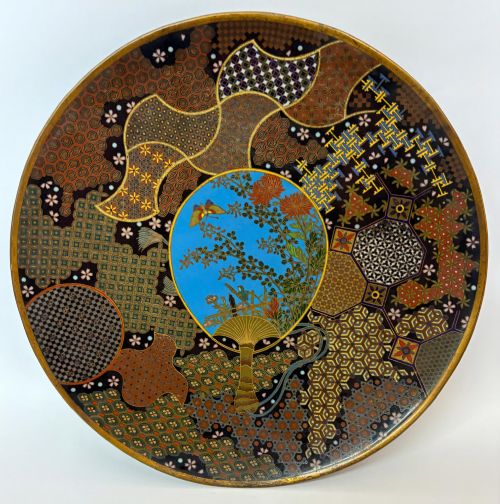


Antique Meiji Cloisonne
Antique meiji cloisonne comprises intricate metal-wired enamel works from a transformative era of Japanese design.
Antique Meiji Cloisonne
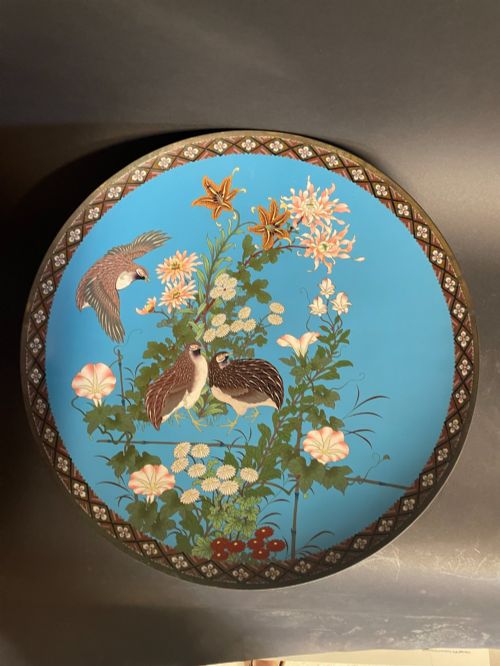
When you search for antique meiji cloisonne, you encounter objects built from copper, brass, or bronze foundations decorated with coloured enamels held within fine wire partitions. These items span decorative chargers, large plates, baluster vases, and lidded jars originating largely from the late nineteenth and early twentieth centuries.
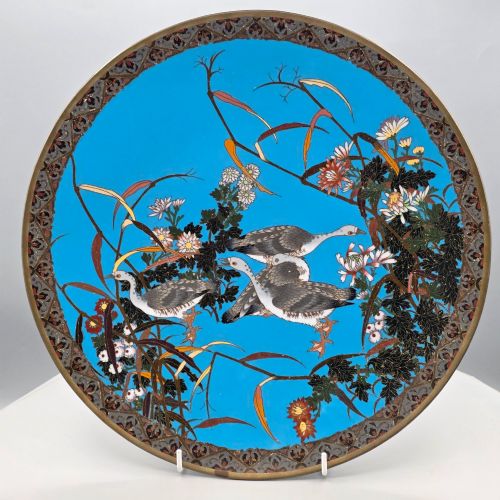
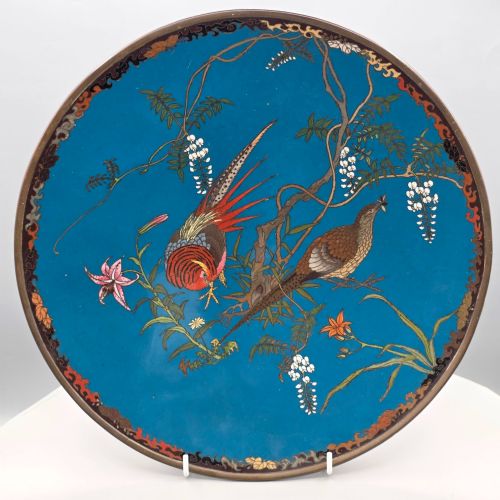
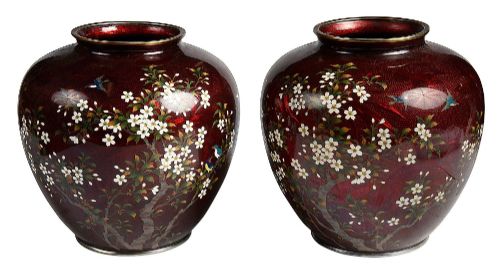
The most common forms on this page include wide decorative chargers and plates depicting flora, fauna, and traditional landscapes, alongside matched pairs of vases. Pieces range from standard Meiji production to items bearing specific signatures and specialised techniques like ginbari.
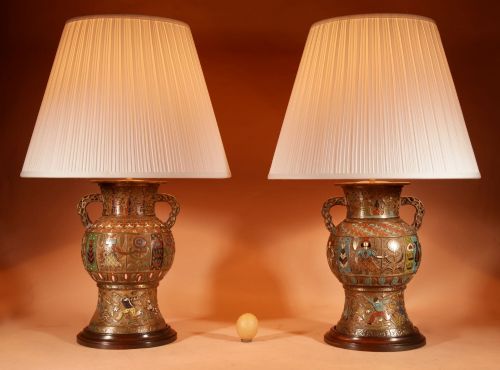
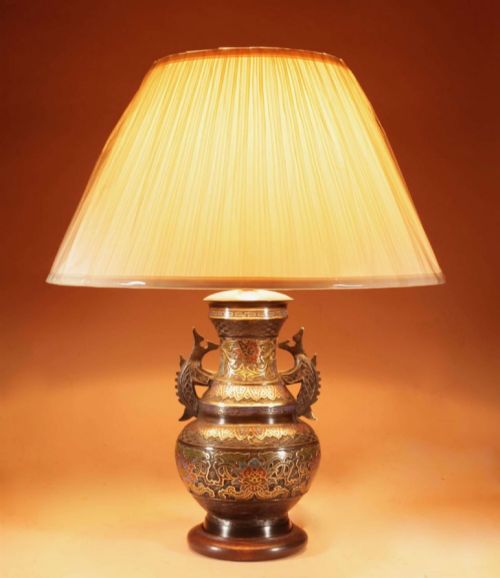
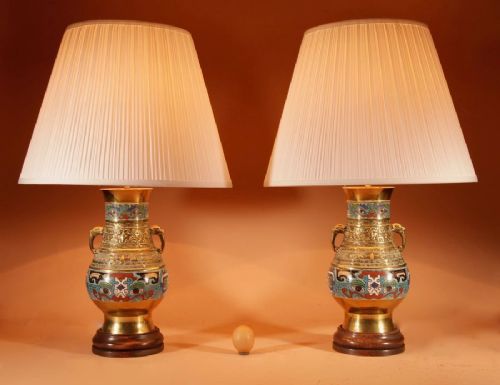
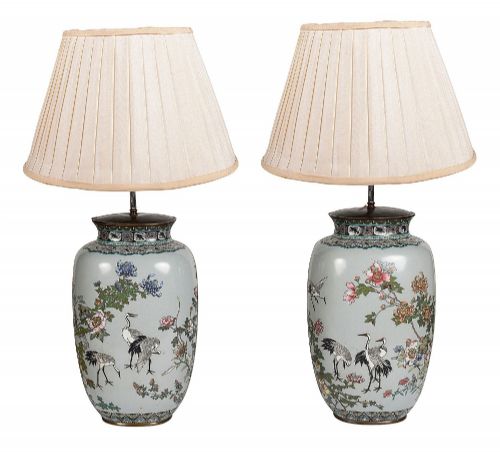
Beyond vessels and wall plates, the selection extends to table lamps, jewellery boxes, trays, and hanging koro incense burners. These functional decorative objects demonstrate the broad application of cloisonne enamel methods across various household forms of the period.
Materials and methods
Artisans constructed the foundation of each piece using hammered copper, brass, or occasionally bronze, shaping them into plates, vases, and boxes. Onto this metal base, they soldered delicate flat metal wires to map out intricate pictorial designs of birds, dragons, and flowers.
Workers filled the resulting cellular compartments with coloured enamel pastes before firing the objects at high temperatures in kilns. After multiple firings and groundings, craftsmen polished the surfaces until the metal wires and vitrified enamels formed a smooth, unified plane.
Several Meiji chargers abandon serene floral arrangements entirely in favour of fierce samurai, demons, and startled frogs.
Variations in quality
The distinction between standard output and the highest tiers rests on the fineness of the wirework and the complexity of the pictorial subject. Masterpieces feature microscopic wire density and nuanced colour gradations depicting subjects such as owls, Mount Fuji, or leaping koi with striking realism.
Execution of specialised techniques like ginbari foil underlays or translucent basse-taille enamelling elevates specific vases and trays above baseline production. Signed pieces and those retaining intricate multi-layered backgrounds demonstrate superior workshop capability.
Ando Jubei
The Antique Meiji Cloisonne Glossary
- Cloisonne
- Enamelwork in which enamel is applied to compartments separated by strips of metal welded to the metal foundation. This technique allows for complex multi-coloured patterns and pictorial representations.
- Champleve
- Enamel decoration where troughs or cells are carved or cast directly into the thick bronze or brass base rather than formed by applied wires. The recessed channels are then filled with coloured enamel pastes before firing.
- Ginbari
- A Japanese foil-backed enamelling method where textured metallic foil is applied beneath translucent enamel layers to create patterned depth. This technique frequently appears in red or coloured Meiji vases.
- Totai shippo
- A specific process where cloisonne enamel is applied over a porcelain body rather than a traditional metal base. Surviving examples often feature simulated tree bark textures surrounding pictorial panels.
- Koro
- A traditional Japanese incense burner typically featuring a lidded bowl supported on legs or designed for hanging. These vessels often utilise intricate bronze or enamel work.
- Basse-taille
- An enamel technique where the metal background is engraved or chased in low relief so that enamel applied over it is translucent and shows different shades. It provides notable depth to floral and avian motifs.
Antique Meiji Cloisonne: Frequently Asked Questions
What is antique meiji cloisonne?
Antique meiji cloisonne encompasses enamelled metalwork produced in Japan during the Meiji period and slightly beyond. These pieces utilise soldered wire partitions to hold coloured vitreous pastes on copper or brass bases.
Items range from large decorative chargers and plates to vases, jars, and table lamps featuring detailed depictions of nature, mythology, and traditional symbols.
How do I date these items?
Dating relies on stylistic shifts, material composition, and workshop signatures recorded across late nineteenth and early twentieth century production. Pieces from the Meiji era often exhibit precise silver or brass wirework and naturalistic motifs.
Later items extending into the Taisho period maintain similar enamelling traditions while sometimes incorporating different base metals or modified surface textures.
How were these pieces used?
Many objects served purely decorative functions within domestic interiors, displayed on walls as chargers or placed on surfaces as vases and lidded jars. Trays and boxes held small personal items or added aesthetic value to rooms.
Some forms, such as koro and table lamps, combined decorative enamelling with practical household utility during the late nineteenth and early twentieth centuries.
How should I clean my cloisonne?
Maintenance requires gentle dusting with a soft, dry cloth to remove surface particles without disturbing the delicate metal wires. Avoid harsh chemical cleaners or abrasive materials that can scratch the polished enamel or tarnish the exposed metal.
Keep pieces away from direct, prolonged sunlight and high humidity to preserve the stability of the vitrified enamel surfaces over time.