




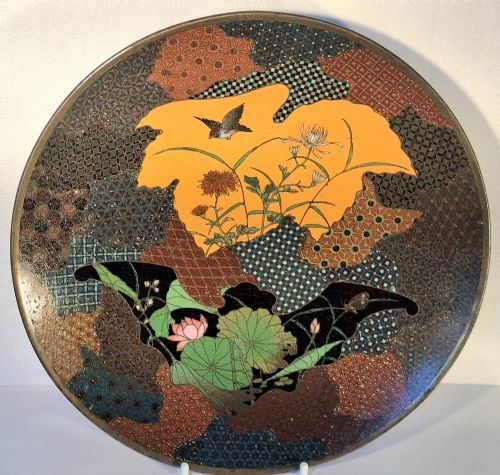
Japanese Floral Cloisonne Plate
These japanese floral cloisonne plate examples offer intricate metalwork and vibrant enamel craftsmanship from the Meiji period.
Japanese Floral Cloisonne Plate
A japanese floral cloisonne plate is a decorative vessel made in Japan during the late nineteenth century. These objects include chargers, trays, and dishes featuring intricate wirework and coloured enamel.
Buyers searching for a japanese floral cloisonne plate encounter pieces originating from the Meiji period, specifically spanning the 1870s to 1900. The forms range from medium plates to large chargers and octagonal trays.
The imagery on a japanese floral cloisonne plate frequently incorporates natural motifs such as chrysanthemums, birds, landscapes, butterflies, and frogs. These decorative elements reflect the traditional craftsmanship of Japanese workshops.
How they were made
Makers of a japanese floral cloisonne plate formed the primary structure using copper, brass, or bronze as a base metal. Thin metal wires were soldered onto this foundation to create compartments for the design.
Coloured enamel paste was packed into the wire cells before the object underwent firing in a kiln. Artisans then polished the hardened surface to achieve a smooth finish that highlights the metal outlines.
Japanese Floral Cloisonne Plate Retail Price Guide 2026
Typical asking prices for japanese floral cloisonne plate among the pieces listed under this phrase on Sellingantiques today, from the lower quarter to the upper quarter. They describe what is for sale here now, not the wider market.
Current listings feature items from the 1870s, 1880s, 1890s, and 1900, constructed from enamel, brass, copper, and bronze.
What varies in quality
The refinement of the wirework distinguishes standard production from superior examples. Finer wires allow for intricate detailing in depictions of birds, landscapes, and floral arrangements.
The depth and consistency of the enamel colours also determine the standard of a piece. Uniform glazing without pitting indicates greater skill in the firing and polishing stages.
Kinkozan
The Japanese Floral Cloisonne Plate Glossary
- Cloisonne
- An enamelling technique where metal wire is soldered to a metal base to create individual cells for coloured paste. These cells hold the vitreous enamel in place during the firing process.
- Charger
- A large decorative plate or tray intended for display rather than dining. These substantial pieces often showcase the most elaborate artistry.
- Meiji Period
- The era in Japanese history lasting from 1868 to 1912. This period saw a flourishing of decorative arts exported to Western markets.
- Enamel
- A glassy substance fused to a metal surface through firing. It provides vibrant colour and a glossy protective layer.
- Bronze
- An alloy consisting primarily of copper, often used as a structural metal for Japanese decorative wares. It offers durability and a dark metallic tone.
Japanese Floral Cloisonne Plate: Frequently Asked Questions
What is a Japanese cloisonne plate?
A Japanese cloisonne plate is an ornamental metal dish decorated with coloured enamels held within thin wire compartments. These pieces date from the Meiji period and feature detailed naturalistic scenes.
Craftsmen soldered wire onto a copper, brass, or bronze base to outline the design before applying enamel paste and firing the object.
How do I date these plates?
Dating relies on stylistic characteristics and historical production periods, predominantly the Meiji era between 1868 and 1912. Listings often reference specific decades such as the 1870s, 1880s, 1890s, or 1900.
Examining the base metal and the complexity of the wirework also helps establish the approximate period of manufacture.
Where were these plates made?
These pieces were produced in Japanese workshops during the late nineteenth century. Specific regional centres, such as Nagoya, were known for notable production.
Many of these decorative items were created specifically for export during the Meiji period, reaching international markets.
How do I display a charger?
Chargers and large plates are typically displayed on sturdy plate stands or mounted securely on walls. Their substantial size and detailed imagery make them prominent focal points in a room.
Keeping them away from direct sunlight helps preserve the vibrant tones of the enamel over time.