



Large Floral Wall Platter
A large floral wall platter commands attention on a room's surface, bringing centuries of ceramic artistry and bold botanical decoration directly to your interior.

Large Floral Wall Platter
A large floral wall platter spans wide diameters designed primarily for display rather than dining. When searching for a large floral wall platter, you encounter substantial decorative plates and chargers intended to hang on walls or anchor tables.
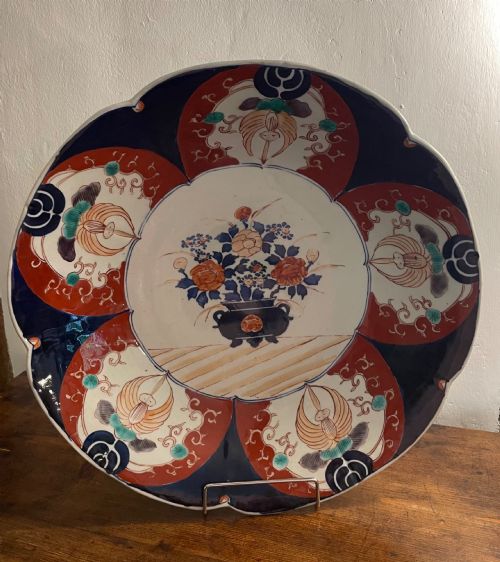
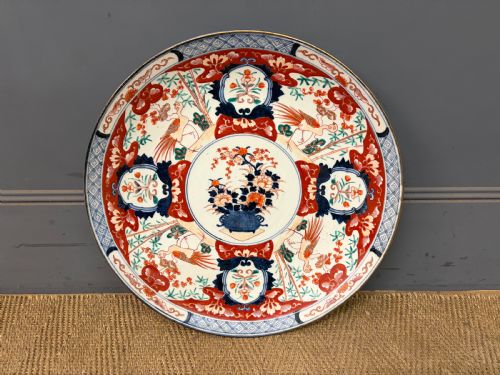
The selections here stretch across periods from the eighteenth century through the Victorian era and into the early twentieth century. Examples encompass Japanese Imari and Meiji pieces alongside Dutch Delft and English ironstone.
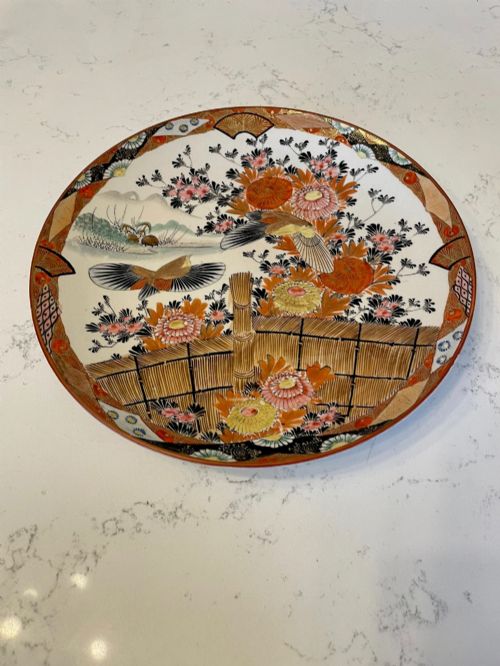
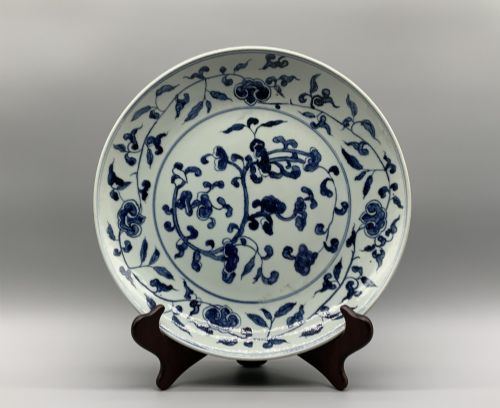
Forms alternate between round chargers and occasional square or oval platters. Botanical and floral motifs dominate the surfaces, rendered in cobalt blue, polychrome enamel, or manganese.
Materials and construction
Potters and artisans utilised porcelain, earthenware, and tin-glazed earthenware as the primary base materials for these wide plates. Cobalt glaze and vibrant enamel colours were then applied by hand across the expansive ceramic surfaces.
Some Japanese and Victorian works incorporated intricate cloisonné enamel with metal wirework, whilst others relied upon traditional hand-painted pigments fired under a protective transparent glaze.
Large Floral Wall Platter Retail Price Guide 2026
Typical asking prices for large floral wall platter among the pieces listed under this phrase on Sellingantiques today, from the lower quarter to the upper quarter. They describe what is for sale here now, not the wider market.
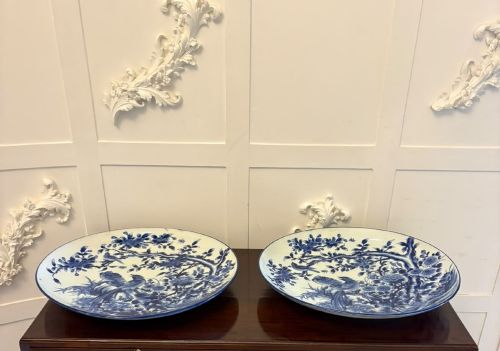
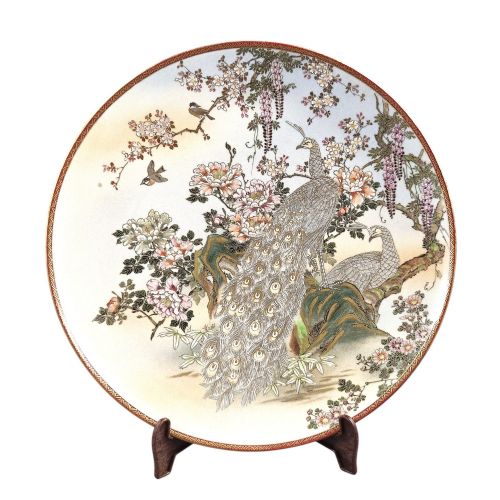
Peacocks occasionally share the painted branches with wisteria and peonies.
Assessing quality and craftsmanship
Quality rests in the precision and density of the hand-painted brushwork across the botanical scenes. Superior pieces exhibit crisp floral details, balanced composition, and rich cobalt or polychrome depth.
The weight of the ceramic, the clarity of the glaze without excessive clouding, and the complexity of the decorative borders distinguish exceptional chargers from standard production.
Charlotte Rhead Bursley Ware·Shozo
The Large Floral Wall Platter Glossary
- Charger
- A large decorative plate traditionally used for display or ceremonial service rather than everyday dining.
- Imari
- A traditional style of Japanese porcelain decorated in underglaze blue and overglaze red, gold, and other colours.
- Tin-Glazed Earthenware
- Pottery covered with a white tin-oxide glaze that provides an opaque surface for painted decoration, seen in Delftware.
- Cloisonne
- Metalwork technique where compartments are created using wire and filled with enamel paste before firing.
- Moriage
- A Japanese ceramic technique using raised slip decoration to create textured, tactile floral and botanical patterns.
Large Floral Wall Platter: Frequently Asked Questions
How were large floral wall platters displayed historically?
Large chargers and decorative plates were traditionally hung on walls using specialist wire hangers or displayed upright on sideboards and dresser shelves.
This allowed households to showcase fine imported porcelain and intricate hand-painted ceramics as focal points in reception rooms.
What is the difference between Imari and Delft platters?
Imari platters originate from Japan and typically feature vibrant iron red, cobalt blue, and gold leaf in dense floral arrangements.
Delft platters stem from European traditions, often displaying tin-glazed surfaces with manganese or blue botanical motifs inspired by Chinese porcelain.
Can these antique platters safely hang on walls today?
Most large antique chargers feature substantial weight and robust ceramic bodies capable of supporting secure display.
Appropriate wall mounting hardware designed specifically for heavy plates ensures they remain stable and protected.
How do I distinguish eighteenth-century pieces from Victorian ones?
Eighteenth-century examples often display tin glazes, hand-potted irregularities, and Kangxi or Dutch Delft characteristics.
Victorian and later nineteenth-century pieces frequently show dense Japanese Imari export styles, machine-assisted earthenware bodies, or heavier enamelling techniques.