


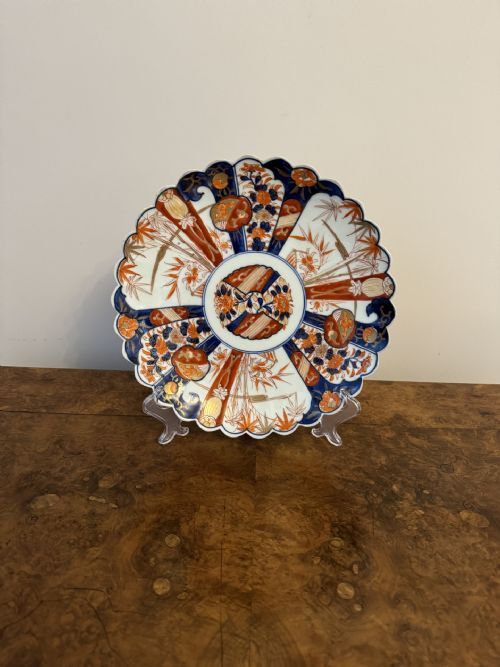


Traditional Imari Floral Charger
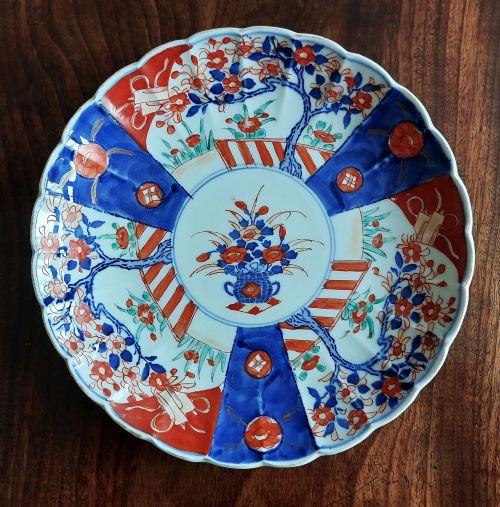
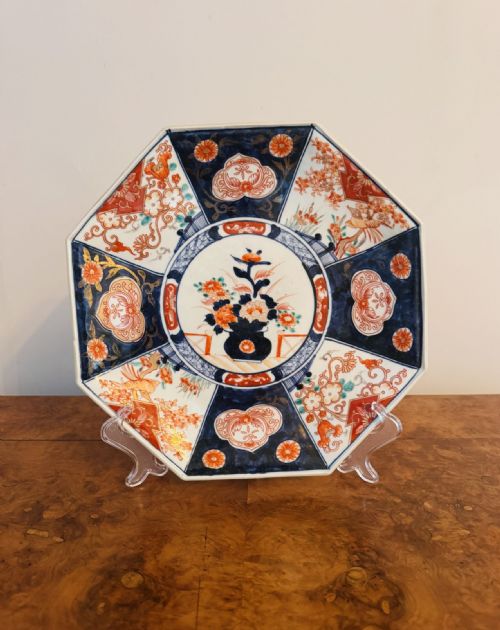
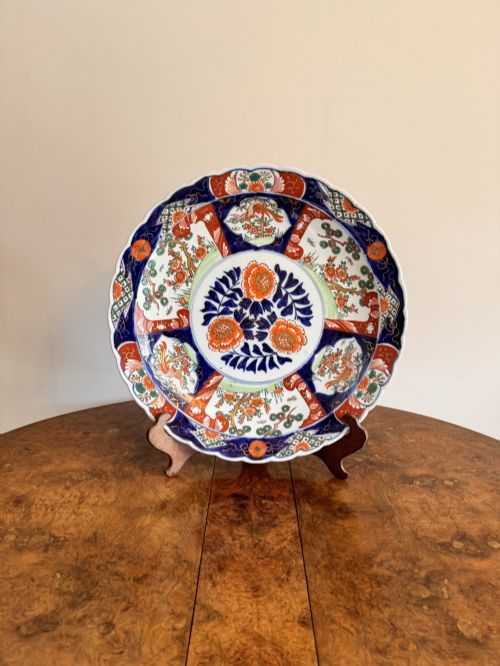
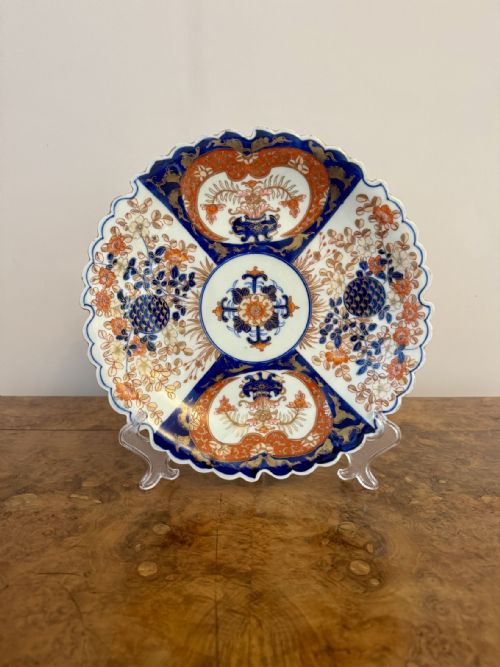
A traditional imari floral charger brings vibrant historic palettes to a room, offering rich visual weight for display.

Traditional Imari Floral Charger
When you search for a traditional imari floral charger, you encounter large circular ceramic plates designed primarily for display rather than dining. These pieces arrive mainly from nineteenth-century, Edwardian, and Victorian contexts, predominantly originating from Japanese production alongside some Chinese export items.
The most common formats on this page are large decorative plates and platters, frequently featuring scalloped shaped edges. Buyers often find single chargers, pairs, or small collections sharing the characteristic palette and floral motifs.
Originating as decorative chargers and fruit display plates, these items bridge traditional ceramic craftsmanship and ornamental interior use. Their robust presence makes them central focal points when placed on walls, cabinets, or tables.
What varies in quality
The definition of the underglaze cobalt lines and the precision of the enamel painting separate standard production from superior pieces. Crisp brushwork and carefully applied gold leaf or gilding indicate higher artisan involvement during the Meiji period and Victorian eras.
Scale and proportion also influence character, with larger chargers requiring greater technical skill to fire successfully without warping the ceramic body. Scalloped edges and complex moulded profiles demand finer hand-shaping before glazing.
Traditional Imari Floral Charger Retail Price Guide 2026
Typical asking prices for traditional imari floral charger among the pieces listed under this phrase on Sellingantiques today, from the lower quarter to the upper quarter. They describe what is for sale here now, not the wider market.
Listings feature porcelain and ceramic bodies decorated with cobalt underglaze, enamel, and gold leaf from the nineteenth century onward.
The Traditional Imari Floral Charger Glossary
- Imari
- A style of Japanese porcelain originally exported through the port of Imari, recognised by a distinctive palette of cobalt blue, iron red, and gold.
- Charger
- A large ornamental plate traditionally used for display on sideboards or walls rather than for serving food at the table.
- Cobalt Underglaze
- A blue pigment applied to raw ceramic before glazing and firing, which sinks into the body to create a permanent cobalt hue.
- Meiji Period
- The era in Japanese history spanning from 1868 to 1912, noted for significant production of decorative arts for international export.
- Scalloped Edge
- A decorative border shaped into a series of continuous curves resembling the edge of a scallop shell.
Traditional Imari Floral Charger: Frequently Asked Questions
How do I display an imari charger safely?
Large chargers require secure wall mountings or stable plate stands designed for heavy ceramics. Ensure the weight is supported evenly across the base.
Keep pieces away from direct sunlight and high traffic areas to protect the delicate enamel and gilt surfaces from accidental knocks.
Are these chargers meant for dining?
These pieces function primarily as decorative chargers and display plates rather than functional tableware. Their historic glazes and enamels are best preserved through careful visual presentation.
Using them for food service risks damaging the antique porcelain and the layered gold leaf details.
How do I identify a Meiji period piece?
Meiji period items often exhibit precise Japanese imari painting styles combined with Victorian-era export characteristics. The combination of cobalt underglaze, vibrant enamel, and gilding points directly to this era of production.
Examining the ceramic body and glaze texture helps confirm the nineteenth-century origin.
What is the difference between a plate and a charger?
A charger is significantly larger than a standard dining plate, manufactured specifically as a centrepiece or decorative wall hanging. Plates in these collections serve similar decorative functions but arrive in more varied scale.
Both forms share the characteristic floral motifs and rich enamel palettes.