



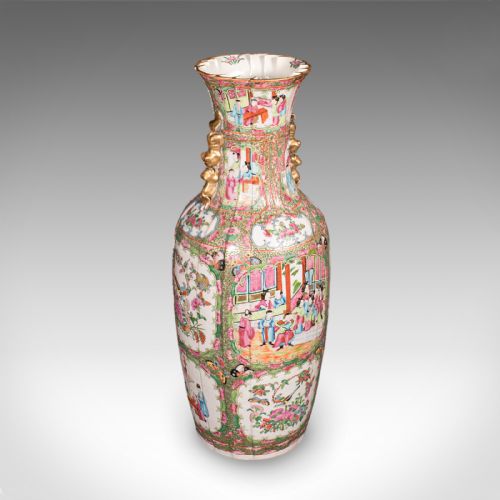
Large Floor Vase
A large floor vase commands a room, drawing the eye with monumental scale and intricate surface decoration.
Large Floor Vase
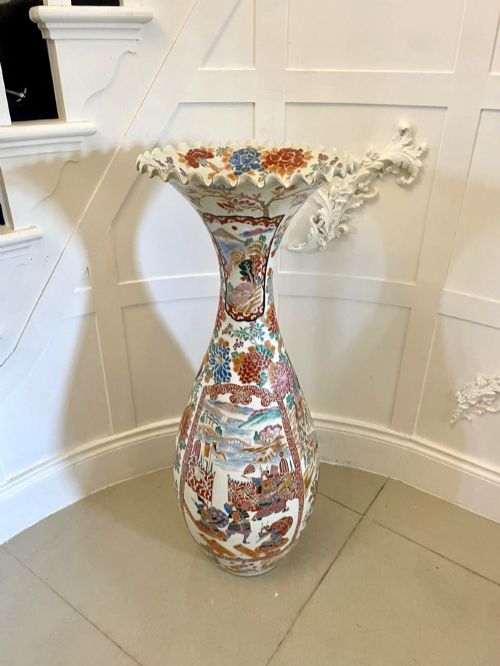
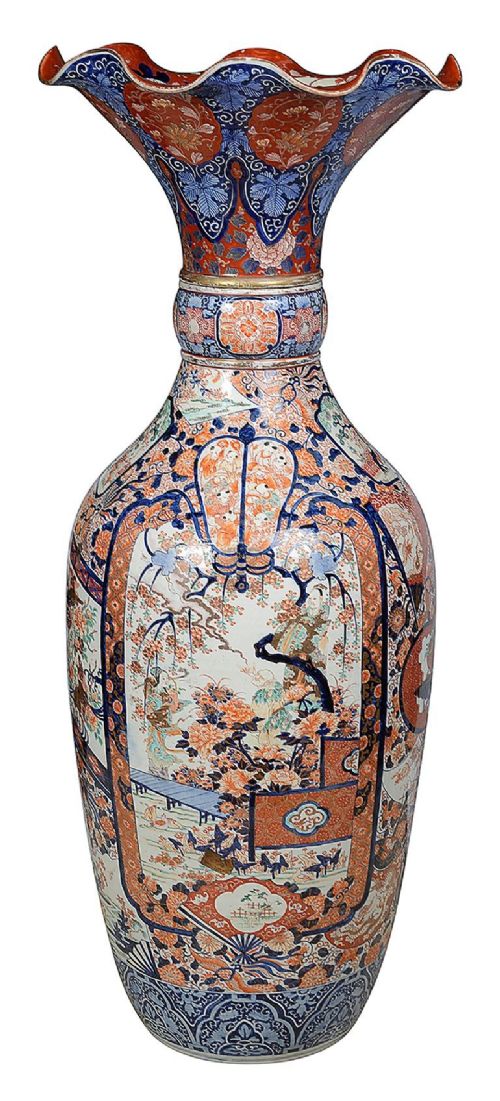
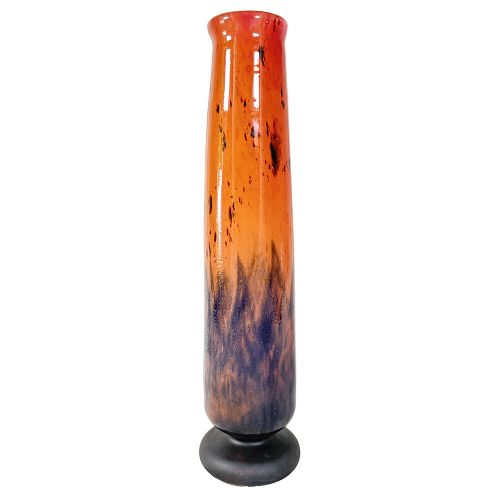
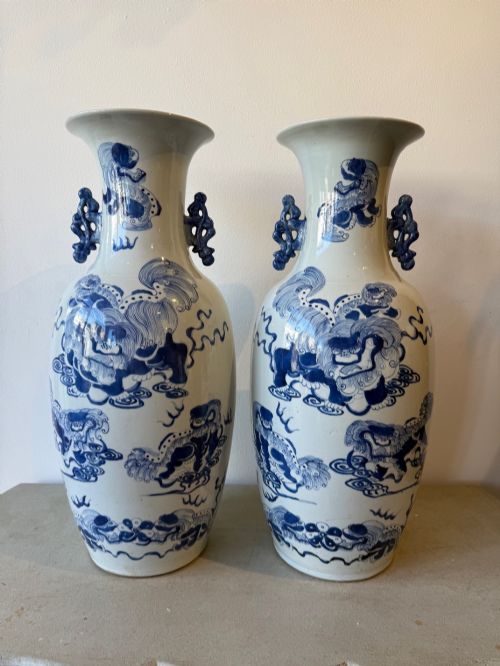
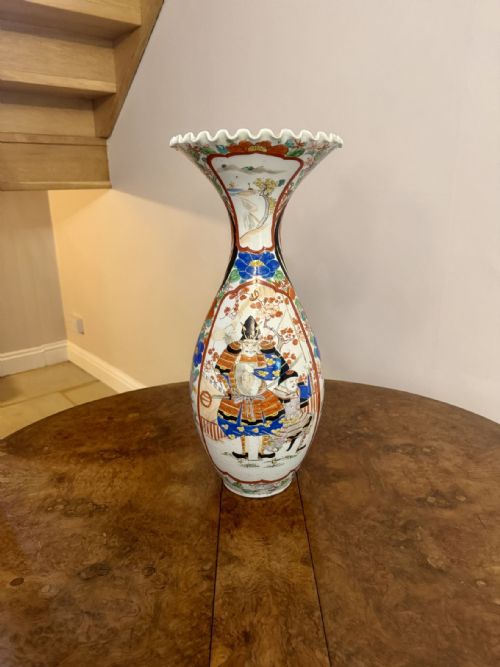
A large floor vase serves as a monumental focal point in interior spaces, designed to stand directly on the ground rather than upon furniture. When exploring this selection, buyers frequently encounter imposing Japanese Imari and Chinese export vessels alongside European ceramic and glass creations.
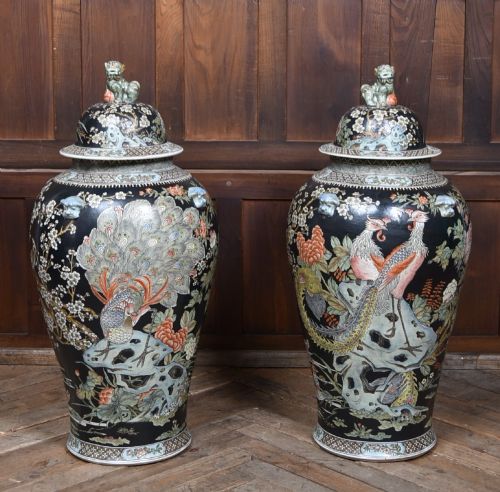
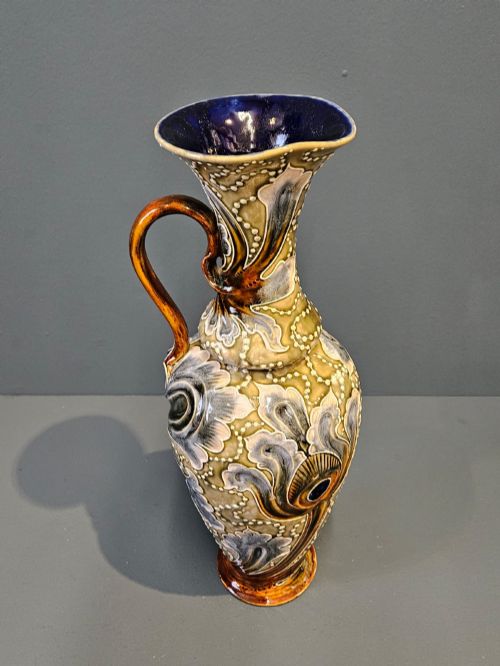
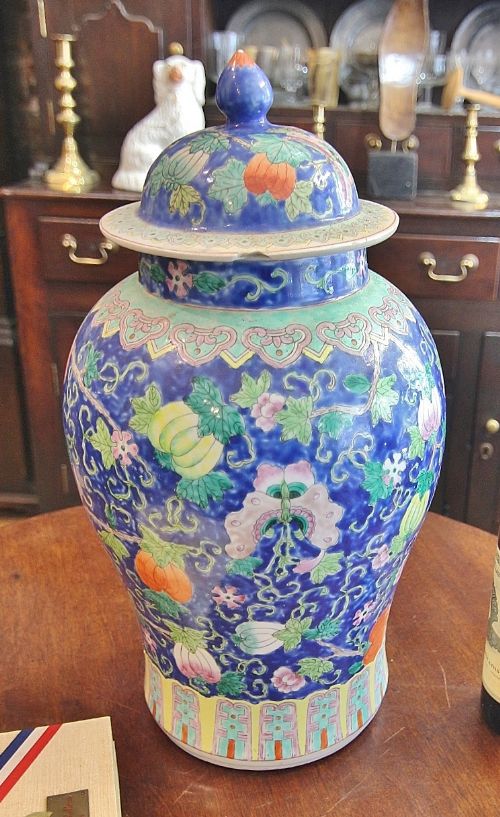
The pieces span various historic epochs, with a notable concentration of nineteenth-century examples and turn-of-the-century works from distinct global traditions. Forms range from baluster palace jars and temple vessels to tall trumpet shapes and handled amphorae.
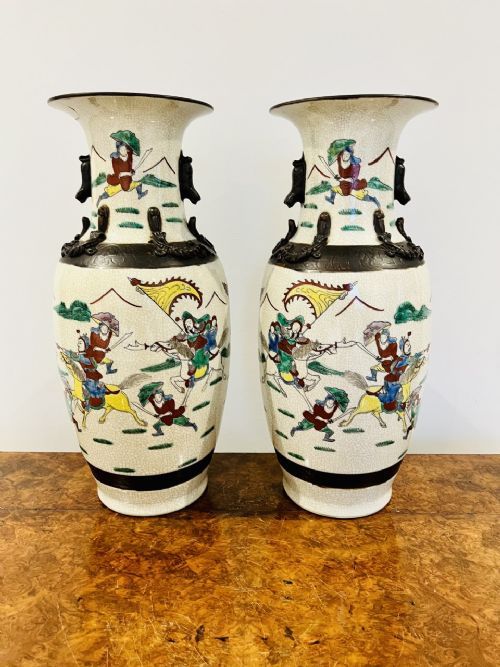
Originating from diverse workshops across Asia and Europe, these large vessels utilise substantial formats to display complex pictorial scenes, glazed panels, or rich enamelling. They function primarily as decorative statements rather than utilitarian water holders.
Materials and construction
Pottery and porcelain form the backbone of these pieces, shaped from earthenware, stoneware, or fine clay bodies before receiving elaborate glazes, blue and white underglazes, or polychrome enamels. Artisans frequently employed gold leaf and metal accents to heighten the visual impact of the surface.
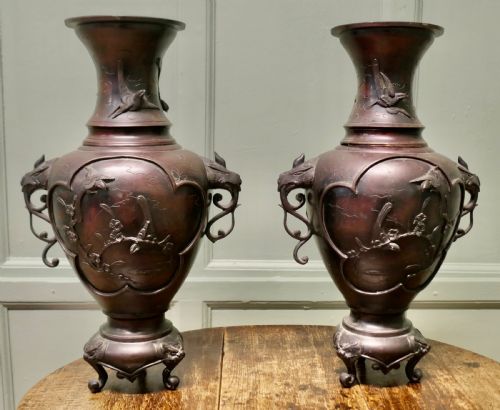
Metalworking techniques also define the category, with makers hammering copper, bronze, and cloisonné enamel into massive palace vessels and floor-standing urns. Artisans embedded wire compartments on metal bases to contain vibrant vitreous enamel powders before firing.
Organic materials occasionally supplement the ceramic and metal inventory, utilising turned wood or specialised papier-mâché to achieve lightweight yet rigid monumental forms. Original stands carved from hardwood or formed in porcelain often accompanied these tall vessels to elevate them further.
Listings feature monumental ceramics spanning from Victorian earthenware and Art Nouveau pottery to nineteenth-century Chinese Qing dynasty export porcelain.
Judging quality and execution
Quality rests upon the precision of the hand-painted detail and the depth of the glaze, whether observing the delicate brushwork on an Imari palette or the complex execution of cloisonné cells. Superior examples display crisp definition in multi-layered motifs without blurring or pooling in the vitrified surfaces.
The ambition of the form and the integrity of the firing process separate standard production pieces from exhibition-grade works. Monumental height achieved without distortion during the kiln process indicates superior technical mastery by the pottery or workshop.
Preservation of fragile surface elements, such as delicate overglaze enamels, gilt highlights, and associated original wooden stands, influences the overall standing of an individual vessel. The cohesion between the decorative scheme and the sheer scale of the body dictates the visual authority of the piece.
Daum·Doulton Lambeth Ware·Brannam·Kato Sanhei·Kinkozan
The Large Floor Vase Glossary
- Imari
- A style of Japanese export porcelain featuring deep cobalt blue, iron red, and gilt highlights. This decorative scheme originated in the Edo period and remained popular through the nineteenth century.
- Famille Rose
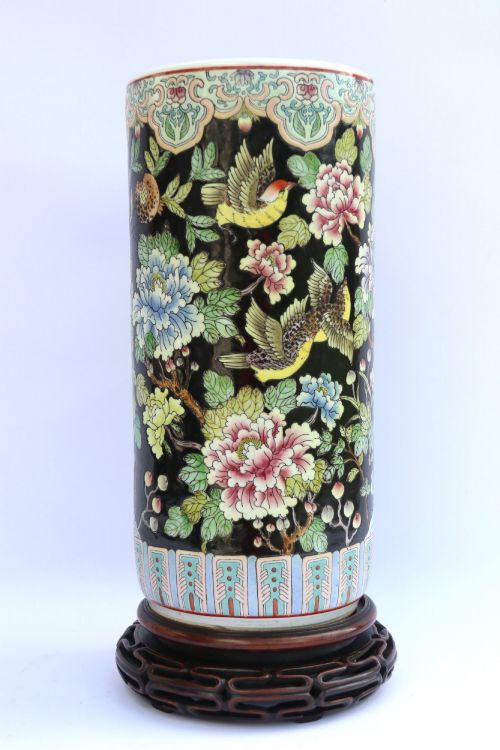
- A palette of opaque enamel colours dominated by pink or rose hues, used extensively on Chinese porcelain during the Qing dynasty. The technique allows for subtle tonal shading in floral and figural scenes.
- Cloisonné
- A metalworking technique where thin flat wires are soldered to a metal base to form partitions, which are then filled with coloured enamel paste and fired. This creates intricate patterned surfaces across large vessel bodies.
- Amphora
- A tall storage vessel featuring two handles and a narrow neck, historically used in the Mediterranean region. Nineteenth-century European potteries revived this classical form for decorative interior use.
Large Floor Vase: Frequently Asked Questions
Where should I place a large floor vase?
These monumental vessels suit spacious hallways, grand reception rooms, or empty architectural corners where their height and bulk can be appreciated without obstruction.
Because they stand independently on the ground, they work well beside fireplaces, beneath stairwells, or paired symmetrically to flank doorways.
Are these vases watertight?
Most antique floor vessels function primarily as decorative interior objects rather than practical containers for fresh water and heavy foliage.
Utilising them for dried branches or decorative stems is common, though many collectors prefer to display them empty to preserve the interior and base.
How do I identify Japanese Imari pieces?
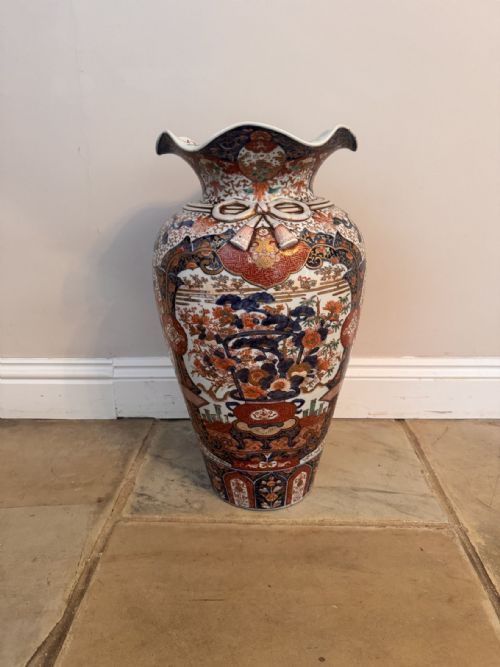
Japanese Imari porcelain typically exhibits a distinct colour scheme combining underglaze cobalt blue with iron red, accented by generous applications of gold leaf.
Designs frequently incorporate dense floral panels, mythical birds, and intricate geometric borders executed across large ceramic bodies.
What is cloisonne enamel?
Cloisonné involves soldering delicate metal strips onto a bronze or copper core to create small walled cells, which are filled with vitreous enamel paste.
The entire vessel undergoes high-temperature firing before the surface is ground and polished to a smooth, lustrous finish displaying detailed pictorial motifs.