



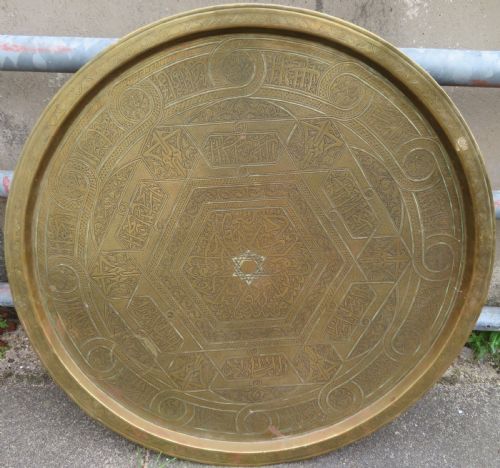
Large Decorative Charger
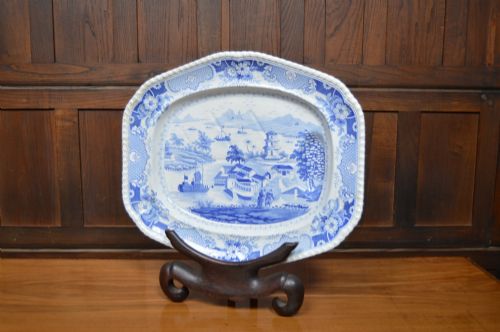
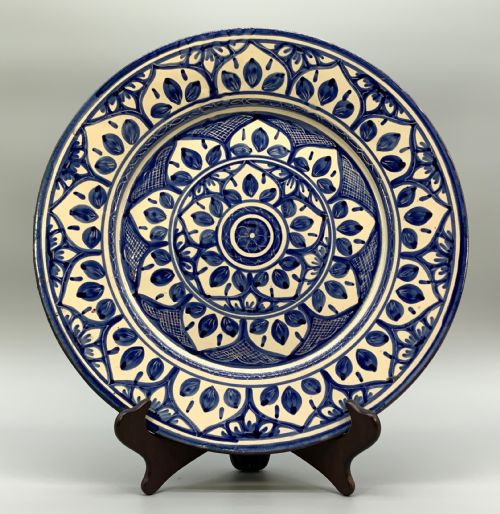
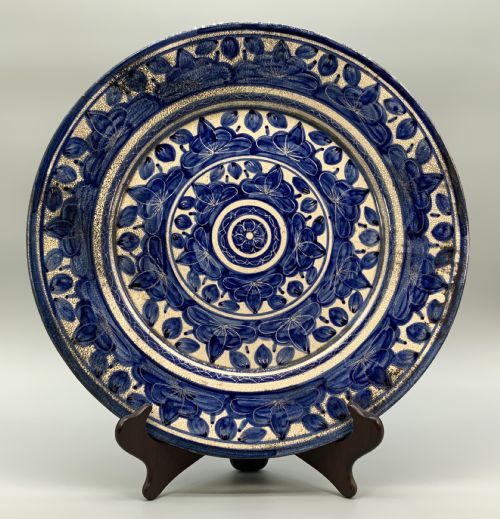
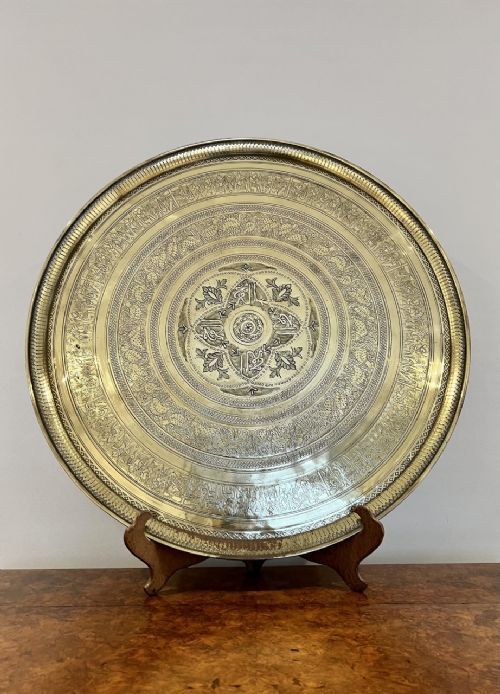
When you search for a large decorative charger, you are seeking a substantial wall or table centrepiece rich in hand-painted detail or metalwork.
Large Decorative Charger
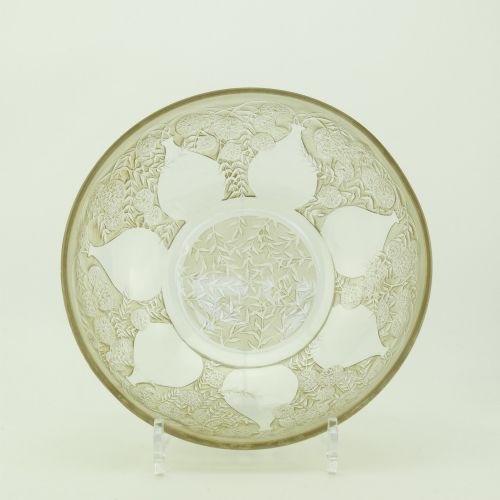
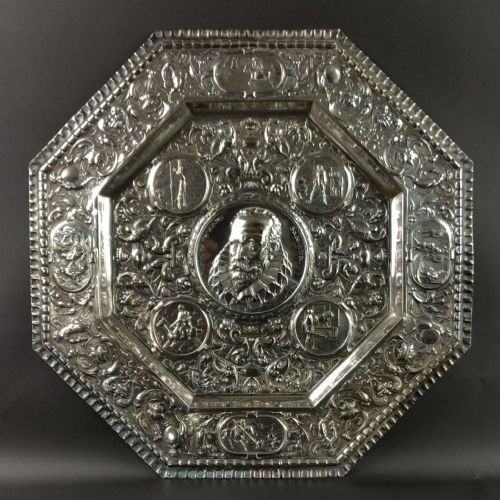
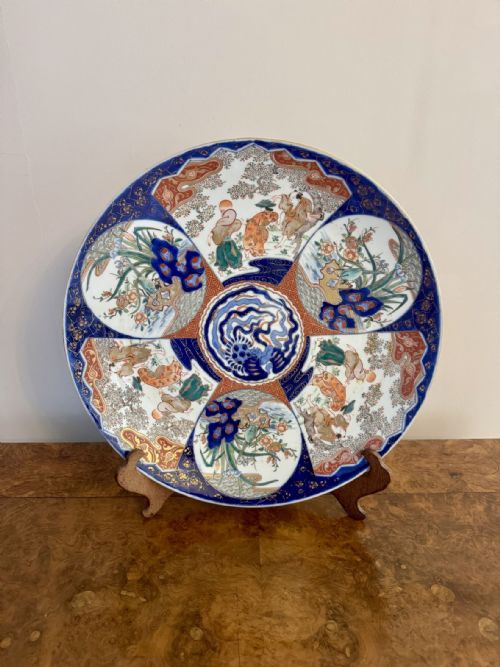
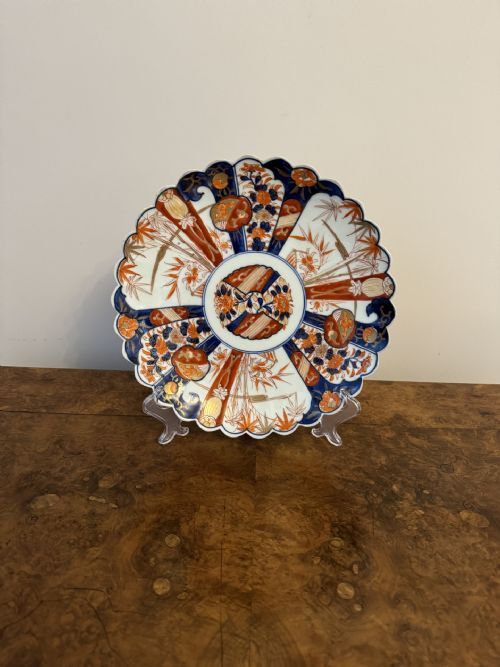
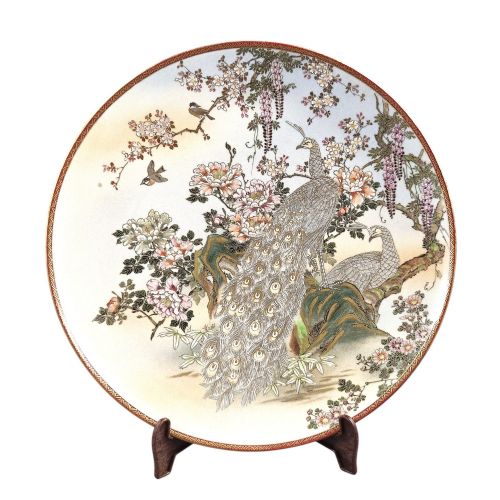
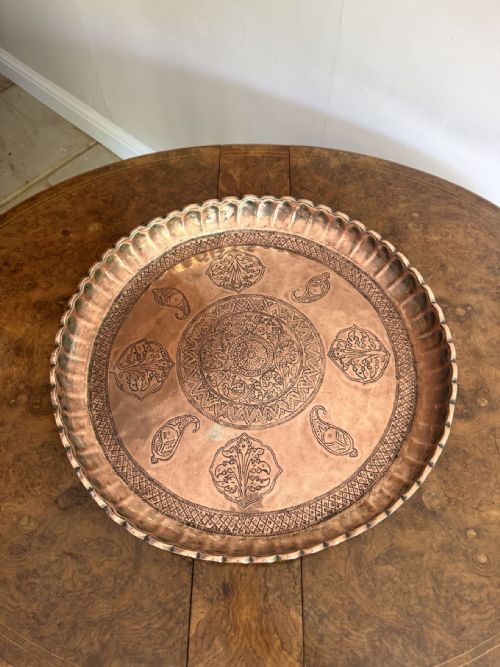
A large decorative charger takes the form of an oversized plate, shallow bowl, or tray intended primarily for display rather than dining use. The pieces found here span the nineteenth century, the Victorian era, and the early decades of the twentieth century, originating from European, Middle Eastern, and East Asian workshops.
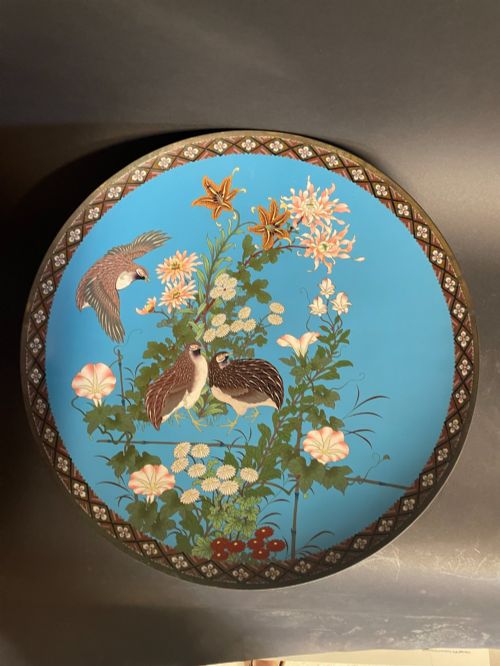
Japanese Imari porcelain and cloisonné enamel examples appear frequently among these listings, alongside European tin-glazed earthenware and mixed metal trays. Buyers encounter circular, scalloped, and octagonal formats carrying pictorial scenes, floral motifs, or intricate geometric patterns.
How They Were Made
Pottery examples rely on ceramic and earthenware bodies coated in glazes, tin enamel, or faience, often decorated with hand-painted cobalt blue, polychrome pigments, and occasionally gold leaf. Artisans built metal pieces using brass, copper, and bronze, applying techniques such as repoussé relief, engraving, and silver or copper inlay.
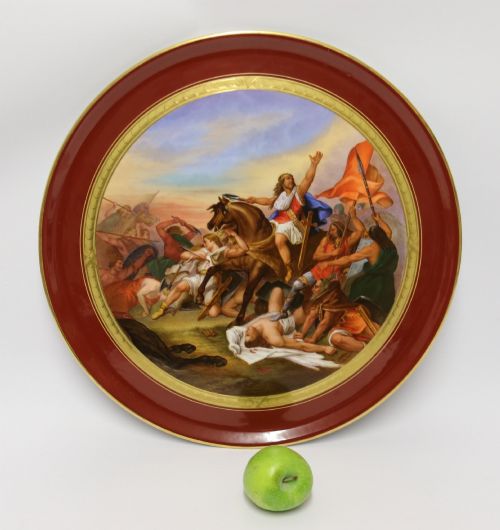
Cloisonné pieces involve soldering thin metal wires onto a metal base to create compartments, which are subsequently filled with enamel paste and fired. Paris porcelain and earthenware chargers employ meticulous brushwork to render historical scenes, botanical studies, and figurative subjects.
Design styles span Japanese Imari, Meiji cloisonné, Art Deco glass, and Renaissance Revival tin-glazed earthenware.
What Varies in Quality
The standard of a large decorative charger rests upon the precision and ambition of its surface decoration. Finely executed pieces display crisp lines in metal engraving, careful registration of enamel wires, or sophisticated pictorial depth in hand-painted ceramic scenes.
The weight of the metal body or the stability of the porcelain blank also dictates the calibre of the object. Superior examples demonstrate a confident balance between the scale of the dish and the complexity of the ornament covering its surface.
Rene Lalique
The Large Decorative Charger Glossary
- Charger
- An oversized plate or shallow dish traditionally used for ceremonial dining or, in later periods, as a decorative wall or table display.
- Cloisonne
- A decorative metalwork technique where wire compartments are soldered to a base and filled with enamel before firing.
- Imari
- A traditional style of Japanese porcelain featuring distinct cobalt blue and iron red decoration, often accented with gold.
- Repousse
- A metalworking method in which the design is hammered into relief from the reverse side of the sheet.
- Faience
- European tin-glazed earthenware, known for a smooth opaque white surface suitable for painted decoration.
Large Decorative Charger: Frequently Asked Questions
How were large decorative chargers originally displayed?
These large plates and trays were positioned on sideboards, mounted on walls using plate hangers, or set upon central tables to showcase wealth and taste.
Their substantial diameters allowed intricate painted scenes and metalwork details to be admired from a distance across a room.
Can these chargers be used for serving food?
Most pieces from the nineteenth and early twentieth centuries serve primarily as decorative objects rather than functional tableware.
Age, delicate glazes, and metal inlays mean modern dining use can risk damaging the historic surface finish.
How do I identify Japanese Imari from other porcelain?
Japanese Imari porcelain is recognisable by a heavy white ceramic body decorated predominantly in underglaze blue and iron red.
Additional gilt highlights frequently appear, depicting floral clusters, landscapes, or mythological figures.
What is Cairo Ware metalwork?
Cairo Ware refers to nineteenth-century Egyptian metalwork featuring brass, bronze, or copper vessels inlaid with silver and copper wire.
These pieces typically display dense Islamic calligraphic bands and geometric arabesque patterns.