



Japanese Wall Plaque
These japanese wall plaque examples bring together centuries of intricate metalwork, lacquer and porcelain from the Meiji and Edo periods.
Japanese Wall Plaque
A japanese wall plaque encompasses large decorative chargers, roundels and framed panels designed for display. Most examples found here originate from the late nineteenth century and the Meiji period, taking the form of round plates or heavy chargers.
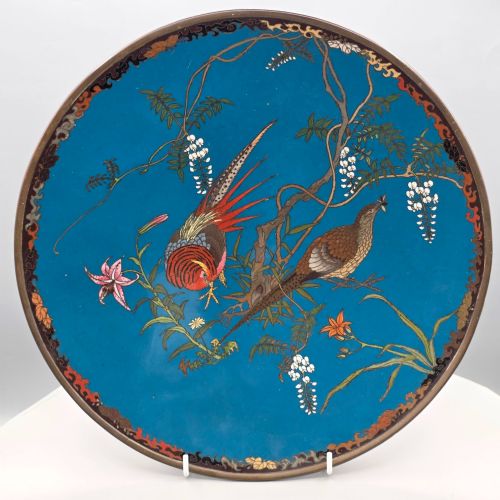
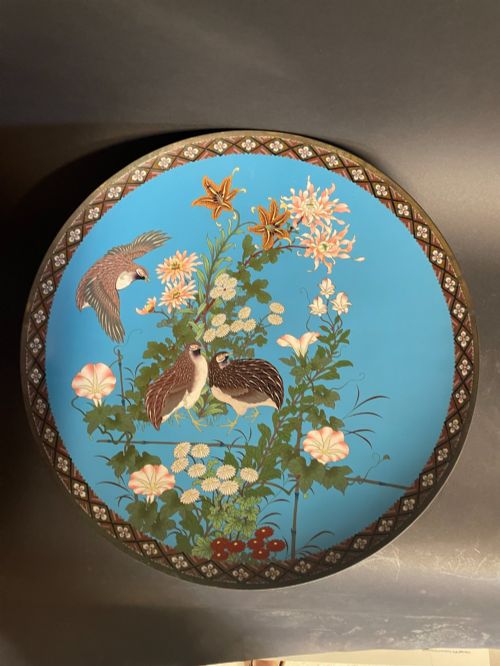
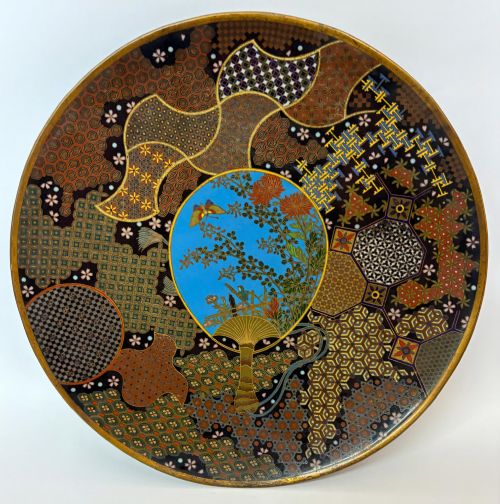
The category extends from porcelain Imari pieces to detailed cloisonne enamel chargers depicting dragons, koi, birds and samurai. Makers produced these items across various decades, incorporating bronze, brass, iron and carved wood alongside lacquer surfaces.
Buyers encounter substantial round chargers and flat wall panels created for both domestic interiors and export markets. These objects reflect the changing stylistic influences of the late Edo, Meiji, Taisho and Showa periods.
Materials and construction
Metalwork pieces rely on bronze, brass and iron foundations enhanced with gold and silver inlay, wire cloisonne and patination. Artisans applied enamel pastes within thin wire cells on copper or porcelain bases before firing and polishing the surfaces.
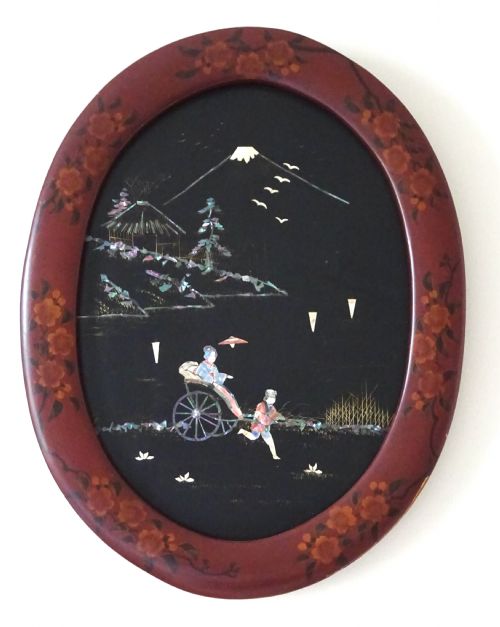
Lacquer items utilise wood, mother of pearl and abalone shell set into red or black lacquered grounds to build up pictorial relief scenes. Porcelain chargers combine hand-painted cobalt blue underglazes with iron red and gilt details characteristic of Imari wares.
Listings feature items spanning the Edo, Meiji, Taisho and Showa periods, utilising materials from bronze and brass to mother of pearl.
Judging quality in execution
Quality shows in the precision of the cloisonne wirework and the complexity of the subject matter, such as dragons, koi and human figures. Fine examples display smooth enamel surfaces without pitting, alongside crisp metal inlay and detailed hand-painting.
The depth and condition of the lacquer work, the crispness of wood carving and the presence of artist signatures distinguish finer pieces from standard production items. Heavier gauges of metal and balanced compositions point to skilled workshop output.
The Japanese Wall Plaque Glossary
- Cloisonne
- Enamelwork technique where fine metal wires form cells to hold coloured pastes on a metal base. This method creates intricate patterns of birds, dragons and floral motifs.
- Imari
- Traditional Japanese porcelain decorated in underglaze blue and contrasting iron red and gold. These plates and chargers were widely produced for export during the nineteenth century.
- Totai Shippo
- Porcelain-based cloisonne where enamel is applied directly onto a ceramic body rather than copper. This fragile technique produces distinctive textured surfaces.
- Shibayama
- Craft style incorporating inlaid mother of pearl, ivory, tortoiseshell and coral on wood or lacquer backgrounds. Plaques using this method depict figures, birds and natural scenes in high relief.
- Komai Style
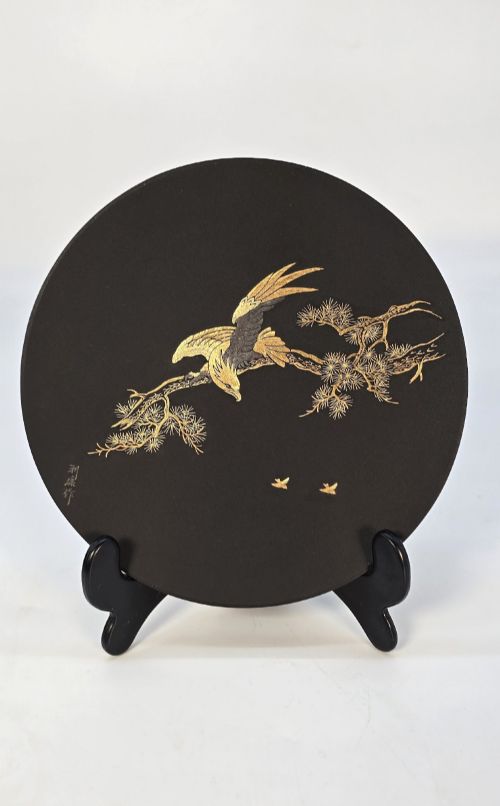
- Metalwork technique featuring iron or steel surfaces densely inlaid with gold and silver wire to produce pictorial scenes. This decorative approach is commonly found on plaques and dishes from the Meiji period.
Japanese Wall Plaque: Frequently Asked Questions
How do I hang a heavy charger safely?
Heavy chargers and metal plaques require sturdy wall fixings and specialised adjustable spring hangers that support the entire rim without placing stress on the body. Ensure the weight is anchored securely into wall studs or solid masonry.
Avoid hanging pieces in direct sunlight or areas with fluctuating humidity to protect delicate lacquer, enamel and mixed-metal surfaces from deterioration over time.
What is the difference between Meiji and Edo period pieces?
Edo period pieces date from before 1868 and often reflect traditional manufacturing techniques intended for domestic patronage or early trade. Meiji period items, produced up to 1912, frequently showcase the heightened technical ambition driven by international exposition markets.
Meiji metalwork and cloisonne display extreme precision and complex pictorial subjects, whereas earlier works lean towards restrained aesthetic forms.
Are signed plaques more valuable?
Signatures and seals on metalwork, porcelain and lacquer indicate production from recognised workshops or master artisans. Signed pieces provide clearer historical context regarding the origin and craftsmanship of the item.
While unsigned works can exhibit exceptional quality, a verified signature adds significant collector interest and helps date the piece more precisely.