


Large Brass Wall Platter
These large brass wall platter items bring tactile warmth and intricate metalwork to a room, spanning Victorian, Edwardian, and Regency periods alongside international revivals.
Large Brass Wall Platter
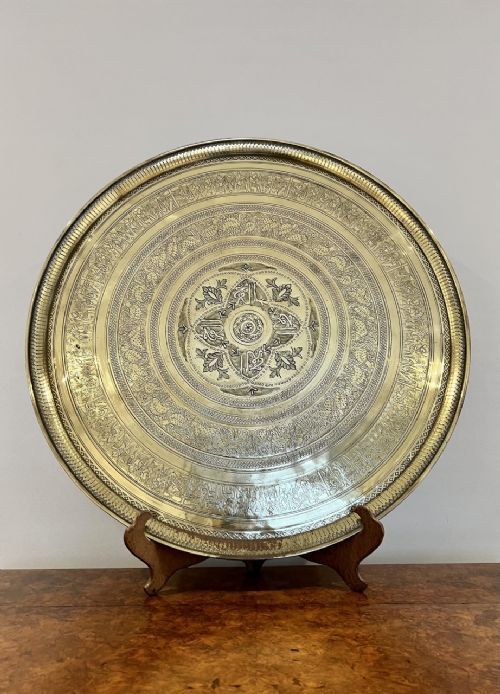
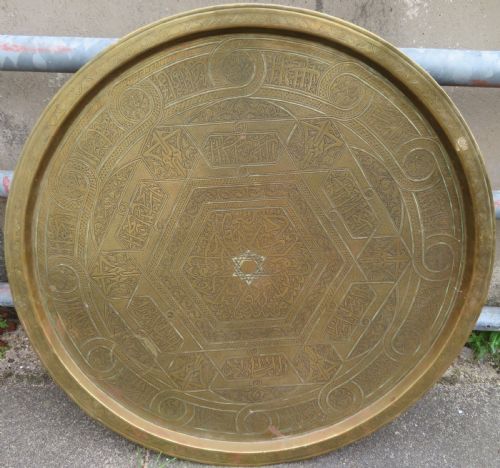
A large brass wall platter takes the form of circular trays, chargers, and repousse shields designed for display. These decorative objects emerge from diverse cultural traditions including Anglo-Indian, Middle Eastern, and Japanese Meiji aesthetics.
The selections on this page span the nineteenth century, reaching through the Victorian and Edwardian eras. Buyers encounter pieces styled in Egyptian Revival, Mamluk Revival, and Renaissance Revival designs.
Forms include massive Japanese cloisonne enamel chargers alongside engraved Cairo Ware and mixed metal trays. Each piece serves as a striking focal point when mounted directly onto a wall.
How they were made
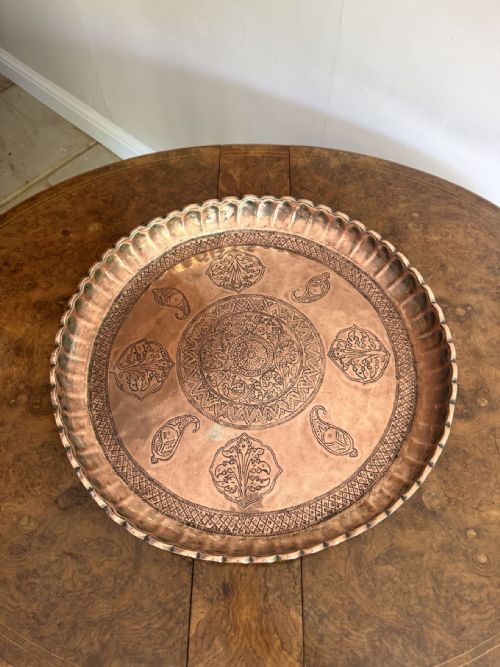
Makers utilised primary bases of brass, copper, and bronze, frequently combining metals for contrast. Artisans applied repousse techniques to hammer designs into relief from the reverse side.
Surface decoration often involved intricate engraving and inlay work using silver and copper. Japanese pieces employed cloisonne enamel methods, fusing glass powders within wire compartments onto metal plates.
Owning a massive metal wall charger gives you an excuse to point at Mount Fuji or a leaping koi while discussing Victorian interior design.
What varies in quality
Quality rests upon the depth and precision of the hand-engraving and repousse work. Sharper, more deeply defined chasing distinguishes superior plates from softer, shallower stampings.
The complexity of mixed metal inlays and the refinement of cloisonne enamelling determine the upper tier of execution. Heavier gauge metal plates generally indicate a more substantial object.
The Large Brass Wall Platter Glossary
- Repousse
- A metalworking technique where the artisan hammers the design from the reverse side to create a raised relief on the front. This method gives decorative platters their tactile depth.
- Cloisonne
- An ancient technique for decorating metalwork objects with coloured material held in place by thin metal strips. Artisans weld wires to the base before filling the resulting cells with enamel.
- Charger
- A large decorative plate or tray used traditionally for display rather than for serving food. These substantial vessels often hang on walls or sit upon sideboards.
- Cairo Ware
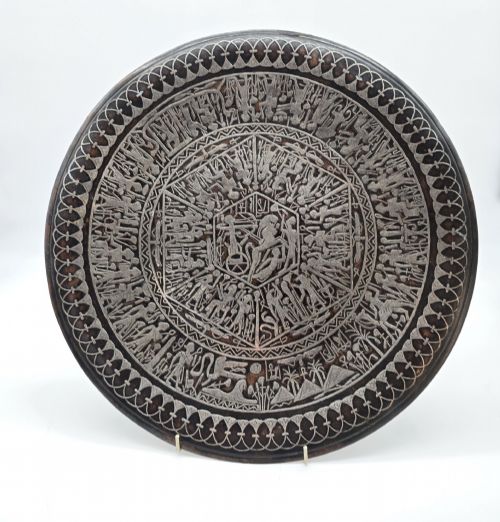
- Metalwork produced in Egypt featuring intricate silver and copper inlay upon a brass or bronze ground. These pieces gained immense popularity in Europe during the late nineteenth century.
- Mixed metal
- An eclectic decorative approach combining contrasting metals such as brass, copper, and silver within a single composition. This technique highlights different metallic hues and textures.
Large Brass Wall Platter: Frequently Asked Questions
How do I hang a heavy metal platter safely?
Large platters require robust wall fixings due to their substantial weight and metallic construction. Utilise appropriate picture wire or dedicated wall brackets designed to support heavy chargers securely.
Ensure the hanging hardware engages firmly with the rim or securely fastened reverse loops. Professional framing or specialist hanging mounts offer additional security for valuable pieces.
What is Cairo Ware?
Cairo Ware refers to nineteenth-century Egyptian metalwork created for Western and local markets alike. These brass or bronze vessels feature dense silver and copper inlay patterns.
Such pieces reflect the Victorian appetite for exoticism and revivalist Middle Eastern design. Artisans hammered and inlaid these chargers by hand in workshops around Cairo.
How do I clean brass and copper chargers?
Dust these platters gently with a soft, dry cloth to prevent the accumulation of grime within engraved recesses. Avoid aggressive chemical polishes that strip away historical patination and damage inlaid metals.
Preserving the aged surface maintains the character and visual depth of the piece. Consult a specialist if deeper conservation cleaning becomes necessary.
Can these platters be used for serving food?
These platters function primarily as decorative wall chargers and display trays rather than tableware. Many antique pieces contain mixed metals or patination unsuited to culinary use.
Displaying them on walls or surfaces protects the delicate hand-engraved and inlaid details. Enjoying them visually preserves their historical integrity for the future.