





Gold Brass Tray
These gold brass tray pieces combine solid metal construction with decorative detail, offering practical surface space for drinks or correspondence.
Gold Brass Tray
A gold brass tray search encompasses serving vessels, decorative platters, and table surfaces produced across the Victorian, Edwardian, and early twentieth-century periods. Buyers typically encounter circular serving trays, handled drink platters, and engraved examples originating from English workshops or international sources.
The inventory demonstrates variety beyond simple servers, stretching to include tray tables, desk accessories, and fitted dishes incorporating mixed metals. These items reflect domestic habits from the nineteenth century onward, serving both utilitarian and display functions in the home.
Materials and construction
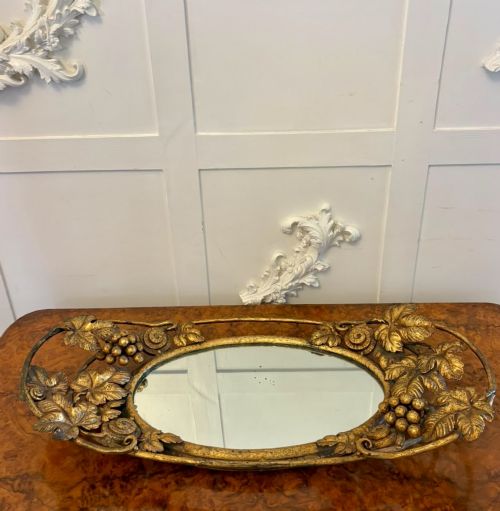
Construction relies primarily on brass, bronze, and mixed metals, often paired with glass, wood, or lacquer surfaces to create contrast and rigidity. Many items employ casting and hand-engraving techniques, resulting in detailed surface decoration such as floral motifs, grape vines, or zodiac signs.
Finishes vary from polished gilt metal and ormolu mounts to dark patinated bronze and mixed-metal inlay work. Craftspeople utilised techniques like chasing and relief work to add texture and depth to the rims and inner wells of each piece.
Listings feature brass alongside mixed metals, glass, and lacquer, spanning the Victorian and Edwardian periods.
Assessing craftsmanship and execution
Quality reveals itself in the crispness of the engraving and the weight of the metal used in the body and handles. Superior examples display secure joints, well-defined decorative motifs, and careful finishing to the underside and edges.
The integrity of applied details, such as ball finials, mirror inserts, or mixed-metal inlays, separates standard production items from finer studio or workshop pieces. Wear patterns on active serving surfaces should appear natural and even rather than obscuring the original design.
Clay
The Gold Brass Tray Glossary
- Ormolu
- Gilded bronze or brass mounted onto decorative objects and furniture, popular in French-inspired designs.
- Chinoiserie
- European artistic style reflecting Chinese aesthetic influences, frequently applied to lacquered furniture and trays.
- Chasing
- A metalsmithing technique where designs are hammered into the front surface of metal rather than carved away.
- Demi-lune
- A half-moon shape characteristic of console tables, hall stands, and corner trays designed to sit flush against a wall.
- Patina
- The surface sheen and colour acquired by metal through age, handling, and oxidation.
Gold Brass Tray: Frequently Asked Questions
How do I clean a brass tray?
Use a soft cloth to remove dust and gentle soapy water for general cleaning, avoiding harsh chemical dips that strip the historic patina.
Dry the metal thoroughly after washing to prevent spotting, and refrain from aggressive scrubbing on engraved or gilded surfaces.
Were these trays meant for serving?
Many examples served as practical drinks trays, calling card receivers, or dressing table organizers in period homes.
Larger versions with raised rims handled liquids or glassware, while smaller engraved dishes held letters, trinkets, or smoking accessories.
How can I date an antique brass tray?
Examine the fastening methods, weight, and style indicators such as Aesthetic Movement or Edwardian motifs.
Hand-beaten tool marks and specific period hallmarks or registration numbers often point to nineteenth or early twentieth-century manufacture.
Can these trays be used on coffee tables?
These pieces function well as decorative centrepieces on tables, holding books, candles, or smaller objects.
Their solid construction provides a stable surface for everyday display while adding metallic warmth to a modern interior.