


Engraved Metal Wall Plaque
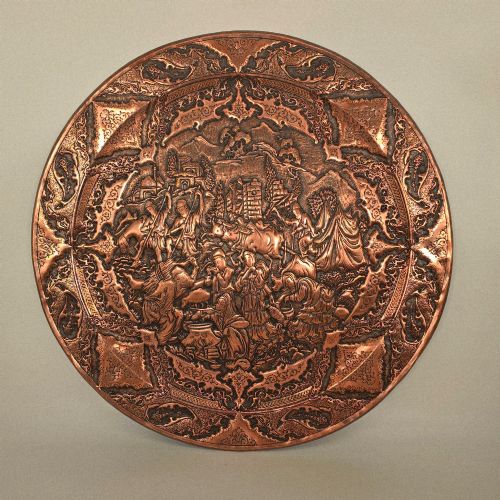
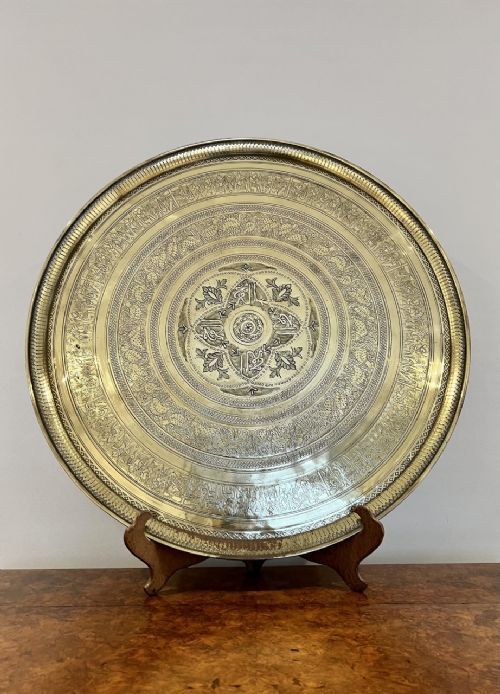
These engraved metal wall plaque pieces bring striking pattern and texture to a room, ranging from large brass chargers to shields.
Engraved Metal Wall Plaque
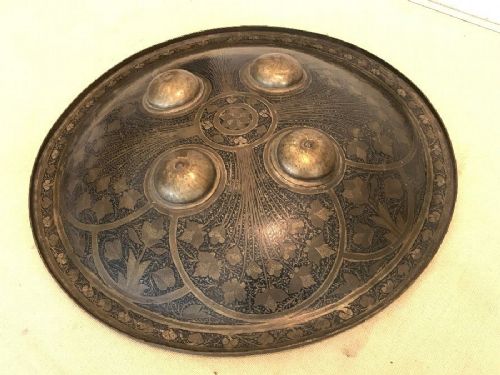
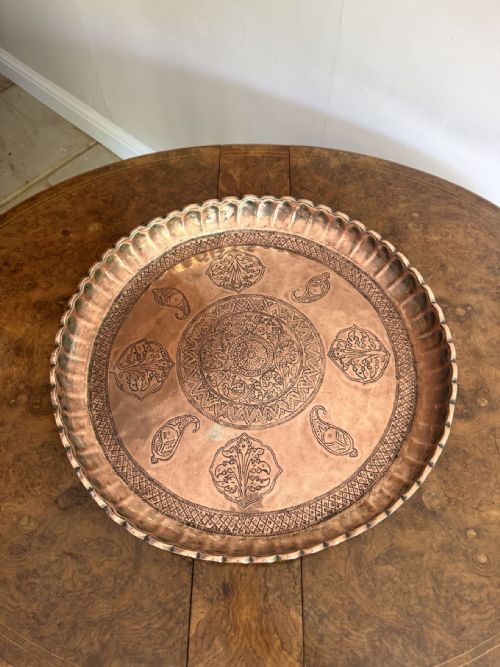
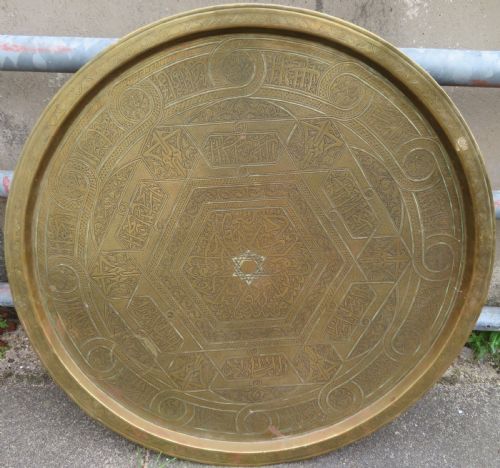
When you search for an engraved metal wall plaque, you encounter circular chargers, trays, and shields spanning the nineteenth and early twentieth centuries. The examples on this page predominantly take the form of large brass, copper, and mixed metal trays or chargers decorated with intricate surface work. These objects bridge decorative arts and functional forms, often originally intended as serving vessels or defensive gear before finding a home on the wall.
Geographic influences are strongly represented through Anglo-Indian, Indo-Persian, Middle Eastern, Persian, and Egyptian Revival styles. You will frequently find pieces designated as Cairoware or bearing Mamluk Revival motifs alongside traditional Victorian interpretations. The scale tends toward the substantial, with large circular diameters dominating the selection.
Materials and Techniques
The construction relies heavily on base metals such as brass and copper, frequently combined as mixed metal or enhanced with patination. Artisans shaped these sheets through hammering and raising, creating sturdy wall chargers, trays, and shields that endure across the decades. Timber occasionally appears in the broader context of related decorative works.
Surface ornamentation is achieved through detailed engraving and repousse work, cutting and pressing linear patterns into the metal. Craftsmen filled these incisions with contrasting dark resin or utilised differential patination to make the foliate and geometric designs stand out against the polished or textured ground.
The listings show materials spanning plain brass, patinated copper, mixed metal, and timber.
Assessing Quality
Quality reveals itself in the depth, precision, and density of the hand-engraved decoration across the surface. Finer examples display crisp, confident lines forming complex foliate or geometric schemes without hesitation or drift.
The choice of materials and the weight of the metal also distinguish the work, as heavier brass and copper substrates support more ambitious repousse relief. Patination that highlights the chasing rather than obscuring it indicates a higher standard of original craftsmanship.
The Engraved Metal Wall Plaque Glossary
- Charger
- A large ornamental plate or dish, typically round, designed for display on a wall or sideboard rather than everyday dining.
- Repousse
- A metalworking technique where the artisan hammers the metal from the reverse side to form a raised design in relief.
- Cairoware
- Nineteenth-century metalware produced in Egypt, featuring intricate silver and copper inlay on brass grounds with Islamic motifs.
- Dhal
- A traditional Indian circular shield, often constructed of metal and decorated with engraved foliate patterns.
Engraved Metal Wall Plaque: Frequently Asked Questions
How do I hang a heavy metal charger safely?
Support the weight using a proper wall bracket or spring-loaded plate hanger designed for heavy metal objects. Ensure the fixing anchors securely into wall studs or uses appropriate masonry plugs.
Avoid relying on simple adhesive discs or light picture wire passed through unsupported elements. Distribute the load evenly around the rim to protect the metal structure over time.
What is the difference between a tray and a charger?
Trays typically feature raised rims and handles or flat bases intended for carrying items. Chargers are generally larger decorative plates meant strictly for display.
Many pieces listed as trays function effectively as wall plaques due to their impressive size and decorative engraving.
How should I clean patinated copper and brass?
Dust the surface regularly with a soft, dry cloth to prevent the accumulation of grime in the engraved recesses. Avoid aggressive chemical metal polishes that strip away the historical patination and dark infill.
Preserving the aged dark finish maintains the visual contrast that defines the engraved patterns.
How can I tell Islamic revival pieces from Victorian items?
Islamic revival pieces incorporate specific geometric strapwork, Arabic inscriptions, and Mamluk brass inlay techniques native to Middle Eastern workshops. Victorian interpretations often adapt these motifs within British aesthetic frameworks while retaining the heavy engraved brass construction.
Both categories frequently overlap on this page through nineteenth-century trade and stylistic exchange.