
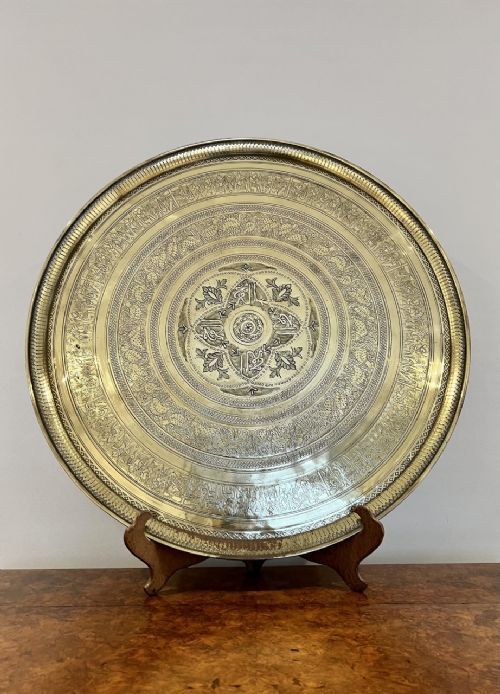


Anglo Indian Brass Tray
An anglo indian brass tray brings a rich tactile history into a room, combining heavy metalwork with carved timber supports.
Anglo Indian Brass Tray
When you search for an anglo indian brass tray, you are looking at items designed for serving or display, frequently mounted on folding stands to create coffee tables or occasional tables. These pieces span the nineteenth century through the early twentieth century, encompassing Victorian productions and Raj period work.
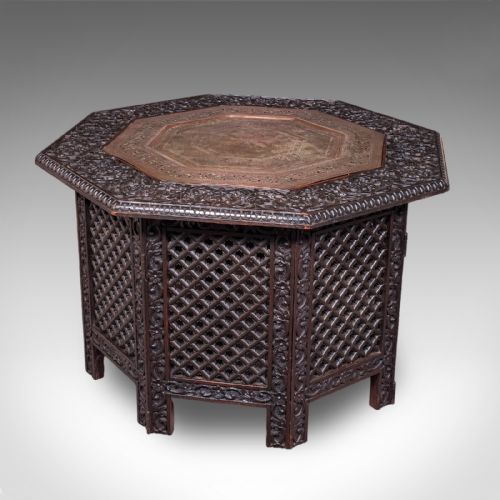
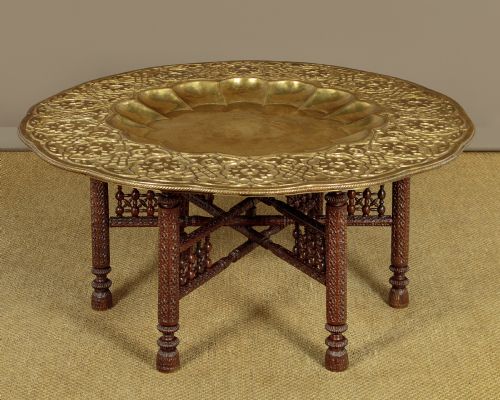
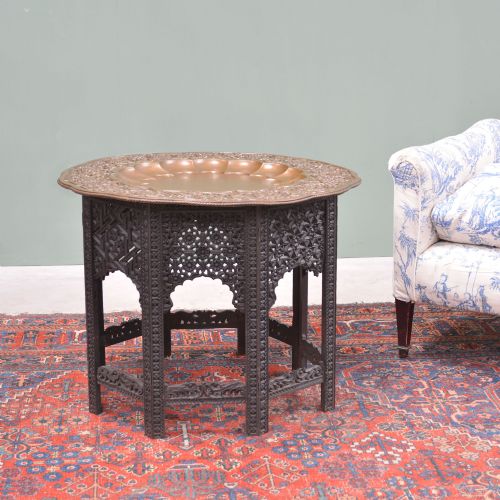
The versions most commonly met on this page combine a removable circular or folding metal top with a collapsible wooden base. Such items range from portable serving trays and wall chargers to larger tray top tables used for coffee or tea.
Makers of the period utilised stylistic influences stretching from traditional Anglo-Indian motifs to Persian designs. Forms include specialised items like afternoon tea slides, desk sets, and large decorative chargers alongside standard table tops.
Materials and construction
The primary metal elements consist of brass, copper, and mixed metal, frequently shaped into large circular surfaces or wall plaques. Artisans hammered and pierced these sheets by hand to create intricate patterns featuring figures, animals, and zodiac signs.
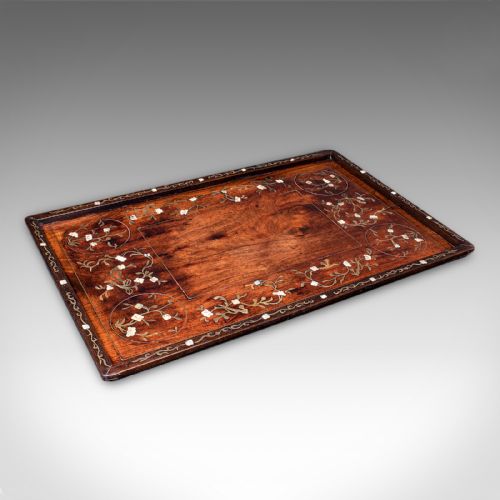
Supporting structures rely on hardwoods such as teak, rosewood, and general carved timber. Certain examples incorporate bone or brass inlay directly into the wooden framework, alongside folding mechanisms designed for portability.
Current listings feature items from the Victorian period through the nineteen thirties, executed in brass, copper, teak, and mixed metal.
Assessing quality and execution
Quality reveals itself in the depth and precision of the hand engraving upon the metal surface. Finer examples display crisp, densely detailed piercing and heavy gauge brass or copper that resists warping.
The supporting woodwork demonstrates craftsmanship through the intricacy of the carving and the stability of the folding mechanism. Superior pieces maintain tight joints in the teak or rosewood frame and a secure fit between the tray and its base.
The Anglo Indian Brass Tray Glossary
- Tray top table
- A piece of furniture consisting of a removable metal tray resting on a collapsible wooden base. This dual-purpose form allowed the surface to be used for serving before being placed back onto the stand.
- Wall charger
- A large decorative metal plate intended for hanging on a wall rather than resting on a table. These items feature extensive hand-pierced or engraved ornamentation across the entire surface.
- Mixed metal
- An alloy composition or combination of different metals utilised within a single decorative object. This technique creates tonal contrast across the engraved surface of the tray.
- Raj period
- The era of British governance in the Indian subcontinent spanning from eighteen fifty-eight to nineteen forty-seven. Pieces from this time often reflect cross-cultural design exchanges.
- Hoshiarpur
- A region in Punjab renowned for intricate woodwork and inlay techniques. Items from this tradition typically feature dense carving on the wooden frames supporting the metal tops.
Anglo Indian Brass Tray: Frequently Asked Questions
How do I clean a brass tray?
Dust the surface regularly with a soft dry cloth to prevent dirt accumulation in the engraved recesses. Avoid aggressive chemical polishes that strip the historic patina from the metal.
Test any mild cleaning solution on a small underside area first. Preserving the dark oxidation in the engraved lines maintains the visual depth of the design.
Are the tray tops removable?
Most tray top tables feature a loose metal top resting directly upon a folding wooden stand. This construction allowed the surface to function as a serving tray.
Care should be taken when moving the assembled table. Lifting the entire unit by the metal top can cause it to dislodge from the base.
What woods were used for the bases?
Makers predominantly utilised dense hardwoods such as teak and rosewood to construct the folding stands. These timbers provided the necessary strength to support heavy metal tops.
Carved decoration often covers the entire wooden frame, sometimes enhanced with bone or brass inlay work. The condition of the wood relies on the original density of the timber.
How do I date an antique tray?
Dating relies on examining the manufacturing techniques, tool marks, and stylistic motifs present on both the metal and the wood. Pieces from the nineteenth century often show hand-beaten irregularities absent in later mass-produced items.
Historical context helps narrow the period, connecting specific carving styles to regions like Hoshiarpur or the broader Raj era. Comparing construction methods with documented archival pieces provides further confirmation.