

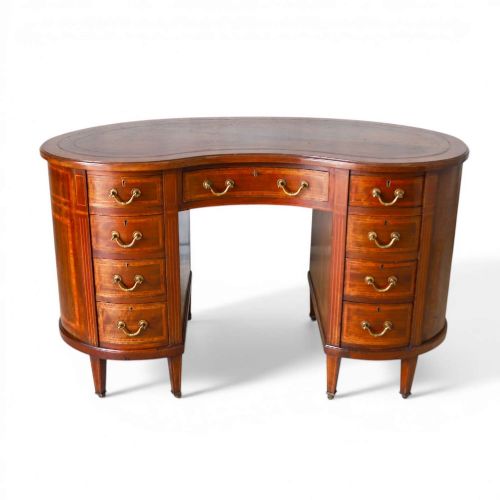
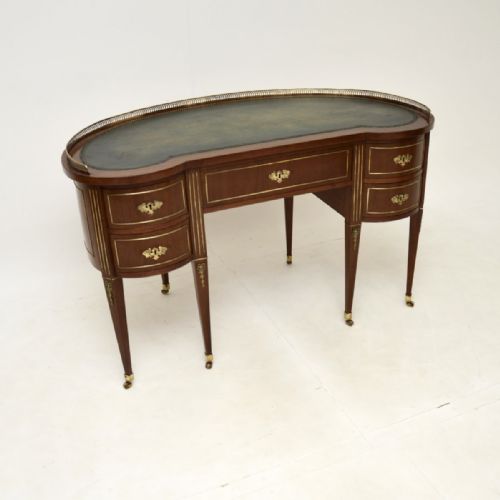
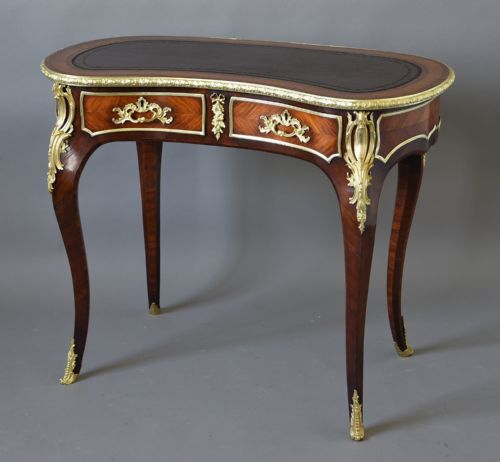
Kidney Writing Table
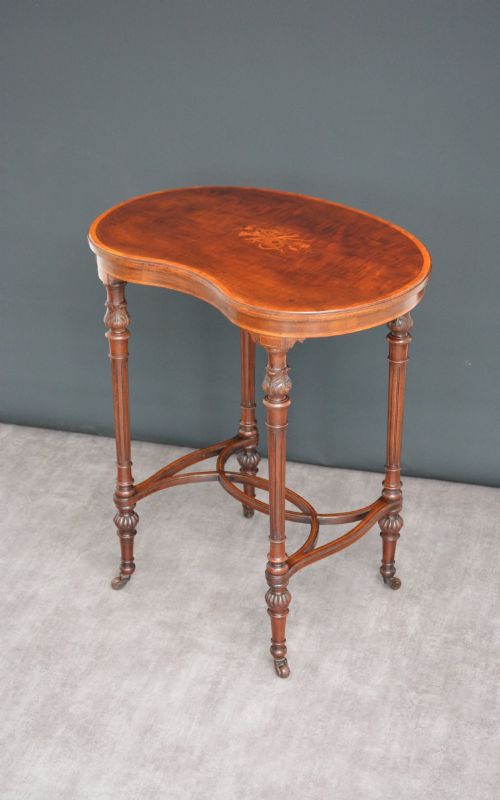
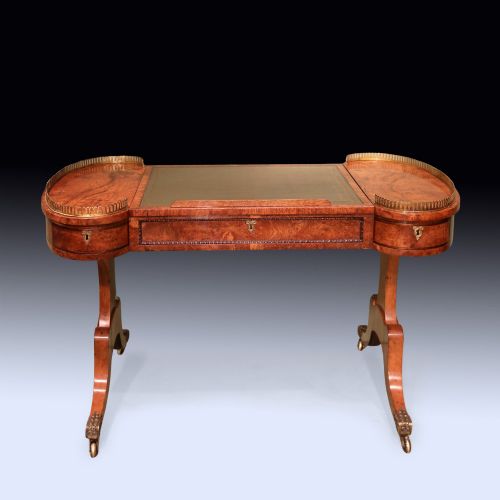
A kidney writing table curves inward toward the user, combining decorative elegance with compact workspace in mahogany, satinwood and walnut.
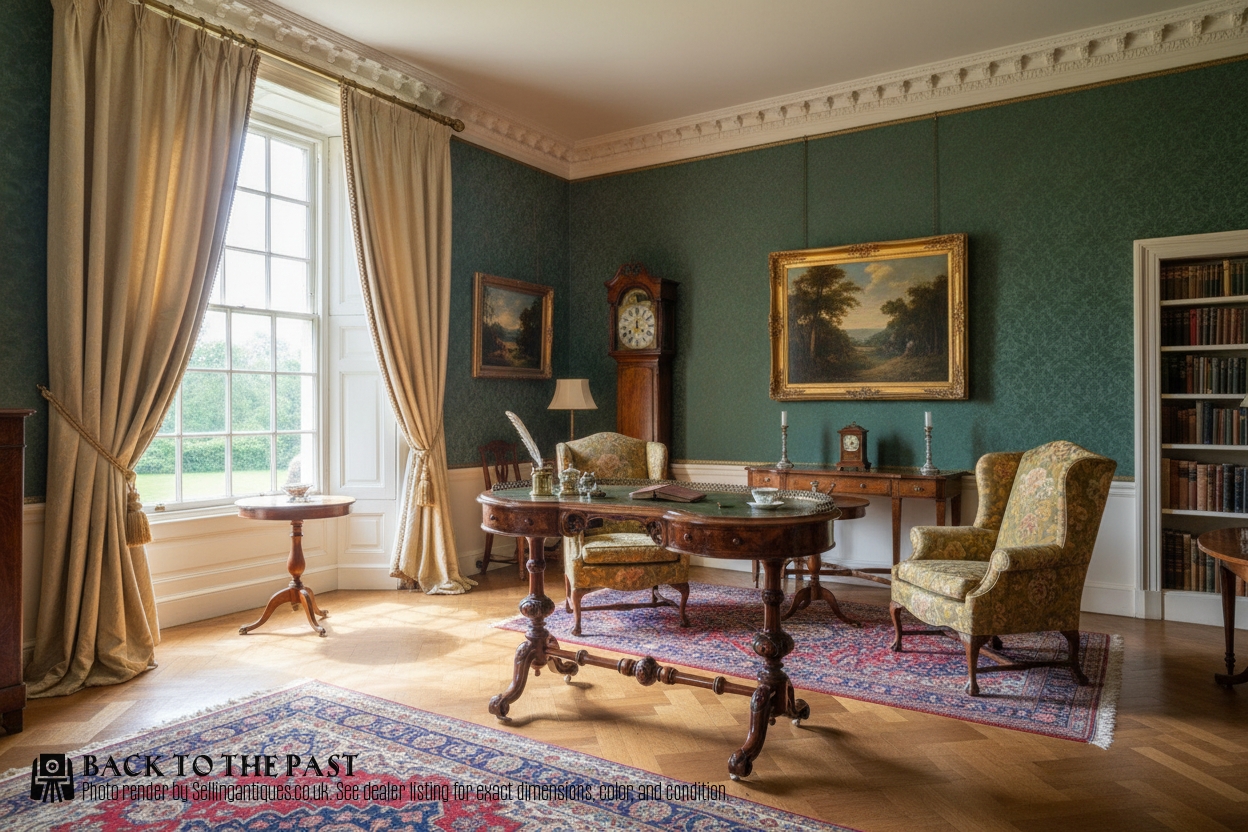
Kidney Writing Table
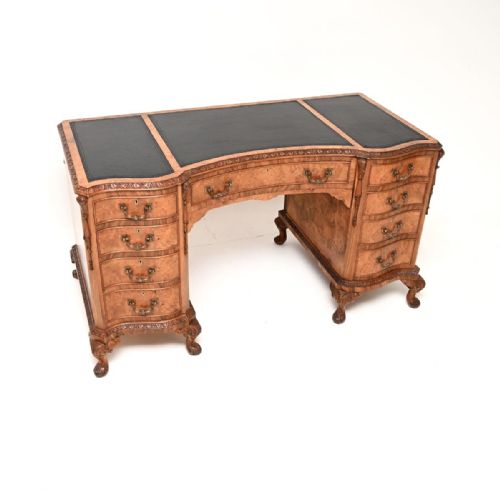
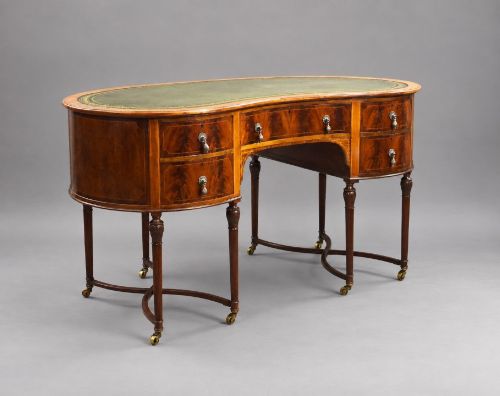
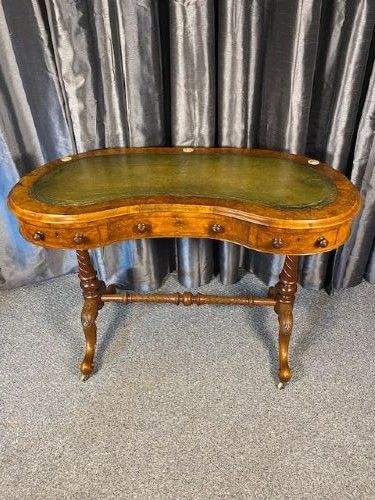
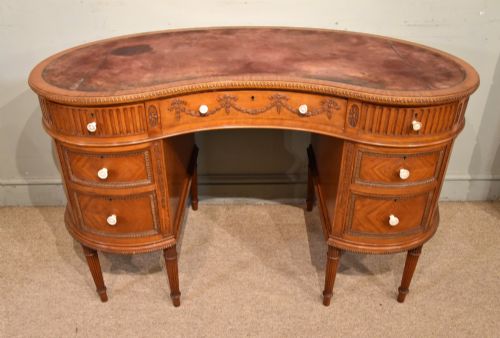
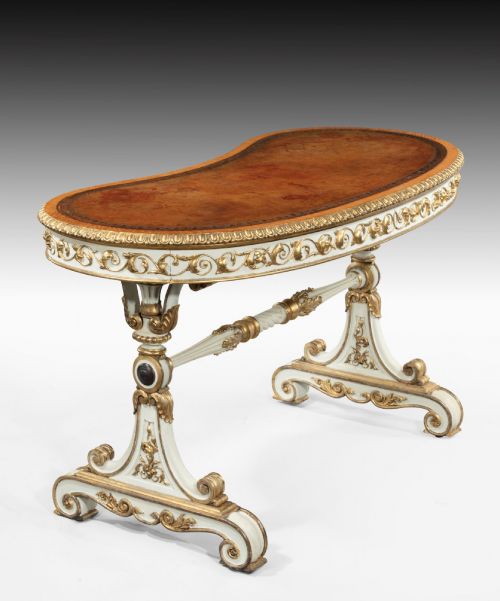
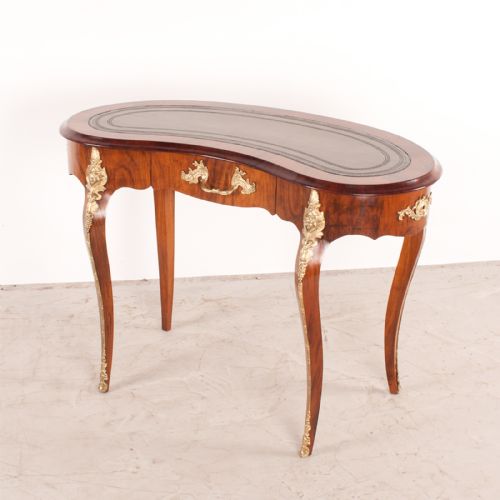
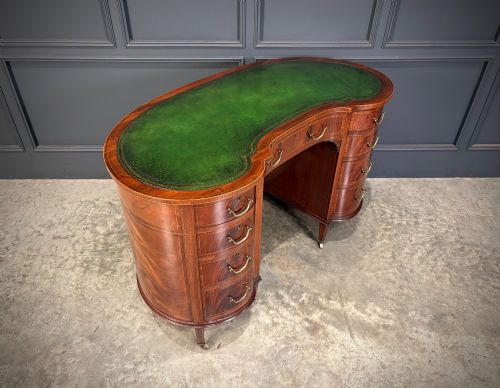
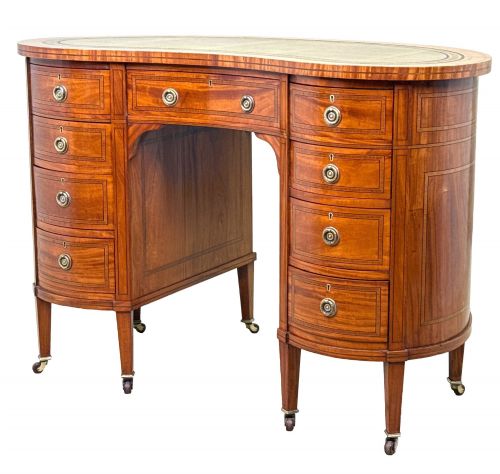
A kidney writing table provides a curved front profile designed to wrap comfortably around the sitter while occupying minimal floor space in a room. These pieces appear frequently in Edwardian satinwood and mahogany iterations, alongside substantial Victorian burr walnut examples.
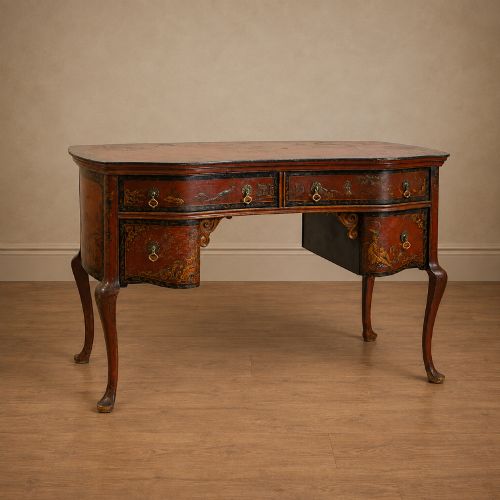
The form spans occasional tables, dressing tables and freestanding writing desks intended for placement in the centre of a room rather than against a wall. Makers adopted the distinctive kidney shape during the late eighteenth century and continued producing revival variants well into the twentieth century.
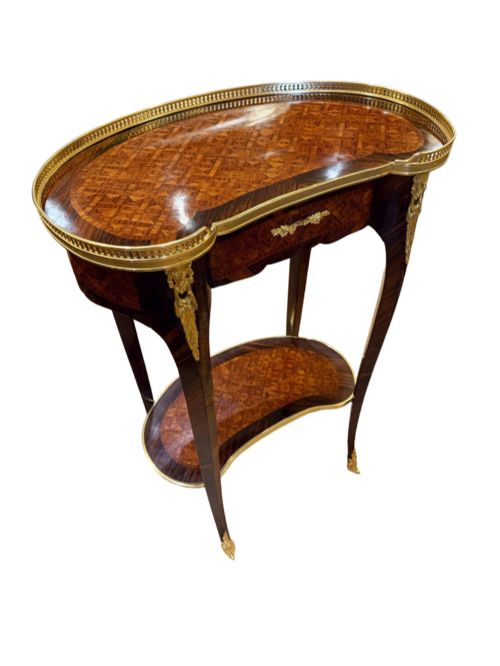
Examples on this page draw upon Sheraton Revival, Louis XV Revival and Neoclassical styles, frequently incorporating parquetry, marquetry or hand-tooled leather writing surfaces.
Craftsmanship and Distinction
The distinction between standard production and exhibition quality rests on the selection of veneers and the precision of the joinery along the curved apron and drawers. Superior pieces utilise highly figured burr timbers or intricate marquetry that flows continuously across the top and drawer fronts without interruption.
Finished backs on freestanding models indicate higher workshop status, allowing the table to face into a room rather than hide against a wall. The refinement of the brass mounts, the subtlety of hand-carved details, and the survival of original leather surfaces further separate utilitarian furniture from high-status commissions.
Some models hide miniature stationery drawers tucked ingeniously within the curved sweep of the kneehole.
Maple & Co·Edwards & Roberts·Wolfe & Hollander·Shapland & Petter·JAS Shoolbred·Waring & Gillow
The Kidney Writing Table Glossary
- Crossbanding
- A border veneer applied around the perimeter of a tabletop with the grain running perpendicular to the central panel. This technique frames the curved edge of a kidney writing table.
- Marquetry
- Decorative patterns formed by fitting together small pieces of veneer into timber backgrounds. Artisans utilise various woods to create floral or geometric motifs across the top.
- Ormolu
- Gilt-bronze decorative mounts applied to furniture. These cast metal ornaments adorn the legs, aprons and corners of revival pieces.
- Parquetry
- Geometric wood inlay forming mosaic patterns such as cubes or chequers. It frequently decorates the writing surface or side panels.
- Bureau-plat
- A flat-topped writing table finished on all sides. This continental term often applies to freestanding kidney forms with multiple drawers.
Kidney Writing Table: Frequently Asked Questions
Where do you put a kidney writing table?
Many examples are finished on all sides as freestanding pieces, making them suitable for placement in the middle of a study or drawing room rather than flat against a wall.
Smaller side table variants also fit neatly into bedroom alcoves or beneath windows.
How do I care for the leather top?
The leather writing surface benefits from occasional cleaning with a dry cloth and gentle conditioning to prevent the hide from drying out and cracking.
Avoid placing damp items directly onto the antique leather and keep the desk away from direct heat sources.
How do I distinguish Edwardian from Victorian examples?
Victorian examples often employ rich burr walnut with heavy proportions and elaborate marquetry, while Edwardian pieces frequently showcase lighter satinwood or painted neoclassical decoration.
Construction methods inside the drawer boxes and the choice of secondary timbers provide additional clues to the exact manufacturing decade.