
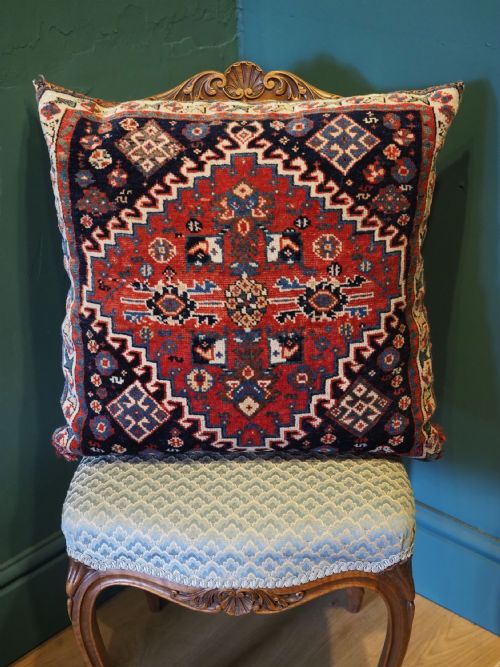
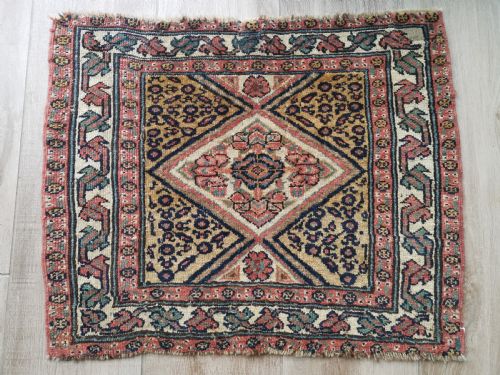
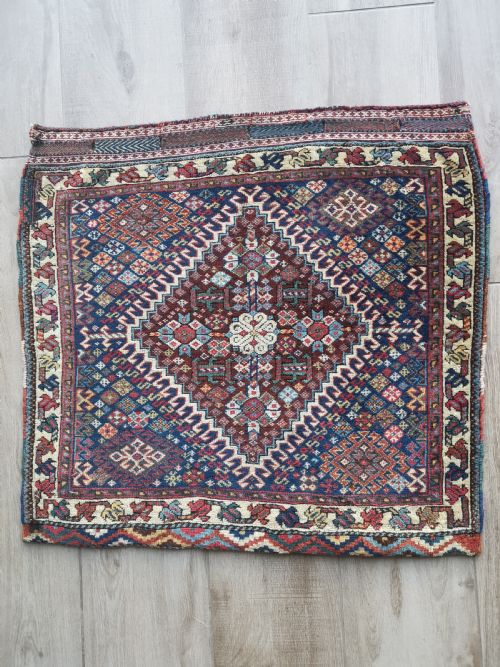


Khorjin Cushion Cover
These khorjin cushion cover selections bring nomadic textile art into a room, formed from antique saddlebags and bag faces woven for daily tribal transport.
Khorjin Cushion Cover
A khorjin cushion cover originates from a Persian tribal saddlebag, adapted into a cushion for domestic use. The pieces gathered here belong to nineteenth and early twentieth century nomadic traditions, taking the form of bag faces or half-saddlebags.
Makers in regions such as Fars, Azerbaijan, and north-west Persia constructed these sturdy containers for pack animals. Tribal groups including the Qashqai, Shahsavan, Afshar, and Khamseh produced distinct regional patterns that now survive as decorative textiles.
How they were made
Weavers relied on hand-spun wool, cotton, and goat hair, combining pile knotting with flatweave techniques such as Soumak. Natural dyes supplied the deep colour palettes derived from local plants and minerals.
Nomadic workshops constructed these storage pieces to endure heavy daily travel before their transformation into cushions. The structures employ sturdy warps and wefts designed to hold firm under constant pressure.
The listings span the nineteenth and early twentieth centuries, featuring wool, cotton, goat hair, and natural dyes across Qashqai, Shahsavan, and Afshar nomadic styles.
What varies in quality
The density of the weave and the precision of the tribal motifs set individual examples apart. Finer pieces demonstrate exceptional handling of natural dyes, yielding a luminous quality across the wool surface.
The integrity of the remaining structure and the retention of complete bag backs or original selvedges influence the character of each textile. Variations in the complexity of bird, dragon, or boteh designs reflect the skill of the individual nomad weaver.
The Khorjin Cushion Cover Glossary
- Khorjin
- The Persian term for a double saddlebag used by nomadic tribes for transport and storage. These functional bags are frequently converted into cushions.
- Bagface
- The decorative front panel of a tribal storage bag, displaying the primary woven design while the plain back served practical needs during transit.
- Soumak
- A flatweave technique involving wrapping weft threads over and under the warps, creating a textured surface often seen on Shahsavan pieces.
- Boteh
- A stylised floral motif resembling a pear or almond, frequently repeated across Afshar and other tribal textile designs.
- Qashqai
- A confederacy of pastoral nomadic tribes in south-west Persia known for finely woven saddlebags and rich geometric patterns.
Khorjin Cushion Cover: Frequently Asked Questions
What is a khorjin cushion cover?
A khorjin cushion cover is made from an antique Persian tribal saddlebag face. These textiles were originally woven by nomads for carrying belongings on pack animals.
Over time, surviving bag faces and half-saddlebags are cleaned, backed, and stuffed to serve as decorative cushions in modern interiors.
How do I care for my cushion?
These antique wool textiles require gentle treatment to preserve the natural dyes and hand-spun fibres. Professional specialist cleaning is recommended for antique pile and flatweave covers.
Keep them away from direct, prolonged sunlight to prevent the natural colours from fading over the years.
How are different tribal origins told apart?
Tribal attribution relies on specific colour palettes, structural techniques, and characteristic geometric or animal motifs. Qashqai pieces often display Fars province iconography, while Shahsavan works frequently utilise Soumak technique with distinct dragon or bird patterns.
Khamseh, Afshar, and Kurdish weavers each employed unique borders and field arrangements that help identify their origin.
Are these covers made from complete bags?
Some examples consist solely of the decorative bag face mounted onto a plain weave back, while others retain their original back panels or form part of a matched pair. Half-saddlebags represent one side of the original double pouch structure.
Each piece reflects the survival of functional nomadic containers adapted into soft furnishings.