


Khorasan Persian Rug
A khorasan persian rug brings the rich nomadic and tribal heritage of north-east Persia directly onto your floor.
Khorasan Persian Rug
When you search for a khorasan persian rug, you encounter hand-knotted floor coverings hailing from the broad Khorasan region of north-east Persia. These pieces span the late nineteenth century into the early twentieth century, capturing an era of traditional village and tribal weaving.
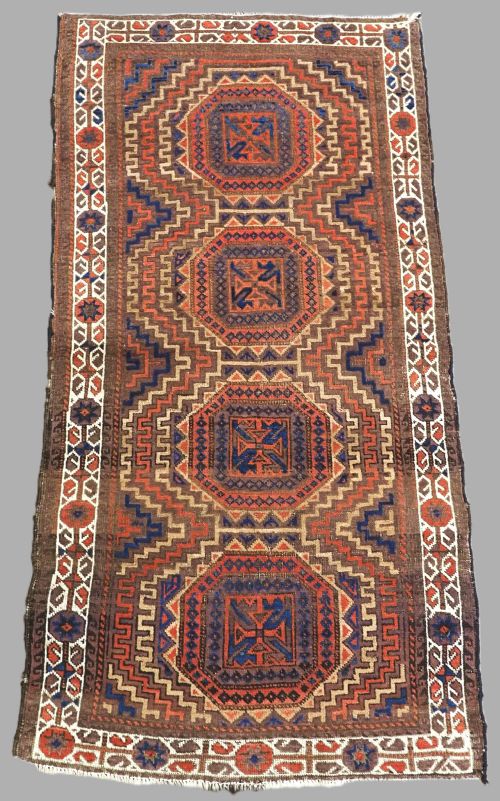
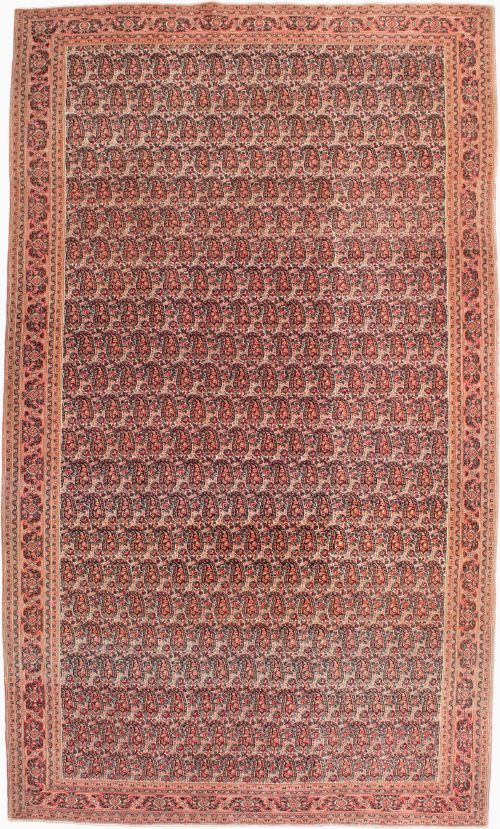
The versions most commonly met on this page include tribal and nomadic formats such as Baluch, Kurdish, and Quchan pieces, alongside larger Khorasan and Meshed carpets. They typically display classic motifs including guls, lattice patterns, calyx designs, and Mina Khani variants.
Originating from specific tribal groups and regional workshops, these textiles reflect distinct cultural identities. Buyers encounter everything from compact area rugs to substantial oversize carpets suited for major living spaces.
How They Were Made
These rugs rely heavily on natural wool foundations, often paired with cotton structures to provide durability and stability. Certain rustic nomadic pieces incorporate camel wool, lending a distinct texture and warm natural tone to the pile.
Weavers utilised traditional hand-knotting techniques handed down through generations of tribal makers. The construction incorporates sturdy warps and wefts designed to withstand decades of daily use while maintaining flexibility.
Dyes and wool selection varied according to regional resources, resulting in deep, enduring colour palettes. The meticulous knotting allows intricate lattice work and geometric guls to remain crisp across both small mats and large carpets.
Several pieces preserve the energetic handiwork of Quchan Kurds who apparently wove while thinking about very large sheep.
What Varies In Quality
The fineness of the knotting and the precision of the lattice or gul design dictate the upper tier of these textiles. Master weavers achieved exceptional detail in geometric repeats, whereas simpler tribal pieces lean towards a more rustic charm.
The choice of materials also signals quality, particularly where select wool grades or fine camel wool were employed by skilled makers. Handling specific regional variants, such as Dorush or Salar Khani pieces, reveals subtle differences in handling and structural tightness.
The Khorasan Persian Rug Glossary
- Gul
- A medallion motif commonly found in tribal rugs, often repeating across the field in structured rows. These octagonal or gabled ornaments identify specific weaving groups.
- Mina Khani
- A repeating floral lattice design featuring interconnected blossoms and rosettes. This classic pattern demonstrates considerable symmetry across Persian and regional carpets.
- Baluch
- A nomadic weaving tradition associated with tribes of the borderlands, frequently noted for deep tones and geometric patterns. These pieces often overlap with Khorasan regional production.
- Calyx
- A floral motif resembling the sepals of a flower, integrated into repeating lattice structures. This detail appears frequently in nineteenth-century village carpets.
Khorasan Persian Rug: Frequently Asked Questions
What is a Khorasan Persian rug?
A Khorasan Persian rug is a hand-knotted floor covering originating from the north-east province of Persia during the nineteenth and early twentieth centuries.
These textiles encompass various tribal and regional styles, including Kurdish, Baluch, and Meshed productions.
How do I identify a tribal Khorasan piece?
Tribal Khorasan pieces often feature geometric guls, lattice layouts, or specific tribal names associated with local weaving groups.
Look for traditional motifs like the Mina Khani design and rustic wool textures characteristic of north-east Persia.
Are these rugs suitable for heavy traffic?
These antique rugs were constructed using durable wool pile and sturdy foundations designed to endure daily household use.
Placing an appropriate underlay beneath the rug helps protect the natural fibres and maintain stability on hard floors.
What materials were used to make them?
The primary material is wool, frequently complemented by cotton foundations and occasional uses of camel wool for distinct texture.
These natural fibres contribute to the resilience and ageing characteristics of nineteenth and early twentieth-century carpets.