
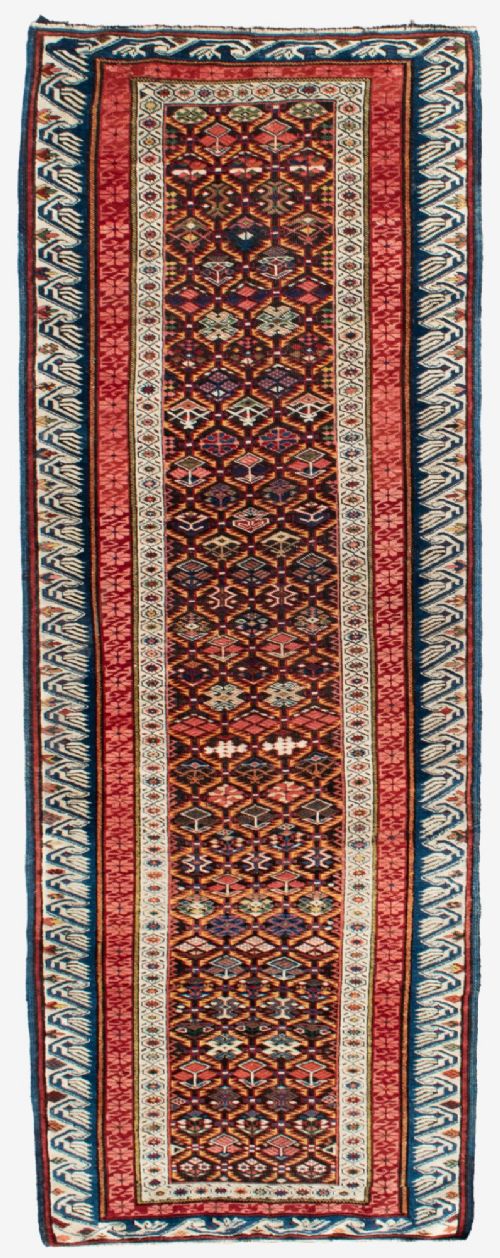


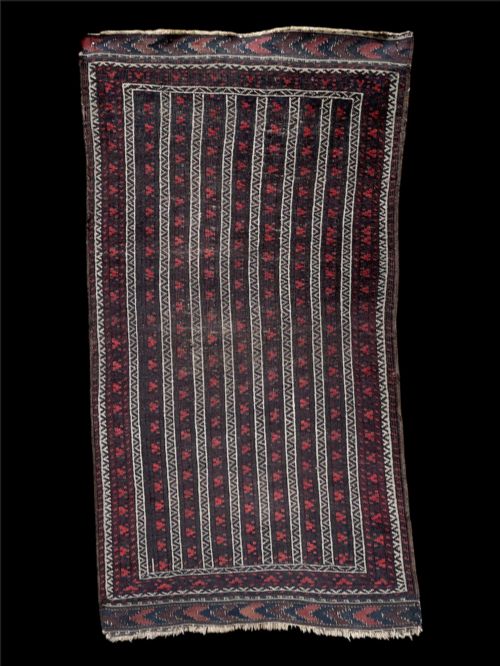

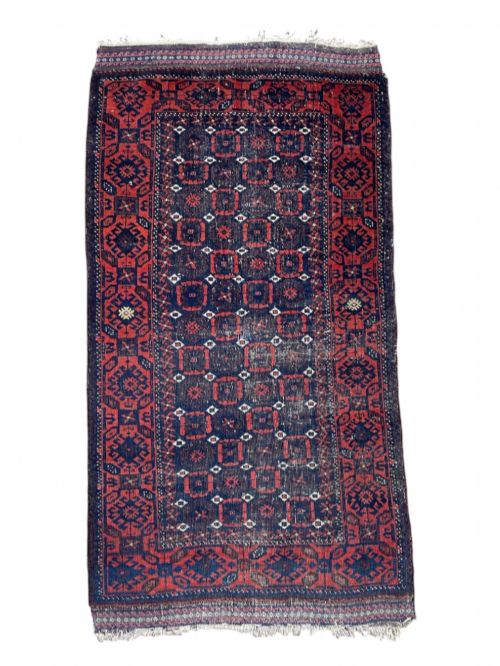


Dark Blue Tribal Carpet
A dark blue tribal carpet brings rich village history into a room through deeply saturated indigo grounds and geometric motifs.
Dark Blue Tribal Carpet
A dark blue tribal carpet encompasses nomadic and village textiles woven across Persia, the Caucasus, and Anatolia during the nineteenth and early twentieth centuries. These floor coverings display geometric medallions, prayer niches, and stylized animal or floral symbols rooted in regional tribal traditions.
Buyers will most frequently encounter Baluch rugs, Khamseh, and Kurdish pieces from the late nineteenth and early twentieth centuries on this page. These works arrive in formats ranging from small scatter mats and prayer rugs to narrow runners and room-sized carpets dominated by indigo and deep navy fields.
Materials and construction
Weavers constructed these textiles using hand-spun wool for the pile, supplemented by cotton foundations and occasional uses of goat hair for durability along the selvedges. Artisans applied natural dyes to achieve deep indigo blue tones alongside earthy madder reds and yellows.
The density of the weave varies according to origin, with village looms producing resilient structures designed for daily domestic utility. Hand-knotting techniques create durable surfaces that preserve the integrity of complex geometric patterns over generations.
Dark Blue Tribal Carpet Retail Price Guide 2026
Typical asking prices for dark blue tribal carpet among the pieces listed under this phrase on Sellingantiques today, from the lower quarter to the upper quarter. They describe what is for sale here now, not the wider market.
Listings feature nineteen-century and early twentieth-century formats including runners, prayer rugs, and room-sized carpets utilising wool, cotton, and natural dyes.
Assessing quality and execution
Quality rests in the depth and clarity of the natural dye palette, particularly the richness of the dark blue indigo ground. Superior examples exhibit precise symmetry in tribal motifs and tightly packed knots that secure the structure.
The handling of secondary colours and the crispness of design elements distinguish standard village output from exceptional tribal pieces. Preservation of original borders and intact ends further elevates the standing of an antique textile.
The Dark Blue Tribal Carpet Glossary
- Gul
- A repeating medallion or octagonal motif frequently found in tribal weavings. This design element often identifies specific regional or nomadic groups.
- Mihrab
- A niche design mirroring the architectural prayer arch found in mosques. These arches direct the visual focus of prayer rugs.
- Selvedge
- The reinforced side edges of a carpet formed by wrapping warp threads. Intact selvedges protect the body of the weaving from fraying.
- Warp
- The vertical foundation threads stretched lengthwise on the loom. Weft threads pass over and under these structural strands.
- Weft
- The horizontal threads passed through the warp to lock knots in place. They form the stable grid supporting the wool pile.
Dark Blue Tribal Carpet: Frequently Asked Questions
How do I clean an antique tribal rug?
Professional dusting and specialist low-moisture washing preserve the integrity of natural wool and indigo dyes.
Avoid household detergents and mechanical scrubbing, which damage fragile fibres and cause colours to bleed.
Can I place these carpets in high-traffic areas?
Sturdy wool construction and tight knotting allow many antique village rugs to handle moderate hallway or living room traffic.
Using a quality underlay prevents slipping and cushions the foundation against premature wear on hard floors.
What causes the colour variation in indigo fields?
Hand-spun wool absorbs natural dye baths unevenly, creating subtle tonal shifts known as abrash across the dark blue background.
This variation demonstrates traditional dyeing methods rather than a manufacturing defect.
How do I distinguish Baluch rugs from Caucasian pieces?
Baluch rugs typically feature deep indigo and dark brown grounds with camel hair accents and geometric symbols associated with western Afghan and eastern Persian nomads.
Caucasian pieces lean towards brighter primary palettes with sharper, highly geometric medallions and distinct border arrangements.