




Mina Khani Carpet
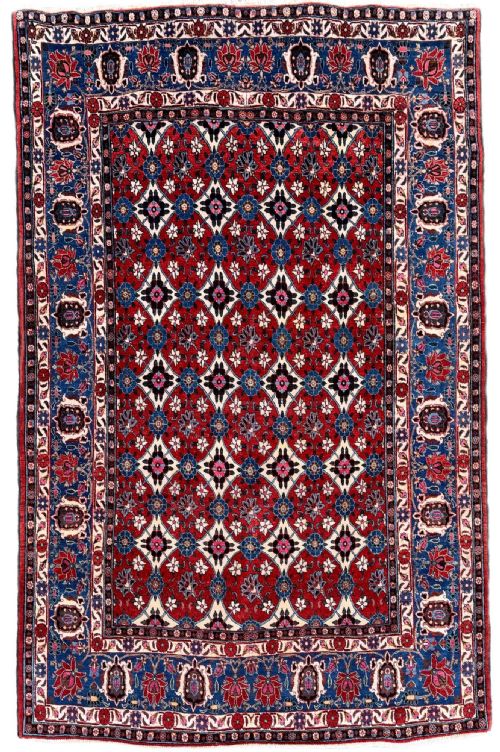
A mina khani carpet offers a dense, repeating lattice of flowers that brings enduring order to traditional Persian weaving.
Mina Khani Carpet
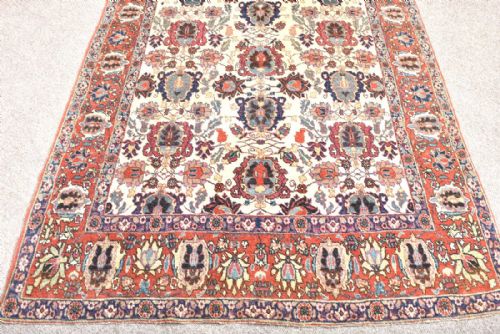
The mina khani carpet centres on a repeating floral lattice pattern that connects stylised blossoms across the field. Buyers seeking this style will encounter examples originating from Persian regions such as Veramin, Khorasan, Kurdistan, and Heriz. These pieces span from the nineteenth century through the early decades of the twentieth century.
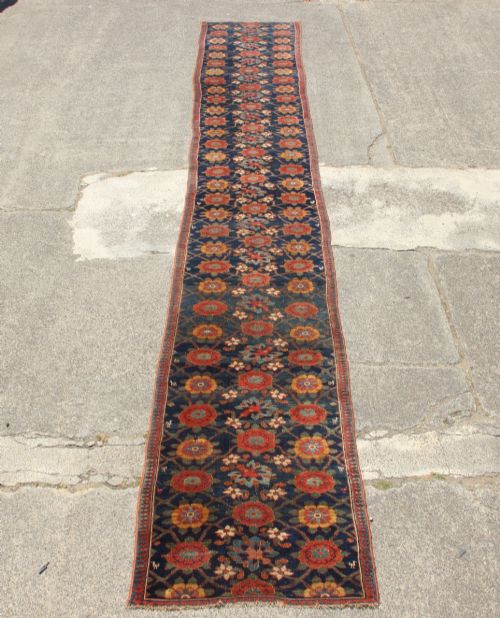
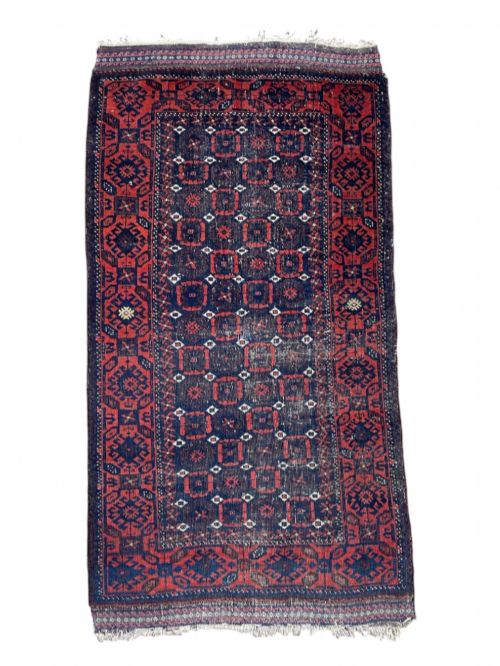
Runners, area rugs, and large carpets all appear within this group, displaying both full-size formats and long proportions. The designs range from classic symmetrical layouts to variant configurations executed by tribal and village weavers. Most pieces demonstrate the traditional workmanship of Persian regional traditions.
Assessing quality
Quality in a mina khani carpet rests on the clarity of the lattice design and the density of the knotting. Finer examples display crisp botanical motifs and precise execution, whereas simpler village or tribal pieces show more rustic interpretation of the traditional layout.
Mina Khani Carpet Retail Price Guide 2026
Typical asking prices for mina khani carpet among the pieces listed under this phrase on Sellingantiques today, from the lower quarter to the upper quarter. They describe what is for sale here now, not the wider market.
Several rugs arrive with unexpected mid-blue grounds, proving that even traditional botanical lattices enjoyed a colourful local twist.
The Mina Khani Carpet Glossary
- Mina Khani
- A traditional Persian all-over pattern featuring interconnected rosettes and flowers linked by a delicate lattice. This design appears frequently in rugs from Veramin and Khorasan.
- Lattice
- A geometric grid framework spanning the field of the carpet that organises the floral motifs into a structured repeat.
- Pile
- The surface layer of upright wool loops or cut ends that forms the usable soft fabric of the rug.
- Warp
- The vertical foundation threads stretched tightly on the loom before knotting begins.
- Weft
- The horizontal threads passed across the warp threads between rows of knots to secure the structure.
Mina Khani Carpet: Frequently Asked Questions
What is a mina khani design?
A mina khani design consists of an all-over repeating pattern of stylised flowers and rosettes joined by a continuous lattice network. This classic Persian layout creates a balanced and harmonious visual field.
The motif draws its name from historical Persian textile traditions and appears across various regional weaving centres, including Veramin and Khorasan.
Where were these carpets made?
These carpets originate primarily from Persian weaving regions and tribal communities across Iran. Prominent centres of production include Veramin, Khorasan, Heriz, and Kurdistan.
Each region applies distinct colour palettes and knotting densities to the foundational lattice pattern.
How do I care for an old rug?
Keep the rug out of direct sunlight to prevent fading of the natural wool fibres and traditional dyes. Regular gentle vacuuming without a beater bar removes trapped grit.
Professional cleaning by specialists in antique textiles ensures the wool and cotton foundation remain intact over time.
What materials are used?
The pile consists entirely of wool, which provides durability and a rich tactile quality. Cotton is typically used for the foundational warp and weft structure.
This combination offers stability while supporting the detailed execution of the floral lattice.