




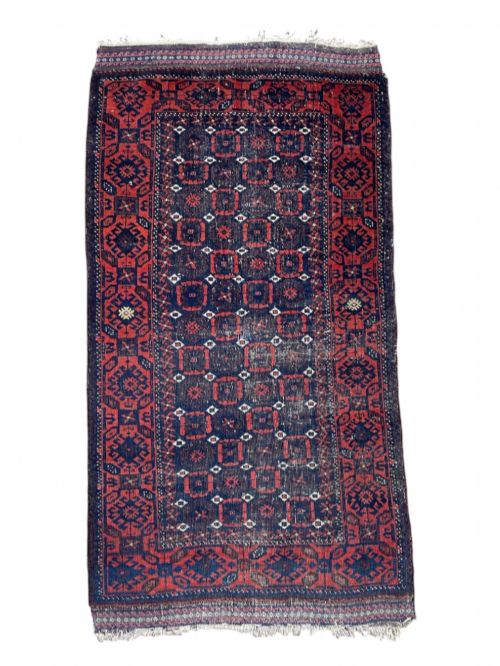


Vintage Baluch Runner
A vintage baluch runner brings the rich, geometric artistry of nomadic weavers into narrow corridors and hallways.
Vintage Baluch Runner
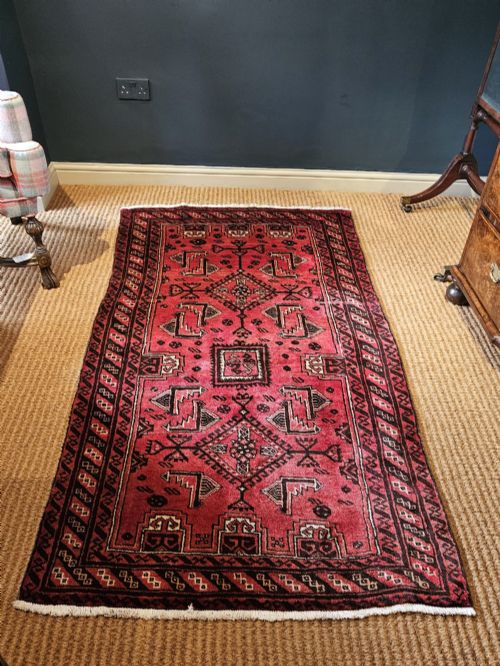
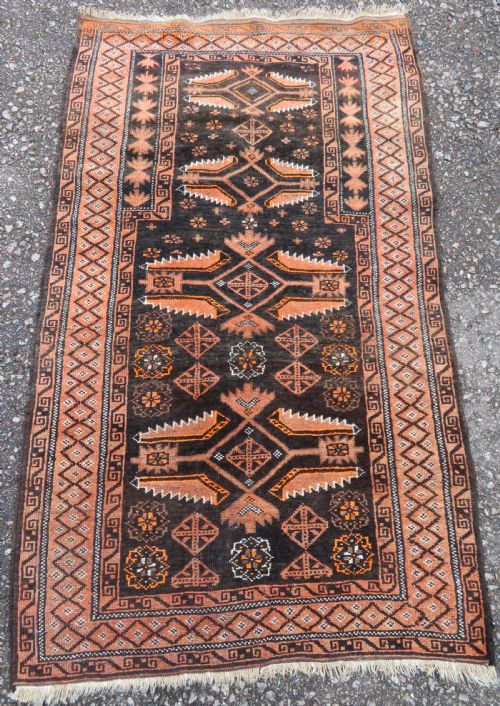
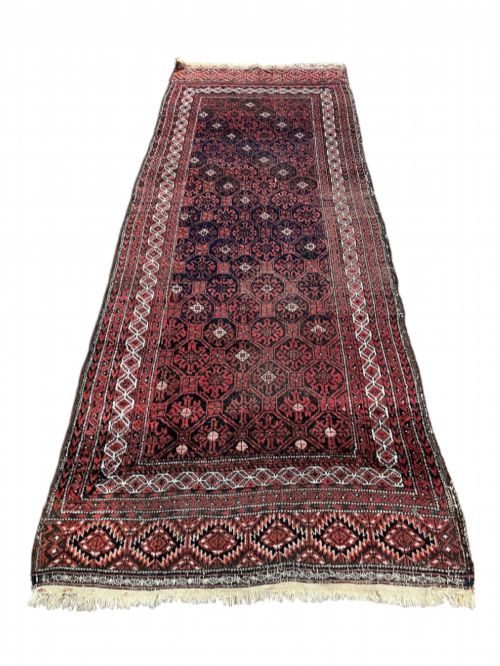
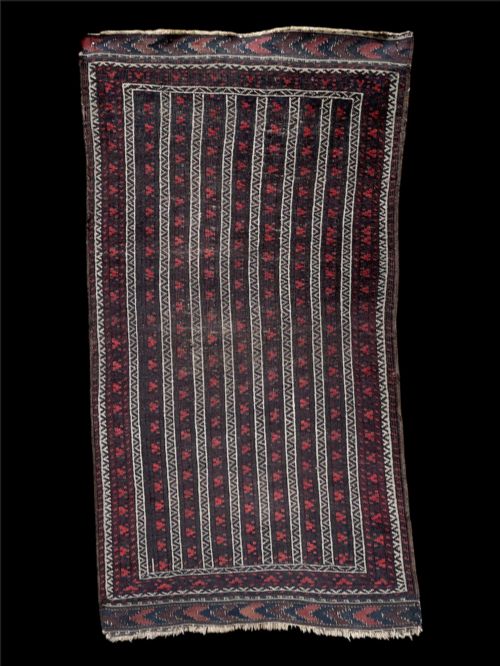
A vintage baluch runner is a long, narrow textile traditionally woven by nomadic and village groups across the borderlands of Persia and Afghanistan. These pieces are characterised by deep indigo, madder red and brown tones, often organised into repeated geometric motifs or prayer niches.
Buyers searching for a vintage baluch runner will find examples originating from the late nineteenth century through to the early decades of the twentieth century. While the inventory spans various rug and carpet formats, the elongated runner shape provides a durable floor covering suited for specific architectural spaces.
Materials and construction
These textiles rely primarily on hand-spun wool for the pile, combined with cotton foundations and occasional uses of camel hair or goat hair for added texture and durability. Weavers utilised natural dyes to achieve deep, rich colour palettes that soften gracefully over time.
Construction techniques include hand-weaving methods typical of tribal workshops, with some pieces incorporating mixed techniques or flatwoven kilim bands alongside knotted pile sections.
Some weavers occasionally incorporated stray goat hairs directly into the wool pile, leaving a subtle signature of the nomadic camp.
Judging quality and character
The fineness of the knotting and the tightness of the weave largely determine the tier of a piece, distinguishing standard village production from exceptionally finely executed tribal work. Greater precision in the geometric lattice or prayer design indicates a higher level of weaver skill.
The integrity of the natural dyes and the quality of the wool also define the upper range of these textiles. Lustrous pile and well-preserved borders signal superior materials from the outset.
Djhan Beghi Tribe·Mahdad Khani
The Vintage Baluch Runner Glossary
- Prayer rug
- A textile featuring a mihrab or arched design indicating the direction of prayer. These formats often include specific niche markers used by nomadic weavers.
- Kilim
- A flatwoven textile produced without a pile. These pieces use tightly packed weft yarns to create sharp geometric patterns.
- Natural dyes
- Colourants derived from plants, roots, and insects rather than synthetic compounds. They yield harmonious tones that age with considerable depth.
- Medallion
- A central decorative motif placed in the field of the textile. Tribal weavers frequently employ repeating hook or box variations.
- Camel hair
- Undyed fibre sourced from camels, utilised in the pile or ground for its natural warmth and soft fawn hue.
Vintage Baluch Runner: Frequently Asked Questions
Where were these runners made?
These runners were produced by nomadic and village tribes inhabiting the borderlands of Persia and Afghanistan, including the Sistan and Khorasan regions. The weavers drew upon distinct regional design traditions.
Such pieces reflect the movement and cultural exchange of communities traversing these historical territories during the nineteenth and early twentieth centuries.
How do I care for a wool runner?
Gentle vacuuming without a rotating brush helps remove grit from the wool pile without damaging the hand-spun fibres. Professional cleaning is recommended for deep maintenance.
Keeping the textile out of harsh, direct sunlight preserves the natural dyes and prevents uneven fading across the runner.
What designs appear on these runners?
Common motifs include latch hook medallions, repeated star patterns within octagons, and intricate mina khani lattice variations. Prayer designs with mihrab arches also feature prominently.
Many examples incorporate geometric borders and bands of flatwoven kilim work that frame the central field.
How do I date an older piece?
Dating relies on assessing the natural dye palette, the handling of the wool, and structural characteristics such as selvedge construction and foundation materials. Earlier nineteenth-century examples often display greater variation in hand-spun wool and deeper indigo saturation.
Comparing structural motifs with documented tribal types helps narrow down the period of production.