


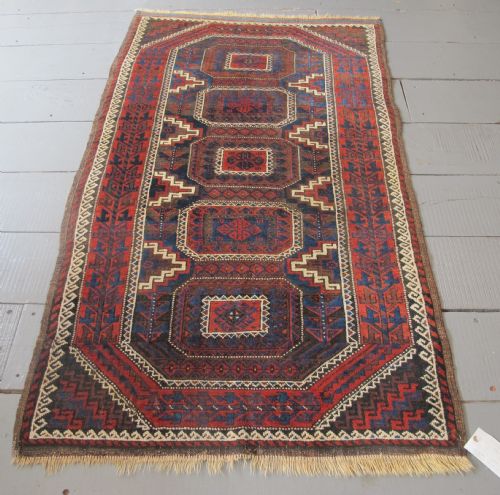

Antique Belouch Rug
An antique belouch rug brings rich nomadic geometry and deep, saturated colour into a room.
Antique Belouch Rug
An antique belouch rug is a tribal textile woven by nomadic and village weavers originating from the borderlands of Persia, Afghanistan, and Balochistan. These rugs are practical floor coverings and small textiles created for nomadic life, featuring distinctive geometric motifs and prayer designs.
The pieces available here span from the late nineteenth century up through the nineteen-twenties, showcasing traditional tribal aesthetics. Collectors encounter formats ranging from small prayer rugs and birdbags to larger area rugs with latch hook medallions.
The geographical origins trace back through regions such as Ferdows Province, Khorasan, and East Persia. Each piece carries the characteristic hand-knotted structure and rustic charm typical of nineteenth and early twentieth century tribal weaving.
Materials and construction methods
These textiles are hand-woven using locally sourced materials including wool, cotton, camel hair, and goat hair. Weavers utilised natural fibres to build durable pile surfaces and sturdy foundations designed to withstand nomadic use.
The construction relies on traditional hand-knotting techniques passed down through generations of tribal weavers. Natural dyes combined with the tactile quality of wool and camel hair give these rugs their characteristic depth and varied texture.
Listings for this phrase feature wool, camel hair, goat hair, and cotton across pieces dated from eighteen-seventy to nineteen-twenty.
Assessing quality in tribal weaving
Quality in these textiles rests upon the fineness of the knotting and the integrity of the wool pile. Tighter weaves and well-preserved structural foundations distinguish the finer examples from standard utility pieces.
The Antique Belouch Rug Glossary
- Belouch rug
- A hand-knotted tribal textile produced by Baluch nomads and village weavers, traditionally featuring geometric patterns and dark, saturated palettes.
- Prayer rug
- A small format textile characterised by a mihrab or niche design, intended for personal devotion.
- Latch hook
- A stepped geometric motif commonly repeated in medallions and borders across tribal weavings.
- Calyx lattice
- A repeating network pattern resembling flower calyxes, often found in Khorasan region pieces.
- Birdbag
- A small storage bag or trapping woven in tribal communities, highly sought after by textile collectors.
Antique Belouch Rug: Frequently Asked Questions
What is an antique belouch rug?
An antique belouch rug is a hand-knotted tribal textile created by nomadic or village weavers in regions spanning Persia and surrounding borderlands. These pieces date from the late nineteenth and early twentieth centuries.
They are distinguished by dark, rich colour palettes, geometric patterns, and sturdy wool or camel hair construction suited to nomadic life.
Where were these rugs made?
These textiles originate from the border regions of Persia, including Khorasan and Ferdows Province, as well as areas associated with Baluch nomadic tribes. Weavers utilised locally gathered materials specific to these regions.
The nomadic lifestyle of the makers meant designs were carried across borders, blending Persian motifs with distinct tribal traditions.
How do I live with one?
An antique belouch rug works well in studies, hallways, or living spaces where its rich geometric design can anchor the room. Using a quality underlay protects the vintage foundation during daily use.
Keep these textiles out of direct, harsh sunlight to preserve the natural dyes and wool pile over the years.
How do I identify the age?
Dating relies on examining the materials, natural dye variations, and structural wear consistent with late nineteenth and early twentieth-century production. The specific weave density and wool quality offer clues to the period.
Pieces from the eighteen-seventies and eighties often display distinct natural palettes compared to later nineteen-twenties examples.