



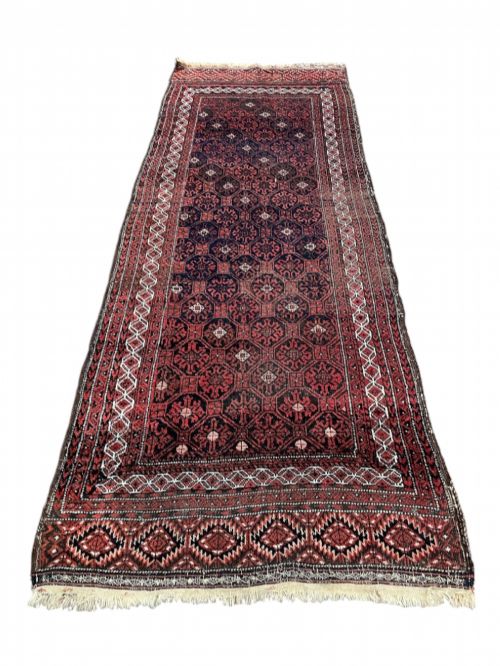


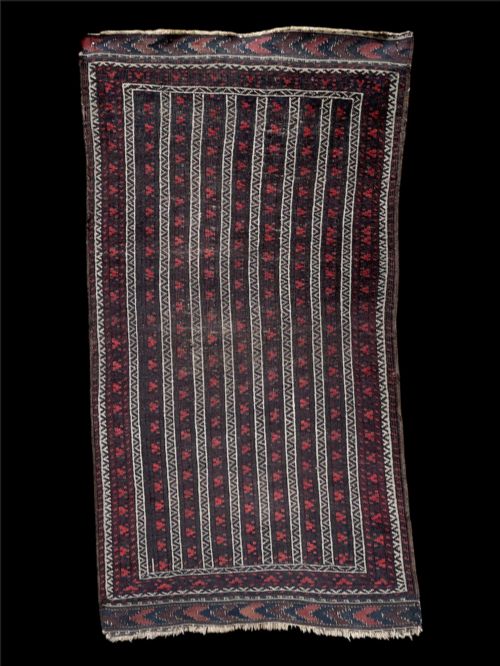

Dark Red Wool Runner
A dark red wool runner brings warmth and tribal character to a hallway or corridor through deep tones and historic weave patterns.
Dark Red Wool Runner
A dark red wool runner is a long, narrow floor covering defined by rich madder and crimson dye work, commonly created by tribal and village weavers across Persia, Afghanistan, and the Caucasus. These textiles primarily date from the late nineteenth and early twentieth centuries, spanning periods from the 1870s to the 1930s.
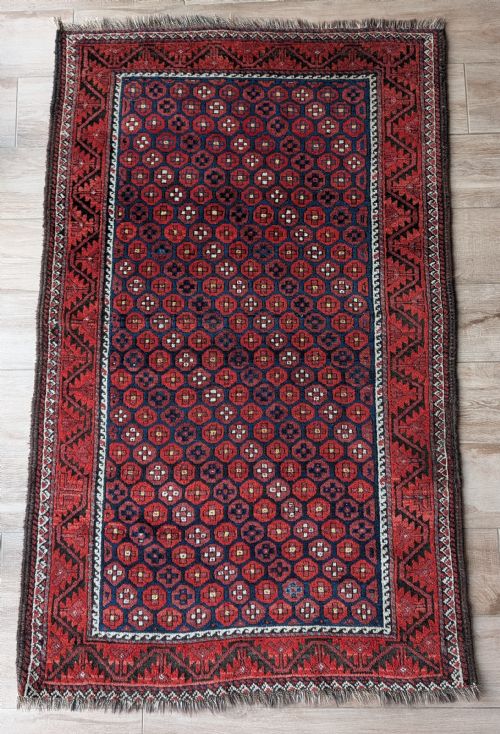
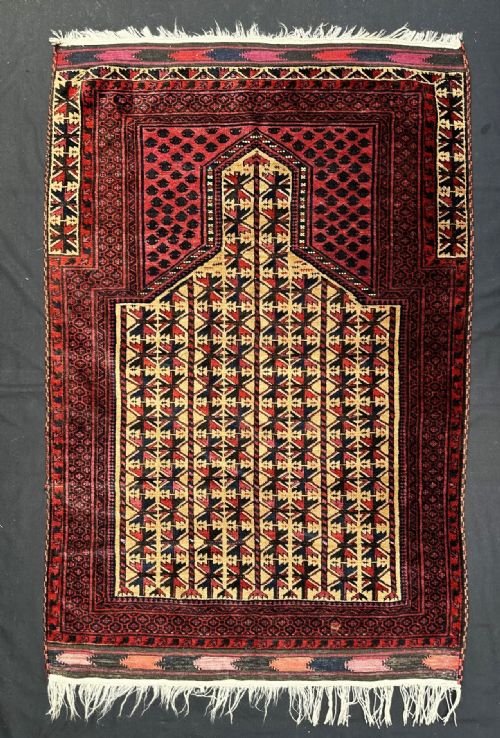
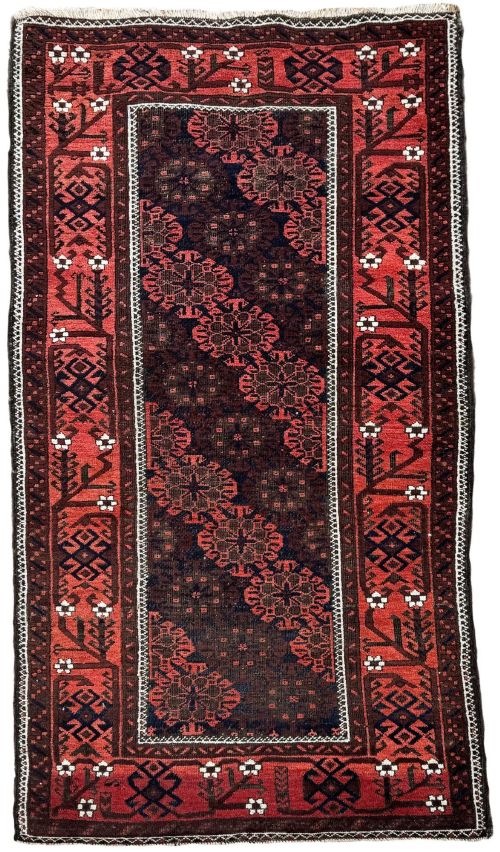
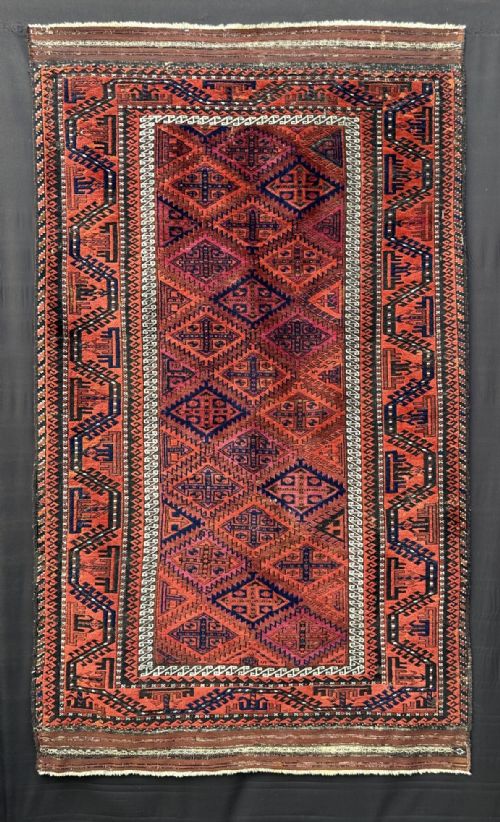
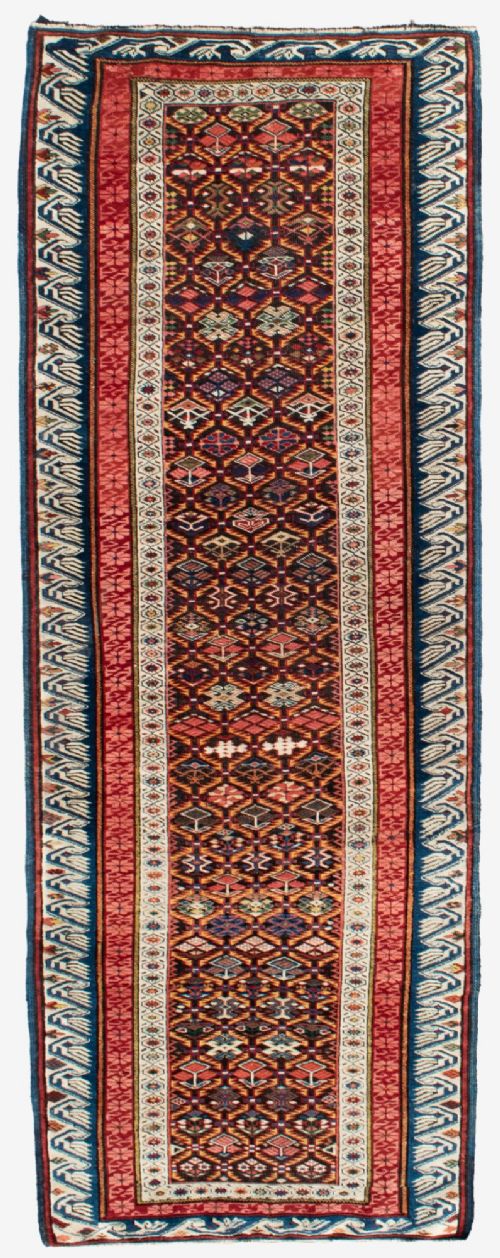
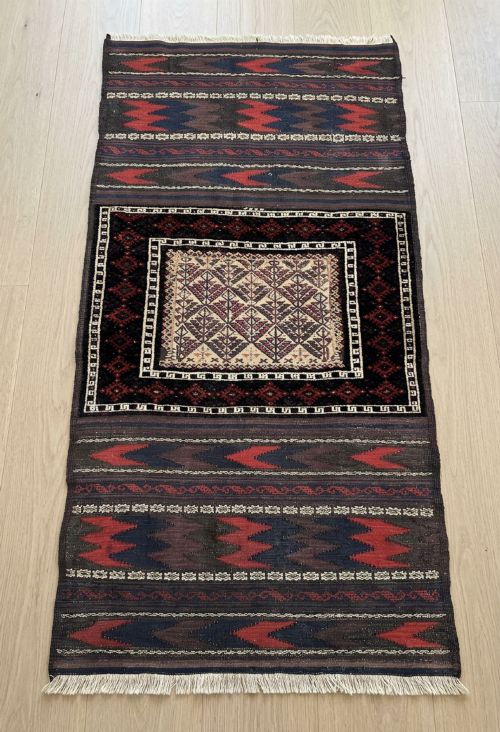
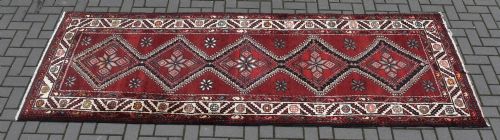
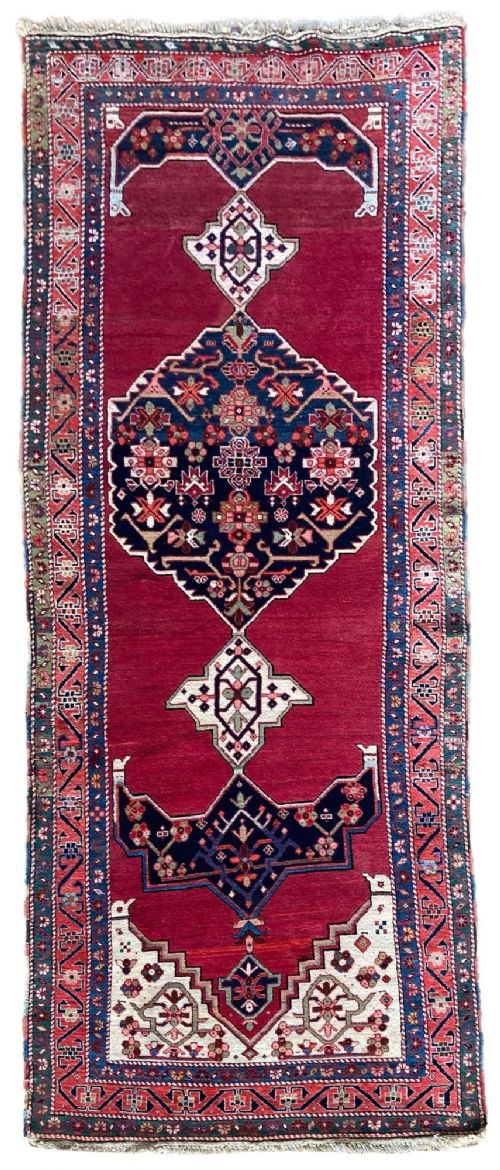
The pieces appearing on this page take the form of traditional runners, long rugs, and narrow corridor carpets created by groups such as the Baluch, Ersari Turkmen, Kurdish, and Seychor weavers. Buyers searching for a dark red wool runner will encounter geometric medallions, repeating star motifs, and prayer formats executed in deep madder and oxblood wools.
Materials and Construction
These textiles are built upon foundations of wool and cotton, utilising hand-spun wool for the pile to achieve a dense, durable surface capable of enduring heavy foot traffic in narrow spaces. Natural dyes, including madder root for deep reds, provide the varied undertones that distinguish older floor coverings from chemical-dyed equivalents.
Weavers employed traditional tribal knotting techniques alongside goat hair selvedges to finish the edges of runners and long rugs. The combination of hand-spun wool and natural dye penetration ensures that the dark red ground colour ages with depth and subtle tonal variation.
Dark Red Wool Runner Retail Price Guide 2026
Typical asking prices for dark red wool runner among the pieces listed under this phrase on Sellingantiques today, from the lower quarter to the upper quarter. They describe what is for sale here now, not the wider market.
Nomadic weavers occasionally inserted deliberate minor errors into strict geometric repeats to ward off the evil eye.
Assessing Quality and Execution
Quality in these runners rests upon the tightness of the knotting, the handling of the natural wool, and the clarity of the geometric or lattice design. Finer examples display precise control over the repeat motifs, such as the mina khani or box medallion patterns, executed with consistent tension across the narrow format.
The depth and saturation of the red wool pile dictate visual success, where skilled dye work prevents muddy tones and maintains luminosity within darker palettes. The integrity of the foundational warps and wefts determines how well a historic runner maintains its structure along corridor floors.
The Dark Red Wool Runner Glossary
- Madder
- A natural dye derived from the root of the Rubia plant, producing the characteristic deep reds found in traditional tribal rugs.
- Baluch
- A tribal designation for weavers originating from the borderlands of Persia and Afghanistan, known for dark woolen prayer rugs and runners.
- Kelleh
- A specific format of Persian rug that is longer than it is wide, serving as a transitional size between standard carpets and narrow runners.
- Torba
- A small Turkmen bag face or hanging trapping, frequently woven with characteristic gul designs and rich red wool.
Dark Red Wool Runner: Frequently Asked Questions
Where should I place a long runner?
These narrow textiles suit hallways, corridors, and bedside areas where length matters more than width. Their dense wool pile withstands frequent walking while adding historic pattern to transitional spaces.
Ensure an appropriate underlay is used beneath the runner to prevent slip on hard flooring and to protect the hand-spun wool foundation from undue friction.
How do I clean an antique wool runner?
Regular gentle vacuuming without a rotating brush lift prevents dust from settling into the wool pile. Professional specialist cleaning remains essential for addressing deeper soil.
Avoid excessive water or chemical detergent, as traditional natural dyes can react poorly to harsh treatments and modern cleaning agents.
Are these rugs made from real wool?
The pieces listed utilise genuine sheep wool for the pile, often hand-spun to retain natural lanolin that contributes to durability and softness. Foundations frequently combine wool and cotton threads.
Goat hair also appears occasionally in the construction, particularly for secure edge bindings on tribal weaving from Afghan and Persian regions.
How do I identify a tribal design?
Tribal designs feature geometric patterns, repeating octagons, mihrab arches, and stylized plant motifs rather than curved floral court designs. Weavers relied on memory and traditional motifs passed through communities.
Variations in symmetry and spontaneous shifts in minor border colours often indicate nomadic or village production rather than factory manufacture.