


Japanese Temple Jar
These Japanese temple jar examples bring painted porcelain and earthenware presence to a room, spanning Imari and Satsuma traditions.
Japanese Temple Jar
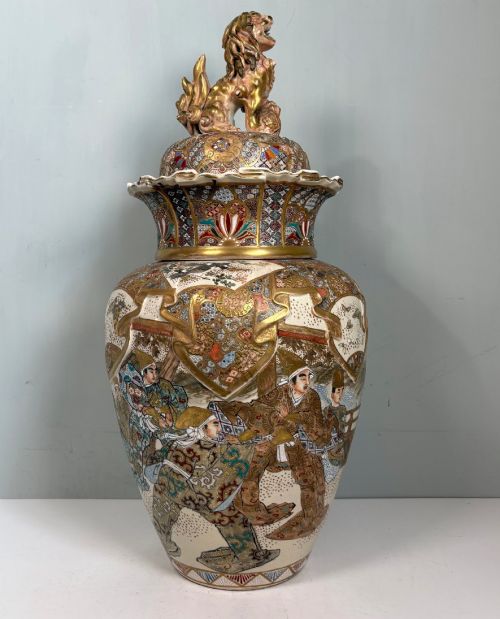
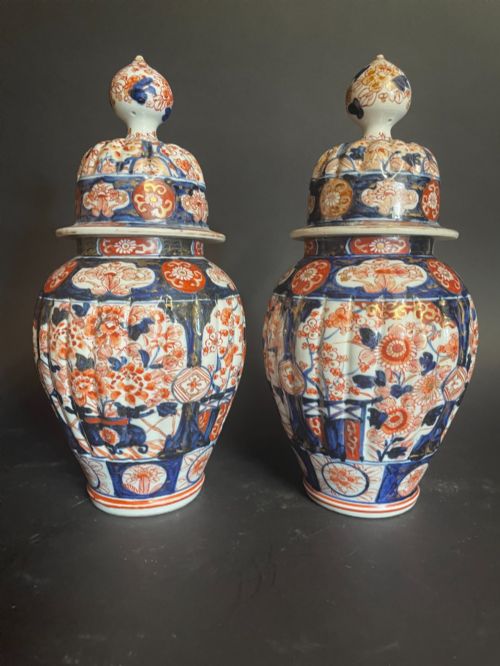
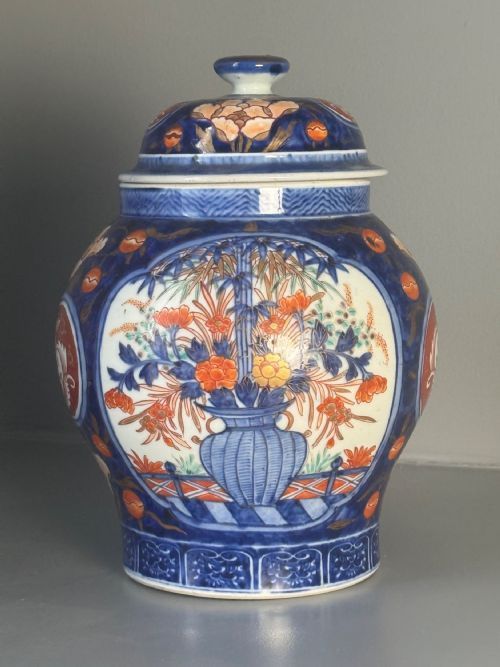
When you search for a japanese temple jar, you encounter substantial covered vessels and lidded urns originating from Japanese kilns and Western interpretations. The selection here leans heavily toward nineteenth-century production, particularly pieces decorated in the Imari palette alongside Satsuma and Kutani wares.
These items take forms such as baluster vases, ginger jars, and large lidded jars originally fashioned for display or storage. Many examples arrive with their matching covers, while others present as open vases or garniture sets intended for mantelpieces and tables.
How they were made
Potters shaped porcelain and earthenware bodies on wheels or in moulds before applying underglaze blue and overglaze enamel colours. Gilding and gold leaf frequently highlight the painted scenes, adding metallic depth to the ceramic surface.
Cloisonné variants utilise metal wire partitions soldered to a base to hold coloured enamel pastes before firing. Earthenware examples such as Satsuma rely on finely crackled glazes acting as a canvas for detailed hand-painted figures and landscapes.
Some lidded jars have spent more time sitting on European mantelpieces than they ever did in their native country.
What varies in quality
The precision and density of the hand-painted decoration set individual pieces apart, separating hurried output from meticulous brushwork. Crispness in the cobalt blue underglaze and adherence of the enamel colours indicate workshop discipline.
The survival of original matching lids significantly influences the integrity of a lidded jar. Balance in the potting proportions and weight of the ceramic body distinguish superior vessels from heavier, less refined forms.
The Japanese Temple Jar Glossary
- Imari
- A style of Japanese porcelain decorated in underglaze blue, iron red, and gilt. It originated in Arita and became widely exported to Europe.
- Satsuma
- A type of Japanese earthenware featuring a ivory-coloured crackle glaze and elaborate polychrome and gilt decoration. It gained prominence during the Meiji period.
- Arita
- The Japanese town and surrounding region where porcelain production began in the seventeenth century. Kilns here produced much of the blue and white and Imari wares.
- Baluster
- A vase shape with a rounded body that tapers toward the base and swells near the middle. This form provides stability for large lidded jars.
- Garniture
- A set of matching vases or jars designed to be displayed together on a mantelpiece or shelf. These sets typically comprise three or five pieces.
Japanese Temple Jar: Frequently Asked Questions
What is a japanese temple jar?
A japanese temple jar is a large lidded ceramic vessel traditionally used for storage or decorative display in interiors. They often feature prominent covers and substantial baluster bodies.
These pieces emerged from kilns in centres like Arita and Satsuma, making their way into Western collections through trade and international exhibitions during the nineteenth century.
How were japanese temple jars used?
Historically, these large jars served practical storage functions before transitioning into purely decorative ornamental objects for grand rooms. Their size made them ideal focal points for mantelpieces and entrance halls.
In Western homes, they were frequently arranged in symmetrical sets called garnitures alongside smaller companion vases.
How do I identify Imari decoration?
Imari decoration is characterised by a distinct palette combining underglaze cobalt blue with iron red, white, and generous applications of gold leaf. The motifs typically incorporate floral patterns, landscapes, and brocade designs.
This style originated in the Arita kilns during the Edo period and remained popular through the nineteenth century and beyond.
What is the difference between Satsuma and Imari?
Satsuma wares utilise an earthenware body covered in a characteristic creamy crackle glaze, painted with detailed figures and gold highlights. Imari pieces are made of hard-paste porcelain with a more vibrant red, blue, and gold colour scheme.
While both appear frequently in nineteenth-century Japanese exports, their material composition and surface textures differ completely.