




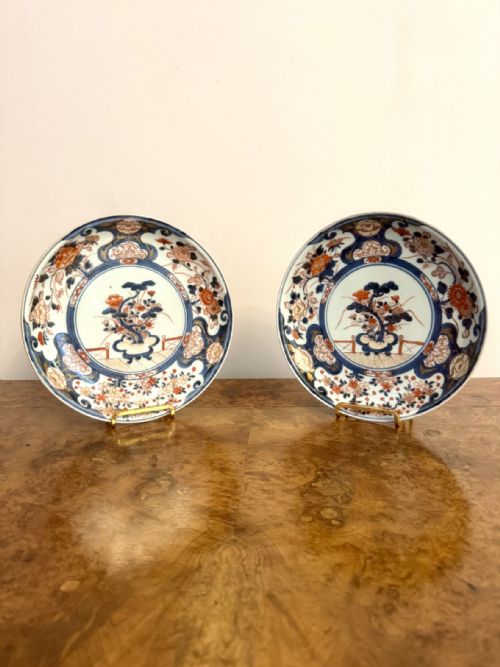
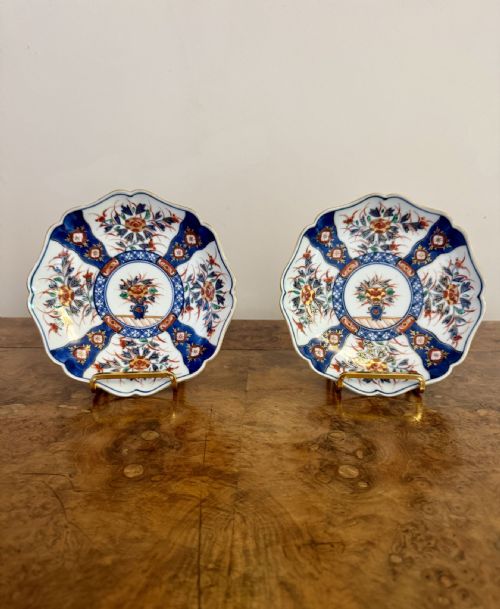
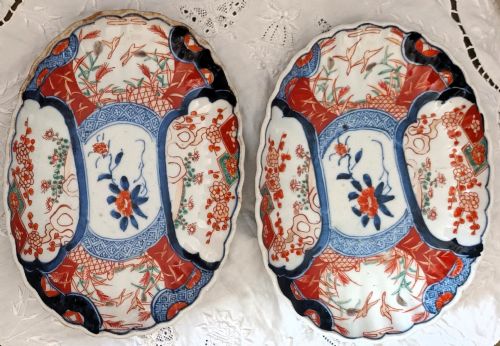
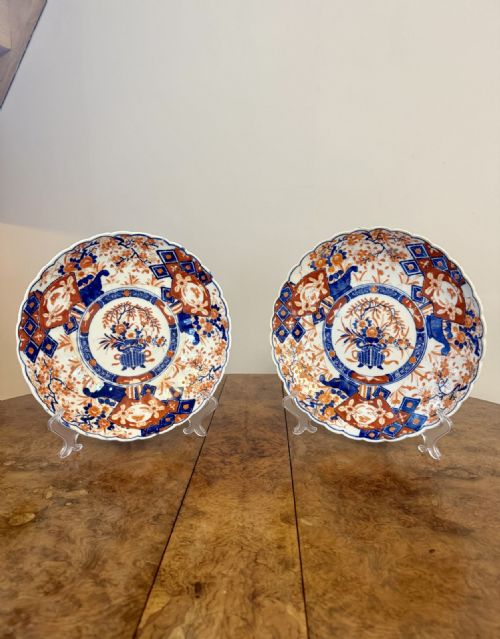


Japanese Porcelain Dish Pair
A Japanese porcelain dish pair brings symmetry and rich colour to a room, offering matching historic objects crafted for display and dining.
Japanese Porcelain Dish Pair
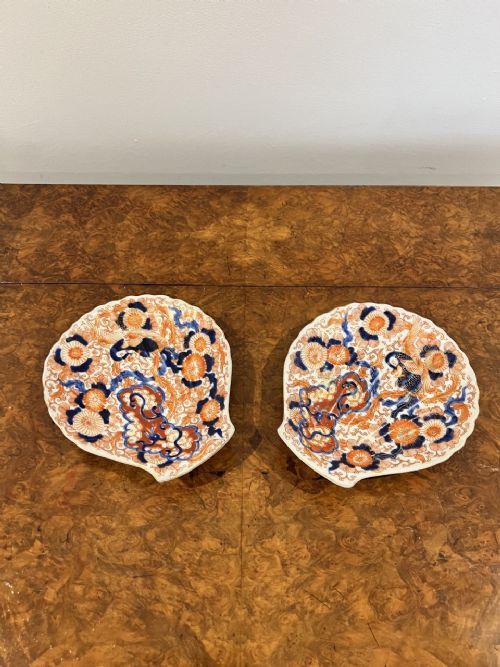
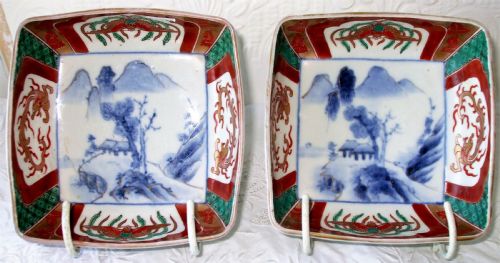
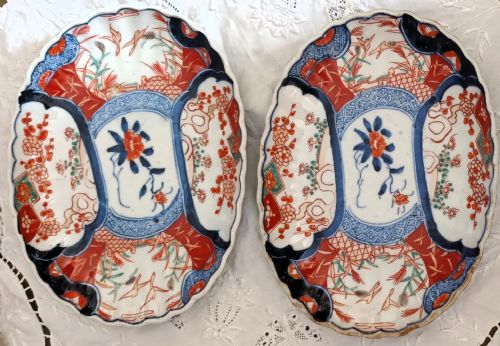
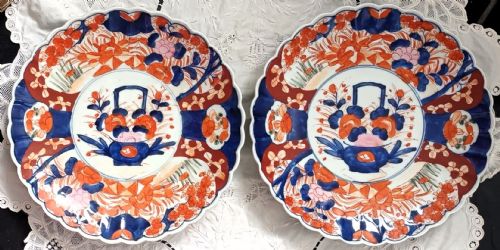
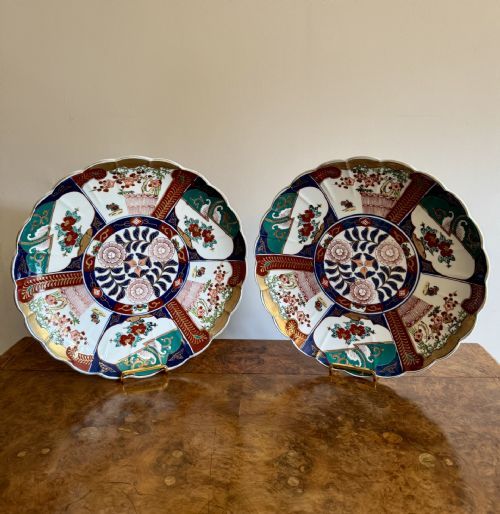
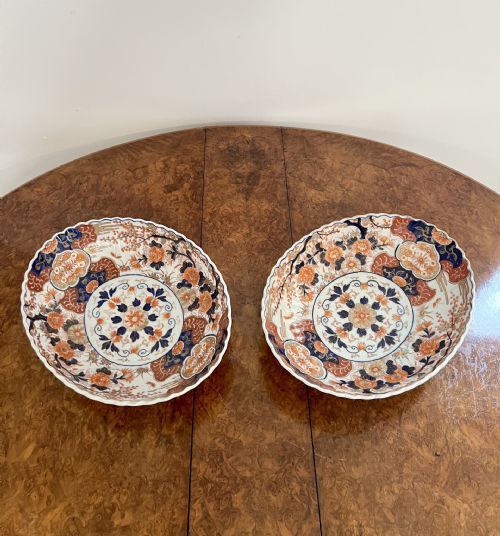
A Japanese porcelain dish pair comprises matching plates, chargers, or bowls created primarily during the Meiji period and the nineteenth century. These objects typically take the form of Imari wares, featuring distinct decorative patterns designed in pairs for symmetrical arrangement.
Buyers encounter various shapes beyond standard circular plates, including oval, hexagonal, fan-shaped, and shell-shaped dishes. The selection frequently includes large chargers and decorative bowls suited for prominent placement on walls or tables.
Materials and production techniques
Potters shaped fine porcelain clay before applying cobalt blue underglaze and rich enamel colours. Artisans then incorporated gold leaf, gilding, and enamel glaze details to create the characteristic layered patterns seen on Imari and Arita wares.
Specialised techniques extended to cloisonné applications on porcelain, such as Totai Shippo methods that imitate tree bark textures. Kiln firing fixed the cobalt pigments and subsequent enamel decorations onto the porcelain body.
Listings feature porcelain, enamel, gold leaf, and glaze materials spanning the eighteenth century through the Victorian era.
Factors determining quality
The precision of hand-painted brushwork distinguishes finer examples, particularly in the rendering of exotic birds, figures like the Seven Lucky Gods, and intricate floral motifs. Crisp definition in the cobalt blue underglaze and the generous application of gold leaf indicate superior craftsmanship.
Form complexity also separates standard items from exceptional ones, with scalloped edges, hexagonal geometries, and moulded shell or fan shapes requiring greater skill from the potter. Well-matched pairs that retain consistent colour saturation across both pieces command higher regard.
The Japanese Porcelain Dish Pair Glossary
- Imari
- A traditional Japanese style of porcelain decorated in underglaze blue, iron red, and gold. This style originated in the town of Arita and became immensely popular for export.
- Charger
- A large ornamental plate used historically for service or display rather than for individual dining. These substantial pieces often feature elaborate pictorial designs.
- Meiji Period
- The era in Japanese history spanning from 1868 to 1912, characterised by extensive international trade and the production of highly detailed decorative arts.
- Cobalt Blue Underglaze
- A pigment applied to the raw porcelain body before glazing and firing, producing a deep blue tone that remains permanently sealed beneath the clear surface.
- Totai Shippo
- A specific Japanese technique where cloisonne enamel is applied directly onto a ceramic or porcelain base rather than a metal one.
Japanese Porcelain Dish Pair: Frequently Asked Questions
How were these dishes used originally?
These pieces served both practical dining functions and decorative display roles within traditional households and export markets. Large chargers and plates were often stood upright on cabinets or hung on walls.
Matching pairs allowed for symmetrical table settings or balanced interior arrangements in formal reception rooms.
What is Japanese Imari?
Japanese Imari refers to porcelain manufactured in the Arita area and shipped from the port of Imari for European and domestic markets. The palette relies heavily on cobalt blue underglaze combined with iron red and gold leaf highlights.
Designs typically incorporate intricate floral panels, landscapes, and traditional motifs.
How do I date a Meiji period piece?
Meiji period items correspond to the reign of the Emperor Meiji between 1868 and 1912. Dating relies on stylistic markers, potting techniques, and characteristic colour palettes recorded during this era of manufacturing.
Markings on the reverse can also provide clues to the production period.
Can I display these dishes on walls?
Many chargers and large plates feature forms intended for wall presentation, often supported by specialised display hangers. The robust porcelain structure and vivid enamel designs make them suitable for vertical visual impact.
Ensuring secure mounting hardware is essential given the weight of larger chargers.
What is the difference between a plate and a charger?
A charger is substantially larger than a standard dining plate, generally exceeding thirty centimetres in diameter. Chargers were produced primarily as centrepieces or decorative items.
Plates were smaller and more frequently integrated into daily service alongside matching bowls and dishes.