


Gilded Japanese Ceramic Dish
A gilded japanese ceramic dish brings intricate Meiji era craftsmanship and rich Imari palettes directly into the home.
Gilded Japanese Ceramic Dish
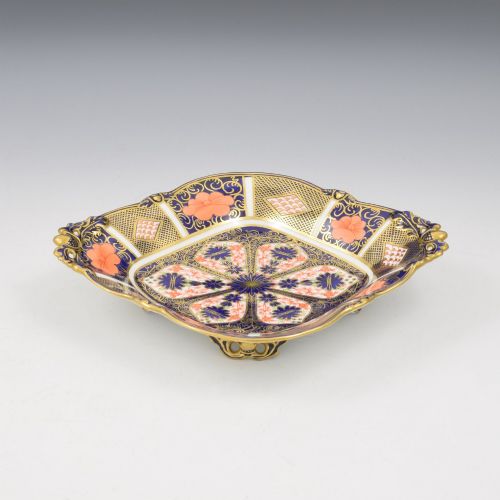
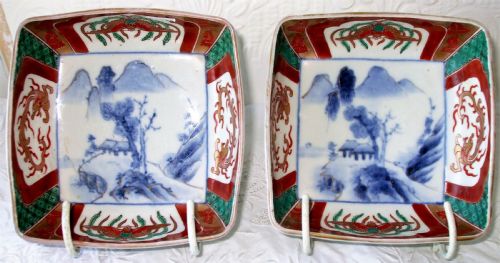
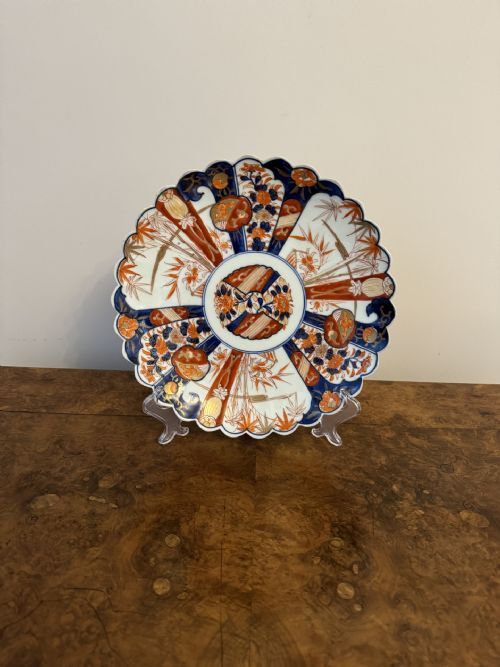
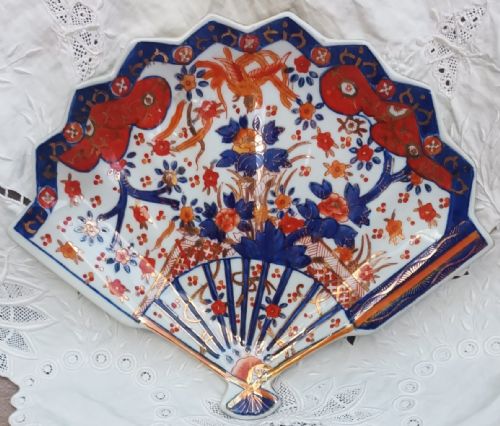
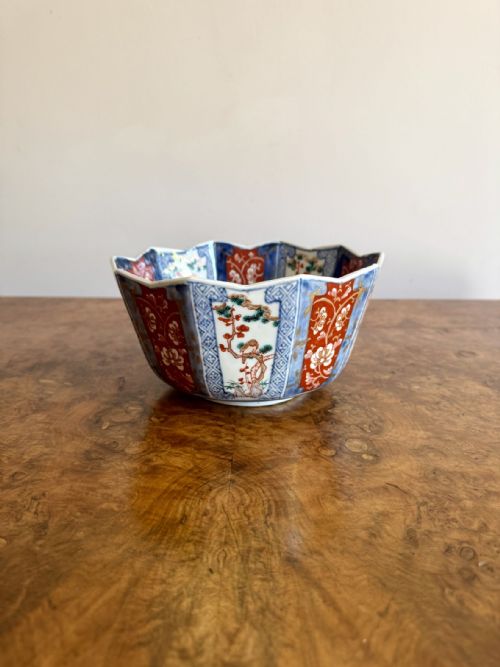
A gilded japanese ceramic dish encompasses decorative plates, chargers, and shallow bowls originating primarily from the late nineteenth and early twentieth centuries. These objects arrive in various configurations, including scalloped edges, octagonal shapes, fan patterns, and shell designs.
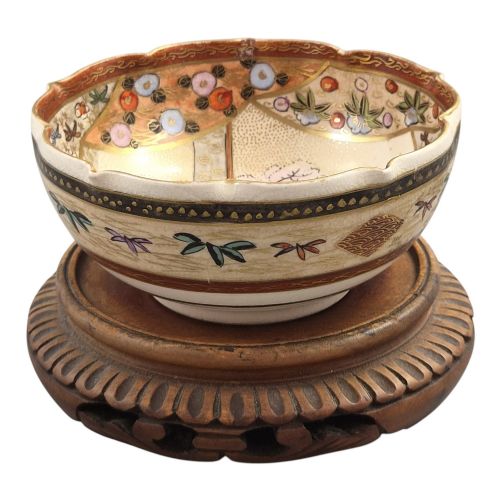
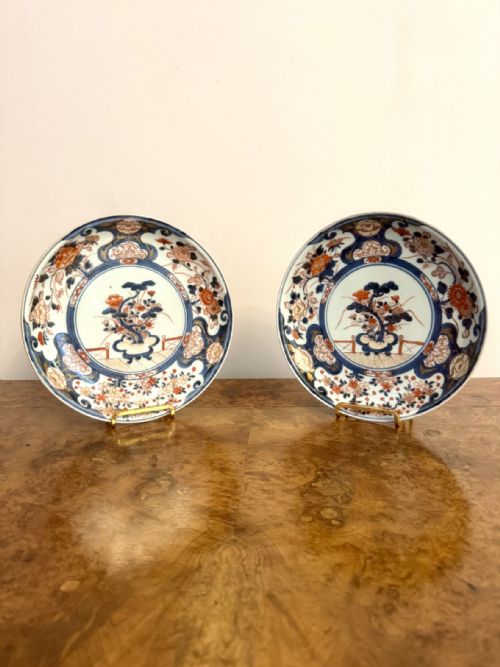
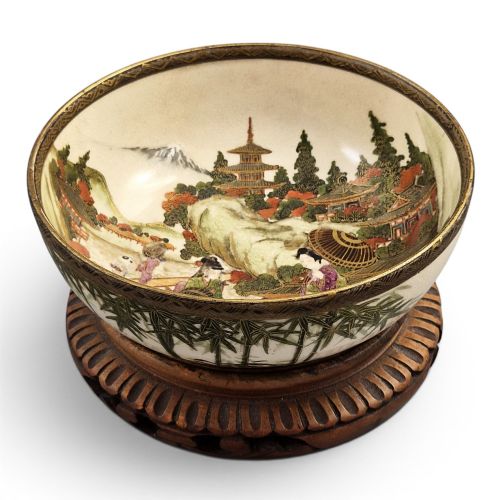
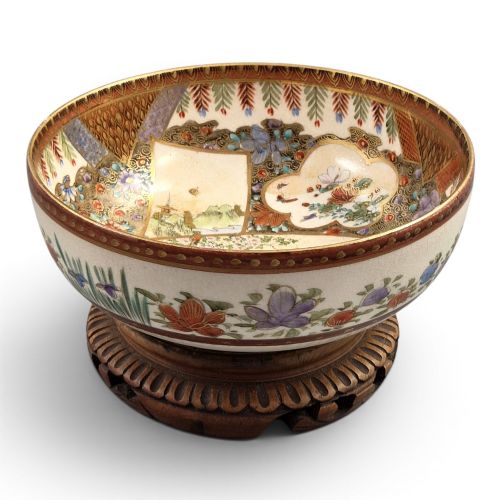
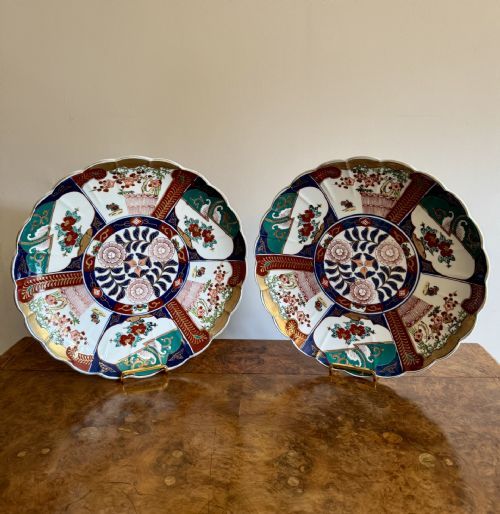
The selections here highlight distinct regional styles such as Imari, Satsuma, and Kutani wares. Buyers most frequently encounter Imari porcelain plates alongside earthenware Satsuma bowls featuring detailed hand painted motifs.
Materials and technique
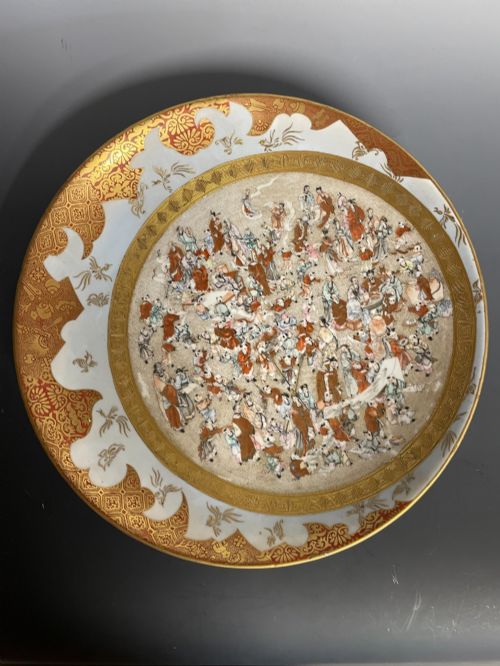
Potters shaped porcelain and earthenware bodies before applying complex underglaze and overglaze enamel painting. Artisans incorporated intricate moriage relief work and detailed hand painting depicting flora, fauna, and traditional figures.
Gilding played a central role, utilising gold leaf and gold gilt to accentuate borders, motifs, and backgrounds. Kiln firing fixed the pigments and metallic applications to produce durable decorative surfaces.
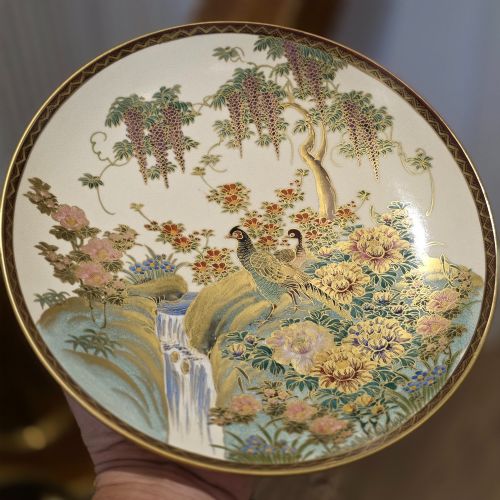
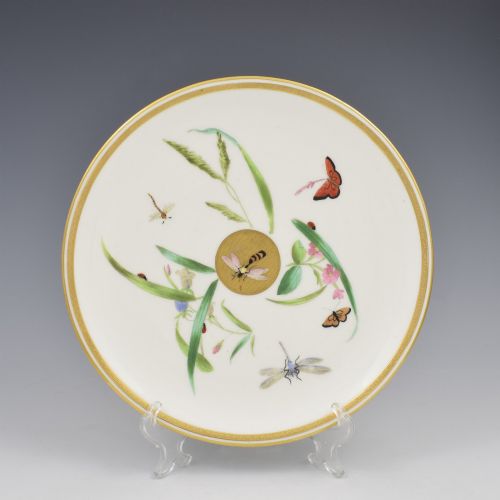
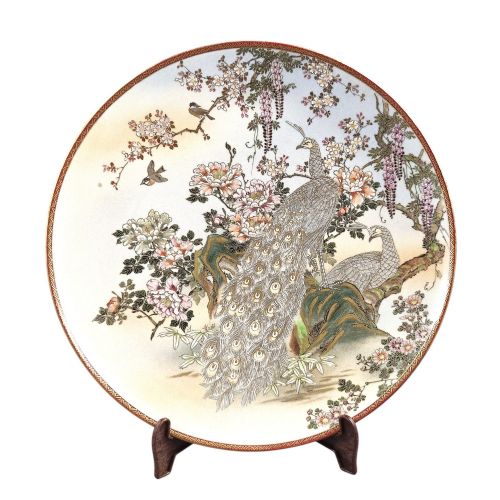
Peacocks strut across Satsuma chargers while delicate insects inspect golden suns on Minton dessert plates.
Distinguishing quality
Quality rests upon the precision of the hand painting and the complexity of the design layout. Finer examples display meticulous brushwork in the enamel and gold applications, particularly on densely decorated Satsuma bowls and large Imari chargers.
The prestige of the workshop or signature influences distinction within the range. Signed pieces from notable makers command attention through superior control of colour palettes and refined ceramic forms.
Koshida·Kozan·Toshozan·Hododa
The Gilded Japanese Ceramic Dish Glossary
- Imari
- A style of Japanese porcelain featuring a distinct palette of underglaze blue, iron red, and abundant gilt highlights. These pieces were widely exported during the Meiji period.
- Satsuma
- An earthenware ceramic type characterised by a fine crackle glaze, typically decorated with polychrome enamels and extensive gold leaf. Kyoto and Yokohama served as primary production centres.
- Moriage
- A decorative technique using raised slip clay applied to pottery before firing, creating a textured, three-dimensional surface often highlighted with gilt.
- Kutani
- A style of Japanese porcelain known for bold pictorial designs and rich colour schemes, frequently incorporating gold plating and detailed figurative scenes.
- Charger
- A large decorative plate intended for display rather than functional dining use. These substantial pieces often form the centrepiece of a collection.
Gilded Japanese Ceramic Dish: Frequently Asked Questions
How do I identify Imari ware?
Imari ware is identified by its characteristic colour combination of cobalt blue and iron red, enhanced with gold leaf detailing. The designs frequently incorporate floral and geometric motifs across porcelain plates and chargers.
These pieces date predominantly from the nineteenth and early twentieth centuries, reflecting traditional export styles adapted for Western collectors.
What is Satsuma pottery?
Satsuma pottery consists of an earthenware body covered in an ivory-coloured glaze marked by a fine network of crackles. Artisans then applied intricate enamel paintings and heavy gilding over this distinctive surface.
Subjects often include detailed scenes of nature, birds, flowers, and figures painted by specialised workshops in regions like Kyoto.
Are these dishes meant for dining?
Most of these antique pieces function as decorative objects rather than tableware. Chargers and large display plates are typically engineered for cabinet presentation or wall mounting.
The delicate enamel and gold leaf surfaces require careful handling and are best preserved away from daily domestic use.
How are Meiji period pieces dated?
Dating relies on stylistic markers, manufacturing techniques, and specific signatures or studio marks found on the base. The Meiji period spans from eighteen sixty-eight to nineteen twelve, a time of significant export ceramic production.
Comparing motif density, glaze characteristics, and regional kiln traits helps establish the precise timeframe of creation.