



Japanese Porcelain Fruit Dishes
Japanese porcelain fruit dishes bring rich Imari palettes and scalloped edges to the table, offering a striking centrepiece for modern dining.
Japanese Porcelain Fruit Dishes
When searching for japanese porcelain fruit dishes, buyers encounter decorative bowls and plates originating from the nineteenth century and around nineteen hundred. These pieces encompass items styled during the Meiji and Edo periods, alongside Victorian interpretations.
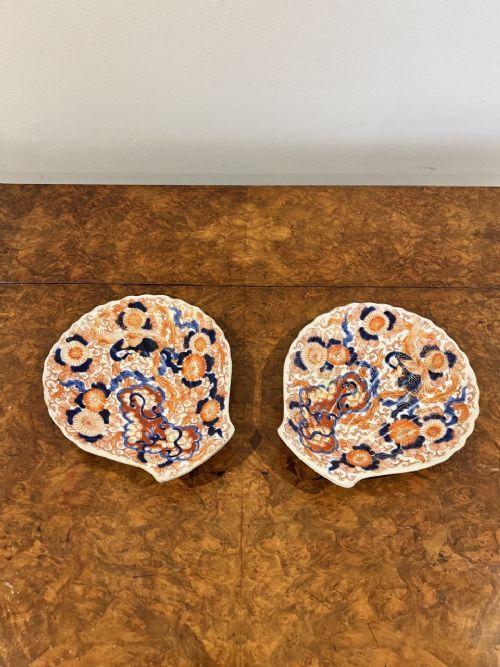
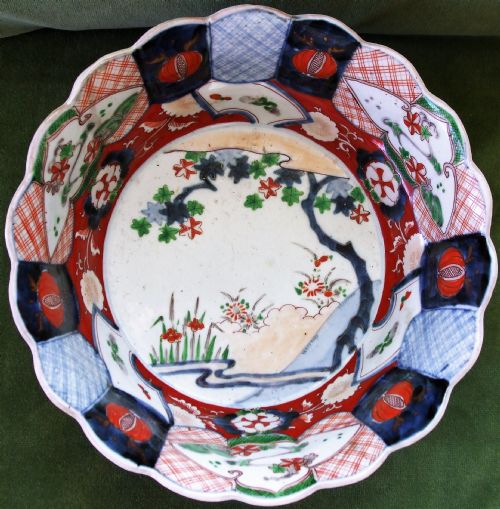
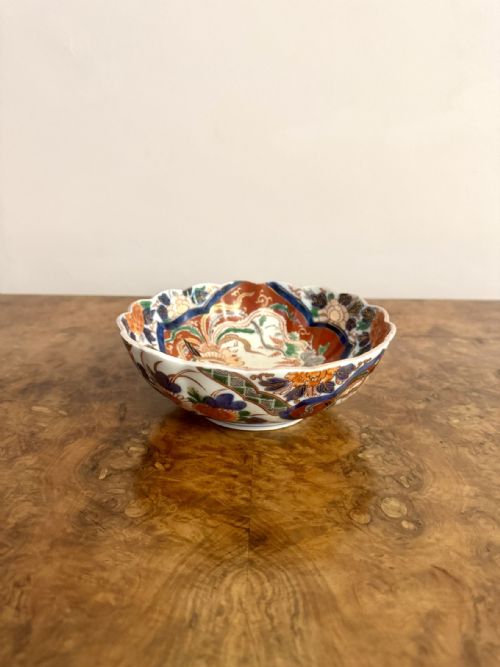
The selections on this page appear predominantly as Japanese Imari bowls and scallop-edged plates. Forms range from shell-shaped dishes to large ceramic platters designed for display.
Blue and white porcelain pieces also surface alongside the richer Imari colourways. The common thread among these objects is their utility for serving fruit and decorating domestic spaces.
Materials and construction methods
Potters shaped these items from porcelain and earthenware, applying glaze and enamel to create durable surfaces. Cobalt blue underglaze provides the foundational depth on traditional Imari vessels.
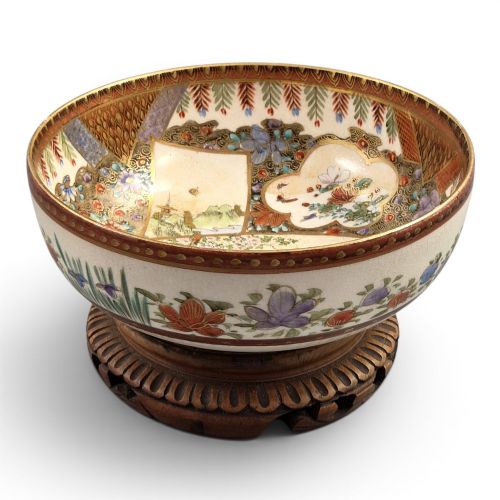
Makers integrated gold leaf and gilt highlights to embellish the decorative motifs across the porcelain bodies. Wood elements occasionally appear alongside the ceramic components in display contexts.
Japanese Porcelain Fruit Dishes Retail Price Guide 2026
Typical asking prices for japanese porcelain fruit dishes among the pieces listed under this phrase on Sellingantiques today, from the lower quarter to the upper quarter. They describe what is for sale here now, not the wider market.
Several bowls take the literal shape of sea shells, bringing maritime whimsy straight to the Victorian dining table.
Assessing quality in the range
The distinction between standard examples and superior pieces rests upon the precision of the hand-painted enamel work and the clarity of the cobalt blue. Stronger designs exhibit deliberate brushwork and well-defined scallop or shell edges.
Condition and scale also separate the items, with larger fruit display plates and matched pairs commanding greater presence. The integration of gold leaf adds a layer of refinement missing from simpler earthenware and porcelain variants.
Kozan
The Japanese Porcelain Fruit Dishes Glossary
- Imari
- A style of Japanese porcelain featuring a distinct palette of cobalt blue, iron red, and gold. These colours are applied over a white base to create intricate floral and geometric patterns.
- Meiji Period
- The era in Japanese history spanning from eighteen sixty-eight to nineteen twelve. Pieces from this time often display confident handling of enamel and gilt decoration.
- Edo Period
- The historical era preceding the Meiji period, running from sixteen hundred and three to eighteen sixty-seven. Work from this time forms the bedrock of traditional Japanese ceramic artistry.
- Satsuma
- A type of Japanese earthenware characterised by a crackle glaze and ornate polychrome enamel designs. These pieces frequently feature detailed figural or natural motifs.
- Gilt
- A thin layer of gold applied to the surface of porcelain or metal. It highlights specific design elements such as rim borders and floral accents.
Japanese Porcelain Fruit Dishes: Frequently Asked Questions
What are Japanese porcelain fruit dishes?
These pieces are decorative bowls, platters, and shell-shaped plates originating from nineteenth-century Japan. They were created to serve fruit or act as centrepieces on dining tables.
Most examples found here reflect the Imari style with cobalt blue and iron red decoration. Their forms range from large Victorian platters to fluted scallop-edge bowls.
How do I date a Japanese Imari bowl?
Dating relies on stylistic markers and material characteristics noted across the nineteenth century and the nineteen hundreds. Meiji period pieces often display vibrant enamel work and gilt highlights.
Victorian era imports into Britain frequently share similar design traits with late nineteenth-century Japanese exports. Examining the base porcelain and the depth of the cobalt blue helps establish the period.
Can I use these antique dishes for food?
Most buyers display these items as decorative centrepieces rather than using them for daily dining. The historic glazes and enamels deserve careful treatment to preserve their integrity.
Dry fruit or decorative arrangements suit these antique porcelain surfaces well. Hand washing with mild soap is essential if they are used for serving.
What is the difference between Imari and Satsuma?
Imari pieces use hard porcelain painted primarily in cobalt blue, iron red, and gold. They possess a resonant ring and a smooth, vitreous body.
Satsuma items are earthenware with a characteristic crackle glaze beneath detailed polychrome enamels. They offer a more opaque, tactile surface compared to porcelain.