




Japanese Painted Pottery Pair
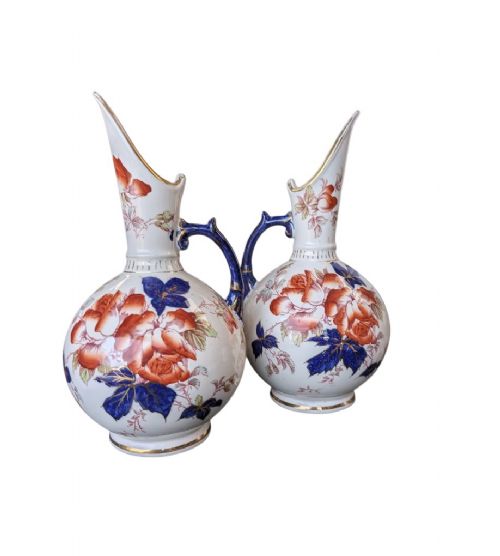
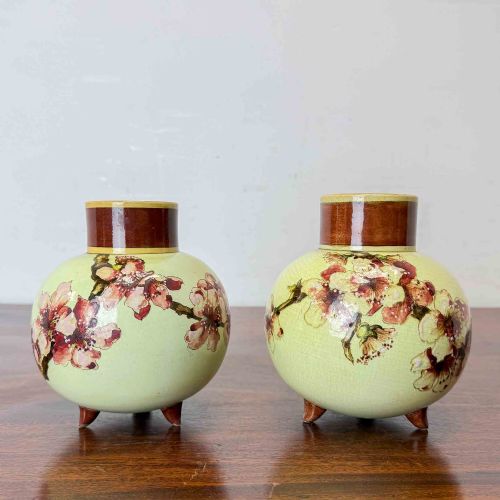
A japanese painted pottery pair brings together matched ceramics from Meiji workshops decorated with hand-painted scenes and enamels.
Japanese Painted Pottery Pair
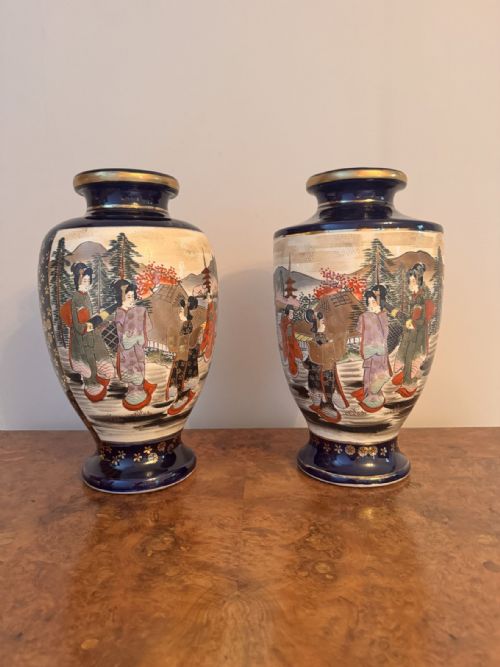
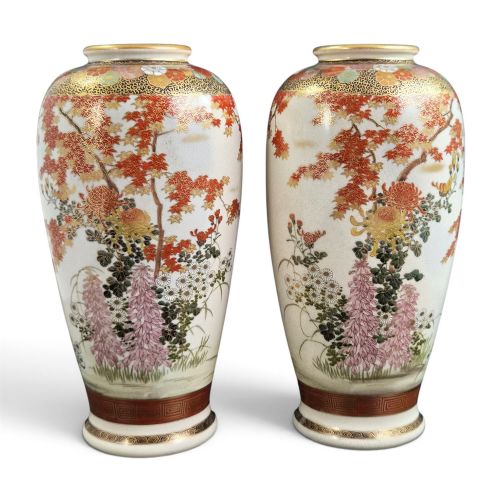
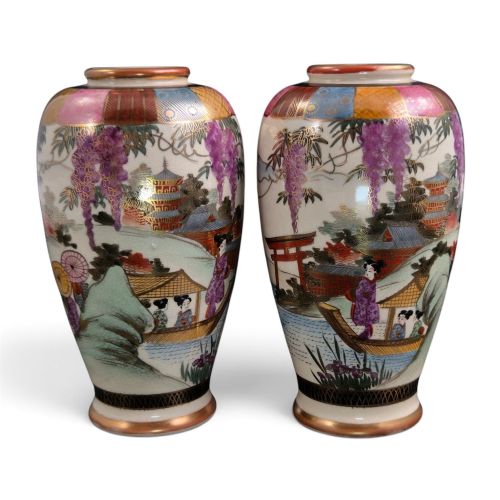
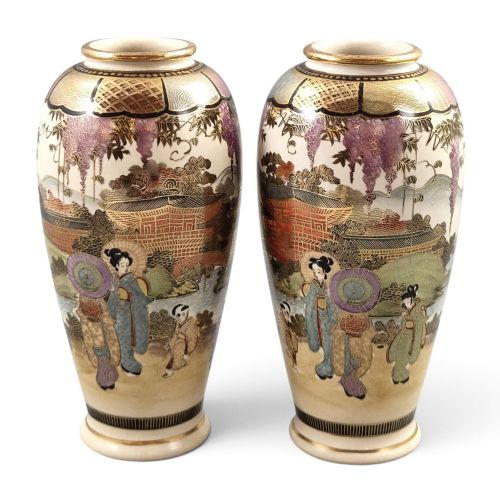
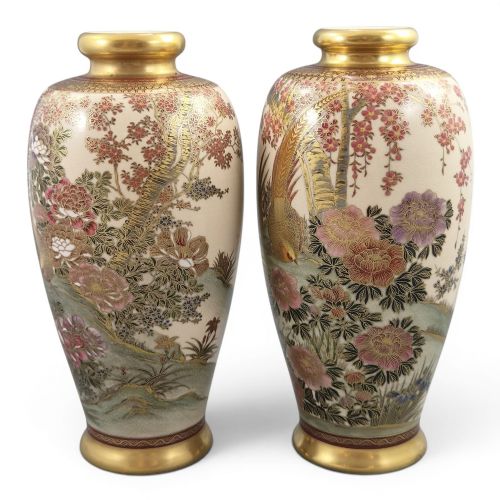
A japanese painted pottery pair typically comprises matched earthenware or porcelain vessels created in Japan during the late nineteenth and early twentieth centuries. The listings show a strong concentration of Satsuma and Kutani wares, alongside Imari porcelain plates and dishes.
Buyers will most frequently encounter pairs of vases in various scales, from small cabinet pieces to large floor standing examples. These objects often display intricate pictorial scenes featuring figures, landscapes, or birds rendered in detailed enamel palettes.
How they were made
The makers utilised earthenware and porcelain bodies as the foundation for their decorated surfaces, shaping them into vases, plates, and pitchers. These clay forms were then painted by hand using mineral enamels, often supplemented with gold leaf and gilt accents.
Firing techniques allowed workshops to fix the complex polychrome designs onto the ceramic body. Many Satsuma items received a fine crackle glaze beneath the painted decoration, while Imari pieces combined underglaze blue with overglaze red and gold.
Materials recorded across the inventory include earthenware, porcelain, enamel, gold leaf, gilt, glaze, wood, and fabric.
What varies in quality
Quality in a japanese painted pottery pair depends largely on the precision and density of the brushwork applied to the ceramic surface. Master painters working for renowned Kyoto or Kobe houses achieved a level of fine detail in figures and foliage that distinguishes their output from standard commercial wares.
The application of gilding and the clarity of the enamel colours also separate ordinary production from exhibition pieces. Matched pairs that retain their original boxes or bear specific studio signatures demonstrate a higher degree of historical documentation and artistic intent.
Maruni Kobe·Shozan·Manpei·Kinkōzan·Hakusan·Hododa·Kizan
The Japanese Painted Pottery Pair Glossary
- Satsuma
- A type of Japanese earthenware originating in Satsuma Province, traditionally characterised by an ivory-coloured crackle glaze and elaborate overglaze enamel decoration with gilt highlights. It became particularly popular for export during the Meiji period.
- Kutani
- Japanese porcelain and pottery known for its bold decorative schemes, often dominated by iron-red and green enamels. The tradition encompasses various styles developed in Ishikawa Prefecture.
- Imari
- A style of Japanese porcelain named after the port from which it was shipped to the West, typically featuring a distinctive palette of underglaze blue, iron-red, and gold. These ceramics were widely collected in Europe during the nineteenth century.
- Meiji Period
- The era of Japanese history lasting from 1868 to 1912, marked by the opening of trade with the West and a surge in the production of decorative arts for export. Pieces from this time often exhibit exceptional technical refinement.
- Shimazu Mon
- The heraldic crest of the Shimazu clan, featuring a cross within a circle, frequently found stamped or painted on Satsuma wares produced under their patronage.
Japanese Painted Pottery Pair: Frequently Asked Questions
What is a satsuma vase?
A satsuma vase is an earthenware vessel featuring a characteristic ivory-coloured body with a fine network of crackles in the glaze. These pieces are typically decorated with detailed hand-painted figures and landscapes enriched with gold.
Such vases were produced extensively during the Meiji period primarily for export markets, combining traditional Japanese motifs with Western aesthetic tastes.
How do I display a pair safely?
Display matched pairs on stable, level surfaces away from direct sunlight to protect the delicate enamel pigments and gilding from fading. Ensure they are placed where accidental knocks are unlikely.
For larger floor vases, position them in low-traffic areas of the room to prevent any risk of tipping or impact damage.
How can I tell Meiji period pieces apart?
Meiji period ceramics can be identified through a combination of stylistic markers, material weights, and artisan signatures. Works from this era often display dense pictorial compositions and sophisticated enamel layering.
Examining the base of the ceramic frequently reveals painted or impressed studio marks that attribute the piece to specific historical workshops.
Were these items meant for use or display?
Most decorative painted ceramics from this era were created primarily as ornamental display pieces for Western and domestic interiors. Their intricate enamel and gold leaf decoration made them unsuited for everyday practical use.
Plates, dishes, and vases served to showcase the technical skill of Japanese pottery houses during international exhibitions.