


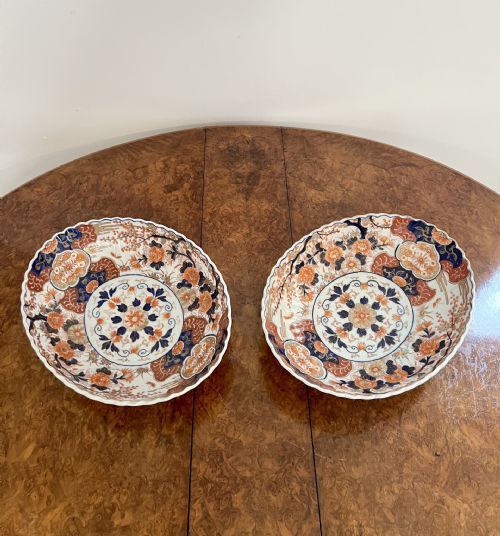


Japanese Imari Serving Dish
A japanese imari serving dish brings rich cobalt blue and vibrant iron red porcelain to the table, offering centuries of decorative tradition.
Japanese Imari Serving Dish
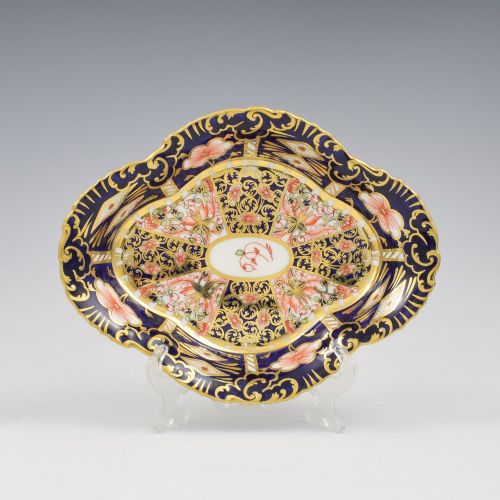
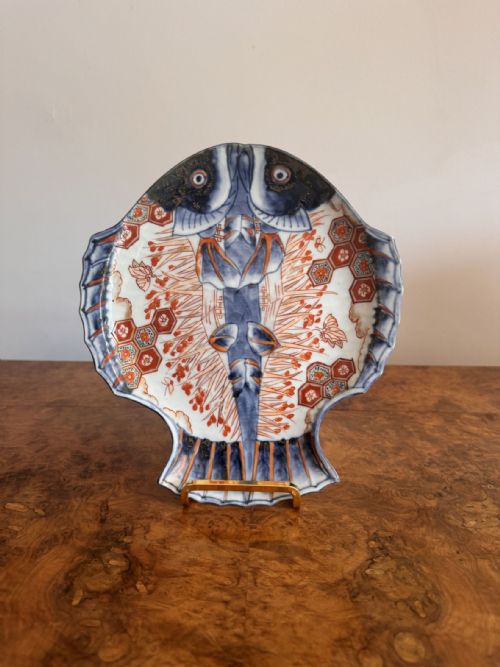
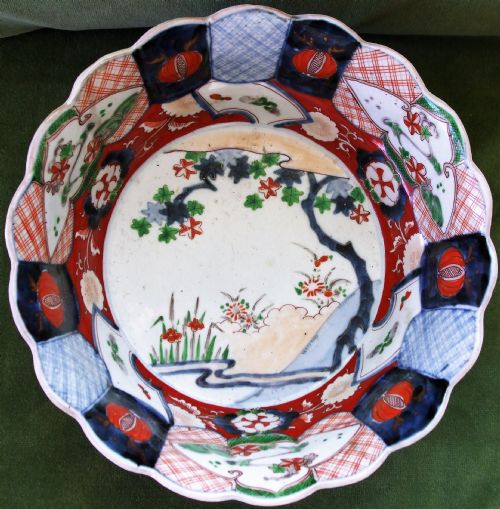
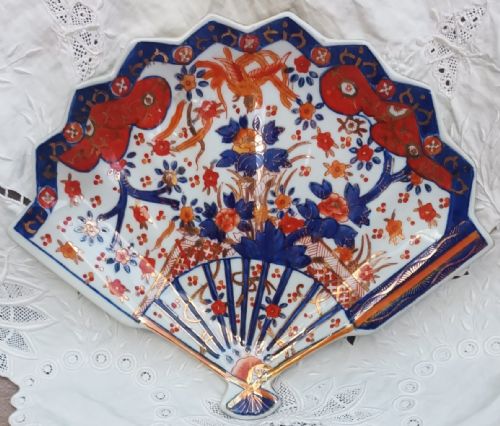
A japanese imari serving dish encompasses everything from traditional round bowls and chargers to unusual forms like fish, boats, fans, and squares. These decorative vessels range across periods from the eighteenth century through the Meiji era and into the twentieth century, capturing both Japanese Arita origins and later English interpretations.
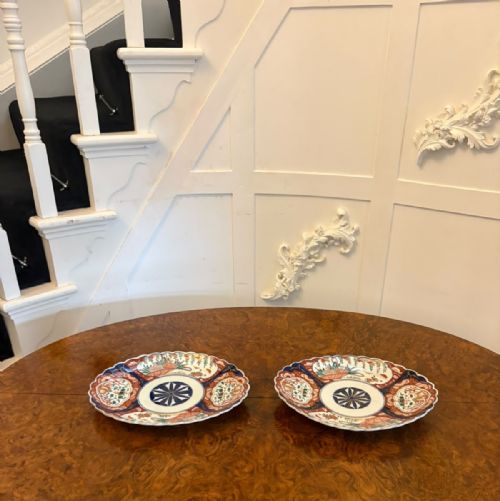
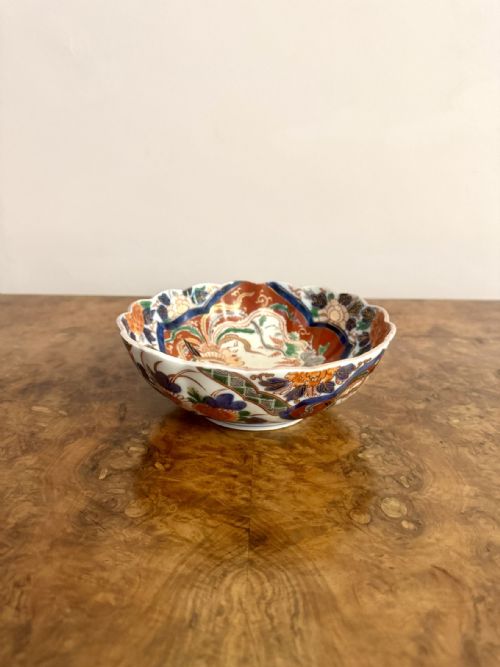
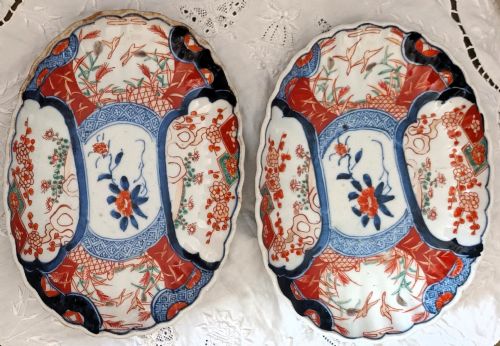
The pieces most frequently met on this page are Japanese Imari porcelain dishes, plates, and bowls from the nineteenth century and around nineteen hundred. Buyers also encounter scalloped edge platters and pairs of oval dishes alongside large chargers designed for display.
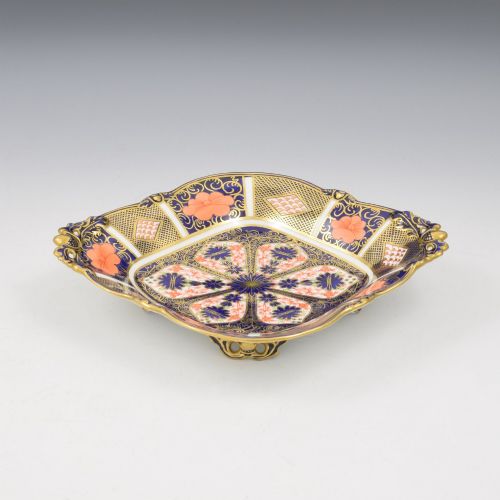
Originating from both Japanese kilns and English workshops such as Royal Crown Derby, these serving dishes showcase distinct cultural interpretations of the classic palette. Whether selecting a square plate or a boat shaped dish, the collector engages with a durable lineage of hand painted ceramics.
How they were made
These porcelain and bone china vessels rely on cobalt underglaze for their deep blue motifs, fired at high temperatures before receiving enamel colours. Artisans then applied rich iron red pigments alongside gold leaf and gilding to create the characteristic contrasting palette.
Hand painted floral and bird designs adorn many pieces, while glazes seal the ceramic body to form a smooth, reflective surface. Pierced detailing and moulded scallop or fan shapes demonstrate advanced handling of clay during forming and shaping.
Artisans occasionally shaped porcelain into swimming fish and fans to serve food.
What varies in quality
The distinction between standard production and exceptional pieces lies in the precision of the hand painted brushwork and the vibrancy of the enamels. Superior examples display crisp cobalt definition and generous, well preserved application of gold gilt across intricate floral and bird compositions.
Unusual forms such as fish, fans, and boat shaped dishes often represent higher artistic ambition than simple round plates. The crispness of moulded edges, particularly on scallop shaped bowls and pierced serving trays, determines the overall refinement of the piece.
Royal Crown Derby
The Japanese Imari Serving Dish Glossary
- Imari
- A style of Japanese porcelain originating from Arita, characterised by a distinctive palette of cobalt blue, iron red, and gold. This decorative tradition heavily influenced both domestic production and later European makers.
- Arita
- The Japanese town and surrounding region where porcelain production first flourished in the Edo period. Kilns here produced the foundational wares that defined the Imari aesthetic.
- Cobalt Underglaze
- A blue pigment applied to the raw ceramic body before glazing and firing. This technique ensures the colour remains permanently locked beneath the glassy surface.
- Charger
- A large decorative plate traditionally used for ceremonial display rather than daily dining. These substantial pieces highlight the full scale of hand painted bird and floral designs.
- Meiji Period
- The era in Japanese history spanning from eighteen sixty eight to nineteen twelve. Pieces from this time often exhibit exceptional decorative detail and confident hand painting.
Japanese Imari Serving Dish: Frequently Asked Questions
What is a japanese imari serving dish?
A japanese imari serving dish is a porcelain plate, bowl, or platter decorated in the traditional Imari palette of cobalt blue, iron red, and gold. These pieces were created for both practical dining use and decorative display.
Originating in Japan and later interpreted by English potteries, they feature hand painted motifs including florals and birds on various forms ranging from standard rounds to fans and fish.
How do I identify a Meiji period piece?
Meiji period items date from eighteen sixty eight to nineteen twelve and typically showcase confident hand painted cobalt and enamel work. Look for fine detailing in the floral and bird designs that reflect the artistic output of that era.
Many pieces from this time also feature scalloped or shaped edges and are constructed from dense, white porcelain.
What is the difference between Japanese and English Imari?
Japanese Imari stems from Arita kilns dating back to the Edo period and earlier, featuring traditional hand painted motifs on native porcelain. English interpretations, such as those by Royal Crown Derby, utilise bone china with similar characteristic palettes.
Both traditions honour the distinctive cobalt underglaze and iron red aesthetic while reflecting the specific manufacturing methods of their respective origins.