


Imari Pattern Ceramic Vessel
These imari pattern ceramic vessel pieces bring rich palettes and striking forms to a room, offering both decorative presence and historic character.

Imari Pattern Ceramic Vessel
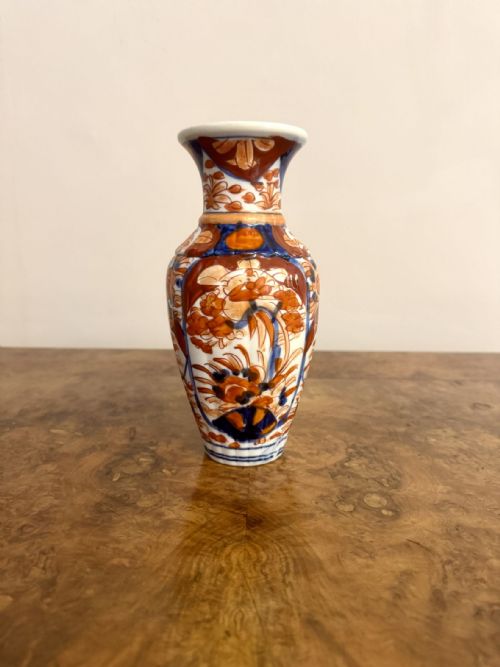
An imari pattern ceramic vessel brings together distinctive forms and rich ornamentation. When you search for an imari pattern ceramic vessel, you encounter a range of items spanning the nineteenth century through to the Edwardian period, alongside Japanese Meiji examples.
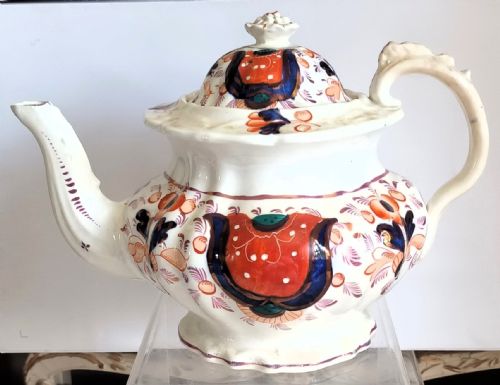
The selections available here include vases, teapots, sugar bowls, decorative dishes, jardinieres, and potpourri pieces. Japanese works sit alongside English interpretations such as Royal Crown Derby, Mason's Ironstone, and Gaudy Welsh productions.
Hexagonal shapes, boat-shaped dishes, and large floor vases appear frequently among these listings. Buyers meet both authentic Japanese export wares and European adaptations styled in the Japanese manner.
Materials and construction
These vessels utilise porcelain, bone china, earthenware, and ironstone as their primary bodies. Potters shaped these materials into robust vessels before applying underglaze and overglaze decoration.
Makers employed enamel colours, lustre glaze, and gold leaf or gold gilding to build up the dense surface patterns. The combination of iron red, cobalt blue, and metallic highlights defines the visual structure of each piece.
Listings feature items from the nineteenth century, Edwardian era, and nineteen hundreds, spanning porcelain, bone china, earthenware, and ironstone.
Distinctions in quality
Quality rests in the crispness of the painted detail and the precision of the gilding across the body. Superior examples display carefully controlled enamel work that sits cleanly on the porcelain or earthenware surface.
Scale and ambition also separate standard production from exceptional pieces. Large pairs of vases and complex moulded forms require greater technical skill during firing and decoration than smaller utilitarian items.
Royal Crown Derby·Mason·Samson
The Imari Pattern Ceramic Vessel Glossary
- Imari
- A style of ceramic decoration originating in Japan, characterised by a palette of cobalt blue, iron red, and gold. European factories later adopted this distinct aesthetic for their own porcelain and ironstone.
- Jardinier
- A large ornamental pot or stand designed to hold growing plants or flowers. These vessels often feature substantial proportions and decorative handles.
- Ironstone
- A type of durable earthenware patented in the nineteenth century to rival true porcelain. It provides a heavy, resilient body suitable for dense enamelling.
- Meiji
- A period in Japanese history spanning from eighteen sixty-eight to nineteen twelve, known for prolific export ceramics. Pieces from this era often display refined painting and gilding techniques.
- Potpourri
- A vessel featuring a pierced or perforated lid designed to hold dried fragrant plant material. These containers allow scent to diffuse while concealing the contents.
Imari Pattern Ceramic Vessel: Frequently Asked Questions
How do I identify an imari pattern ceramic vessel?
Look for the characteristic combination of underglaze cobalt blue, iron red, and gold gilding on porcelain, bone china, or ironstone bodies. The designs frequently incorporate floral and geometric motifs arranged in compartmentalised panels.
English factories often marked their wares on the base, while Japanese export pieces might carry handwritten signatures or remain unmarked.
Are these vessels suitable for daily use?
While teapots and sugar bowls were originally made for domestic service, antique vessels benefit from gentle handling and careful display rather than heavy everyday use. Overglaze enamels and gold leaf can wear down over time with frequent washing.
For decorative vases, jardinieres, and dishes, use them to hold dried arrangements or display them as standalone ornamental objects.
How do I care for antique porcelain and earthenware?
Dust these items gently with a soft, dry cloth to prevent accumulation in recessed areas or around gilded rims. Avoid using harsh cleaning agents or submerging pieces with delicate overglaze enamel or gold leaf in water.
Display them away from direct sunlight and extremes of temperature to protect the glaze and body from unnecessary stress.
What is the difference between Japanese and English imari?
Japanese examples originate from the Meiji period and earlier, featuring traditional motifs and specific export potting techniques. English imari wares, produced by factories such as Royal Crown Derby, apply the Japanese aesthetic to local bodies like bone china and ironstone.
Both traditions share the iconic palette, but the paste, potting style, and base markings reflect their distinct geographic origins.