



Japanese Floral Centrepiece
A Japanese floral centrepiece brings complex Meiji and Edo craftsmanship to a table.
Japanese Floral Centrepiece
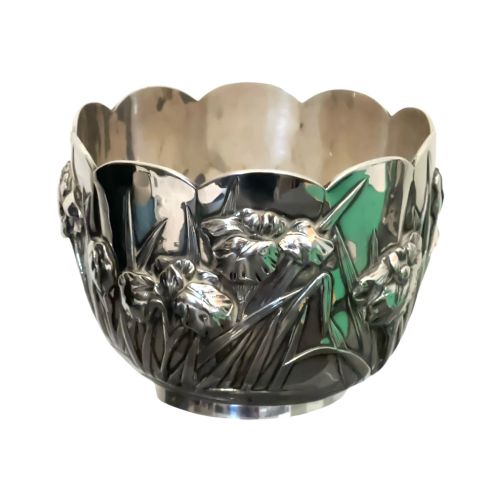
When you search for a Japanese floral centrepiece, you encounter large decorative bowls and vessels originating from the nineteenth century. These items span the Edo and Meiji periods, showcasing traditional forms designed for display.
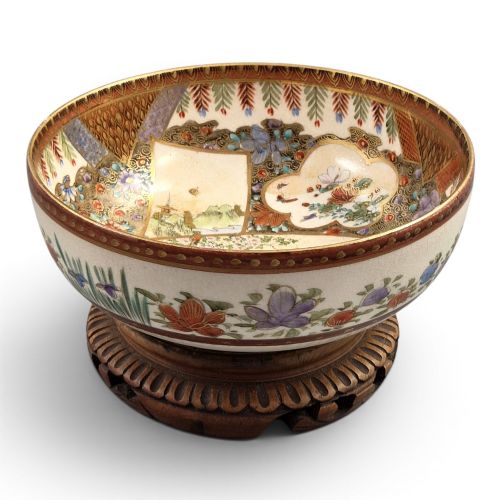
The version you are most likely to meet on this page is a Japanese Imari porcelain bowl featuring scalloped edges and intricate floral motifs. Alternatively, you will find Satsuma earthenware and cloisonne enamel bowls decorated with peonies, birds, and millefleur patterns.
These pieces function as striking focal points in a room, combining substantial scale with meticulous surface design. The forms remain consistent, primarily centring on deep decorative bowls created for visual impact.
How they were made
The makers of these items utilised porcelain and earthenware as the primary structural bases, applying detailed glazes and pigments. Imari porcelain pieces rely on underglaze blue and iron red, often enhanced with gold leaf accents.
Cloisonne enamel bowls require a copper or brass body fitted with thin metal wires to form individual cells. Artisans fill these compartments with enamel paste before firing and polishing the surface to a smooth finish.
Satsuma ware employs a fine-pored earthenware clay finished with a characteristic crackle glaze. Craftsmen then paint elaborate floral and figural scenes by hand over the glaze.
Listings feature items spanning the Edo and Meiji periods, utilising enamel, porcelain, copper, and brass.
What varies in quality
The distinction between tiers of work rests upon the precision and density of the hand-painted or enamelled decoration. Finer pieces demonstrate superior control over line work, colour saturation, and composition.
Material application also dictates standing, particularly in the thickness and uniformity of cloisonne wirework or the purity of the porcelain body. Signed pieces by recognised makers often exhibit a higher degree of execution.
The complexity of the subject matter, such as multi-layered bird and peony motifs or dense millefleur patterns, reflects the level of artisanal skill invested in the individual vessel.
Kozan·Ryuzan
The Japanese Floral Centrepiece Glossary
- Imari
- A traditional style of Japanese porcelain featuring a distinct palette of cobalt blue, iron red, and gold. This ware originated from the town of Arita and gained substantial export popularity during the nineteenth century.
- Cloisonne enamel
- A metalworking technique where thin wires are soldered to a copper or brass base to create compartments filled with enamel paste. These vessels are fired multiple times to achieve a vitreous surface.
- Satsuma
- A type of Japanese earthenware characterised by a pale, ivory-coloured crackle glaze. Artisans typically decorate these ceramic bodies with elaborate polychrome enamels and gold leaf.
- Meiji period
- The era of Japanese history spanning from 1868 to 1912, noted for a surge in decorative arts produced for international markets. Pieces from this time often display heightened technical complexity.
- Edo period
- The historical period in Japan lasting from 1603 to 1867, preceding the Meiji era. Items surviving from this time frequently represent earlier traditional craftsmanship and design.
Japanese Floral Centrepiece: Frequently Asked Questions
How do I clean a cloisonne enamel bowl?
Dust these enamel vessels gently with a soft, dry cloth to prevent accumulation. Avoid using water, liquid cleaners, or abrasive cloths that might damage the metal wires or enamel surface.
Keep the piece away from direct sunlight and areas prone to high humidity. Proper placement ensures the stability of the metal body and the preservation of the coloured enamel.
Can I use these bowls for serving food?
Antique decorative bowls are generally intended for display rather than culinary use. The historical glazes and enamel surfaces on nineteenth-century pieces can be sensitive to moisture and acidic foods.
Displaying the vessel empty or using it dry protects the interior decoration from wear. Treating the piece as a static work of art preserves its historical condition.
What is the difference between Imari and Satsuma?
Imari pieces are made of hard porcelain and feature strong blue and red pigments under a glossy glaze. They often incorporate scalloped edges and geometric floral patterns suited for general display.
Satsuma items consist of earthenware with a matte crackle glaze painted with detailed polychrome scenes. These pieces tend to showcase intricate figural and botanical narratives rather than stark geometric borders.
How do I date a Meiji period piece?
Examine the stylistic markers, the weight of the material, and any signatures present on the base. Pieces from the Meiji era often reflect a shift toward elaborate decorative techniques intended for global exhibition.
Compare the specific enamel colours or porcelain bodies against documented examples from the same decades. Historical records and maker signatures provide the most reliable chronological framework.