


Fine Satsuma Ware
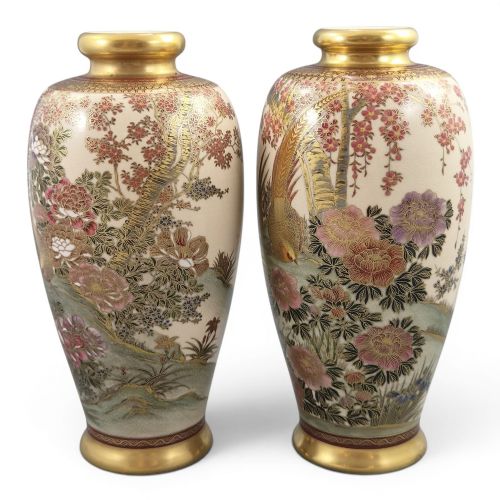
Fine satsuma ware brings intricate earthenware painted with gold leaf and enamel into the home.
Fine Satsuma Ware
Fine satsuma ware comprises ceramic pieces originating from Japan, spanning the nineteenth century, the Meiji period, and the early Showa period. When searching for fine satsuma ware, collectors encounter vessels designed for display rather than utility.
The forms on this page include vases, miniature vases, decorative dishes, decorative plates, and decorative bowls. Pairs of vases and individual globular vessels represent the primary shapes available to the buyer.
Originating in regional Japanese centres such as Kyoto and Kobe, these objects demonstrate precise artistry from makers working across distinct nineteenth-century and early twentieth-century decades.
How fine satsuma ware was made
Artisans built fine satsuma ware using earthenware, shaping bowls, jars, and vases before applying detailed surface decoration. The physical structure relies on traditional ceramic fabrication methods appropriate for delicate ornamental objects.
Painters utilised enamel and gold leaf to articulate intricate motifs across the earthenware surface. Specific techniques include cobalt and gilt moriage, creating raised textures that catch the light alongside flat painted scenes.
Listings feature items from the nineteenth century, nineteen hundred, eighteen eighty, and the nineteen twenty Showa period, utilising earthenware, enamel, gold leaf, and wood.
What varies in quality in fine satsuma ware
The intricacy of the painted surface determines the visual distinction of each piece. Miniature vases with complex figural processions demonstrate a higher degree of miniaturist skill than simpler decorative arrangements.
The presence of identifiable artist signatures, such as work by Kinzan, Chosei, Kinkozan, or Manpei, elevates individual pieces. Furthermore, the precision of the gold leaf application and the density of enamel work distinguish superior examples.
Manpei·Kinzan·Chosei·Nanzan·Kinkozan·Yamashu·Shuzan·Yasuda
The Fine Satsuma Ware Glossary
- Earthenware
- Porous pottery fired at lower temperatures, forming the foundational body of all satsuma ware. It provides a receptive base for enamels and gold leaf.
- Moriage
- A ceramic technique using piped slip to build raised decorative patterns. In fine satsuma ware, this creates tactile relief beneath the enamel and gilding.
- Millefleur
- A decorative pattern composed of countless tiny painted flowers covering the entire surface. This French term describes dense floral compositions seen on bowls.
- Meiji Period
- The era in Japanese history spanning from eighteen sixty-eight to nineteen twelve, associated with intricate decorative arts exported globally. Much of the recorded fine satsuma ware dates from this period.
Fine Satsuma Ware: Frequently Asked Questions
What is satsuma ware?
Satsuma ware is a type of Japanese earthenware characterised by a crackle-glazed ivory body painted with enamel and gold leaf. These decorative objects were largely produced for export during the nineteenth and early twentieth centuries.
Items range from small miniature vases to large presentation vessels, dishes, and bowls, frequently depicting traditional landscapes, figural processions, and floral motifs.
How do I display these pieces?
Display fine satsuma ware on stable surfaces away from direct sunlight to protect the delicate enamel and gold leaf decorations. Because many pieces are decorative vessels or shallow dishes, placing them on wooden stands enhances their visibility.
Keep them clear of high-traffic areas to prevent accidental knocks, as the earthenware body and raised moriage details require careful handling.
How do I identify Meiji period pieces?
Meiji period pieces often feature signatures of specific artists or studios on the base, alongside dense and meticulous painting styles. The historical context of the era encouraged highly detailed craftsmanship intended for international exhibitions.
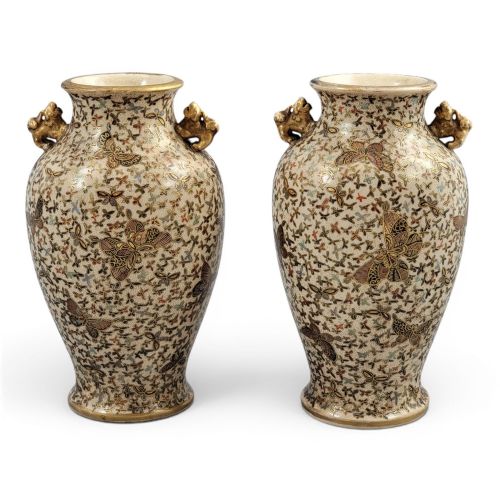
Look for refined brushwork depicting complex figural scenes, landscapes, or thousand butterfly motifs combined with substantial gilding characteristic of late nineteenth-century production.
How should I clean my vase?
Dust fine satsuma ware gently with a soft, dry brush to remove particulate matter without disturbing the surface. Avoid using water, detergents, or chemical solvents, as these can damage the delicate enamels and vulnerable gold leaf.
Regular, careful maintenance preserves the intricate painted details and the subtle crackle glaze distinctive of authentic earthenware pieces.