



Satsuma Porcelain Dish
A satsuma porcelain dish brings dense, hand-painted narratives in enamel and gold leaf straight from the Meiji period into your home.
Satsuma Porcelain Dish
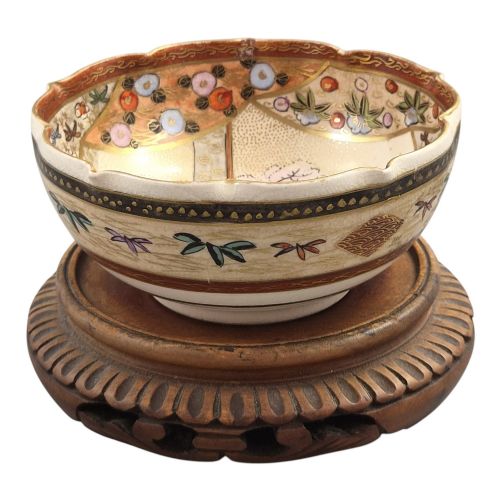
When you search for a satsuma porcelain dish, you are looking at intricate Japanese earthenware typically created during the Meiji period, alongside Edwardian examples. These pieces appear in forms such as decorative bowls, chargers, plates, and small saucers.
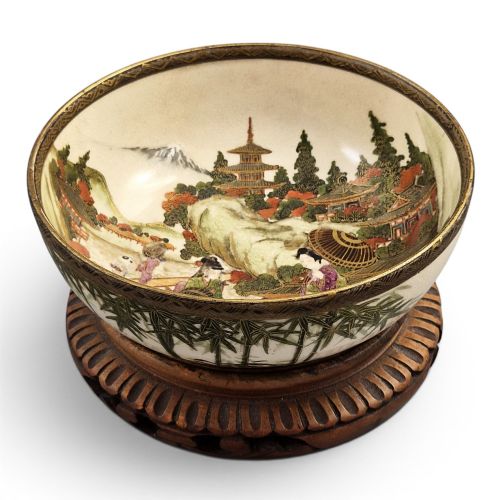
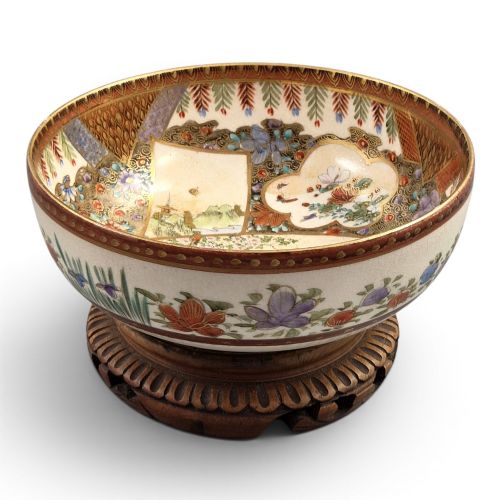
The most common versions you will meet on this page are bowls and plates decorated with floral motifs, multi-figure scenes, and intricate millefleur patterns. Many originate from Kyoto or bear the marks of notable workshops.
Makers such as Koshida, Gyokkō, Kozan, Kinkozan, Nikko, Hododa, and Meizan dominate the listings, often displaying the Shimazu clan crest.
Materials and construction
These items are constructed from earthenware, a porous ceramic body that forms the base for elaborate surface decoration. Artisans then apply detailed enamel paints to build up figurative and botanical scenes.
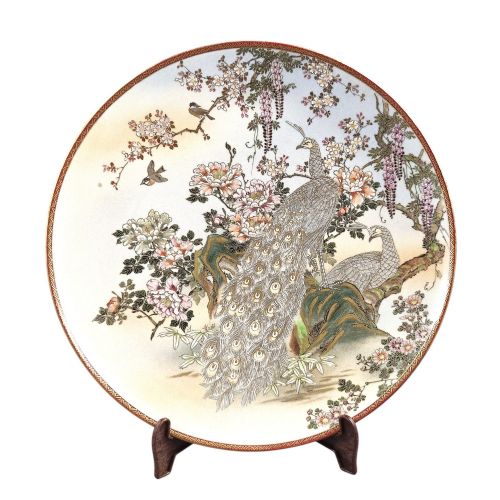
Gold leaf and gilt work are heavily utilised to highlight specific areas, creating a rich contrast against the painted motifs and cobalt blue backgrounds. Raised moriage techniques add physical texture to elements like flowers and plumage.
Peacocks strut across these surfaces with feathers rendered in thick, raised enamel, daring you not to run a finger over the tail.
Factors that distinguish quality
The precision of the brushwork and the complexity of the narrative scenes separate finer examples from simpler production pieces. Thousand-flower patterns and multi-figure compositions require immense skill to execute cleanly across a curved surface.
Signatures from recognised artists and studios, such as Kinkozan or Hododa, indicate superior workshop standards and careful firing. The density and preservation of the gold gilt and enamel work also determine the standing of each piece.
Koshida·Gyokkō·Kozan·Kinkozan·Nikko·Hododa·Meizan
The Satsuma Porcelain Dish Glossary
- Earthenware
- A type of porous pottery fired at relatively low temperatures. It forms the primary ceramic body for these Japanese wares.
- Moriage
- A decorative technique where slip is piped onto the pottery before firing to create raised, textured details. This method frequently accentuates floral elements and borders.
- Millefleur
- A dense pattern composed of countless tiny painted flowers covering the entire surface. The term translates directly from French to mean thousand flowers.
- Gilt
- A thin layer of gold applied to the surface of the ceramic. It provides metallic highlights that frame the painted panels.
- Meiji Period
- The era of Japanese history lasting from 1868 to 1912, characterised by the opening of trade with the West. Most items of this type originate from this specific timeframe.
Satsuma Porcelain Dish: Frequently Asked Questions
How do I clean a satsuma dish?
Dust these items gently with a dry, soft cloth to remove everyday particles. Avoid using water, detergents, or abrasive materials, as moisture and scrubbing can damage the delicate enamel and gold leaf.
Keep them away from direct sunlight and damp environments to protect the porous earthenware body and the vibrant painted surfaces over time.
Are these pieces made of porcelain?
Despite common terminology, these items are technically earthenware rather than true porcelain. The ceramic body is softer and more porous than porcelain, requiring a specialised glaze and enamel application.
Traditional pieces from the Meiji period rely on this specific clay composition to achieve their characteristic crackle-glaze finish beneath the painted decoration.
What does the Shimazu crest mean?
The Shimazu crest depicts a circle enclosing a cross and represents a powerful Japanese samurai clan. Studios located in the Satsuma domain used this mark to signal their regional heritage and patronage.
Finding this crest on the base connects the item directly to the historical production centres of Satsuma ware during the nineteenth century.
How do I date a piece?
Examine the style of the painted figures, the presence of specific artist signatures, and the overall complexity of the gilding. Pieces from the Meiji period often display meticulous hand-painted detail and specific workshop marks.
Edwardian or later nineteenth-century examples frequently combine traditional Japanese motifs with techniques adapted for Western export markets during the same era.